
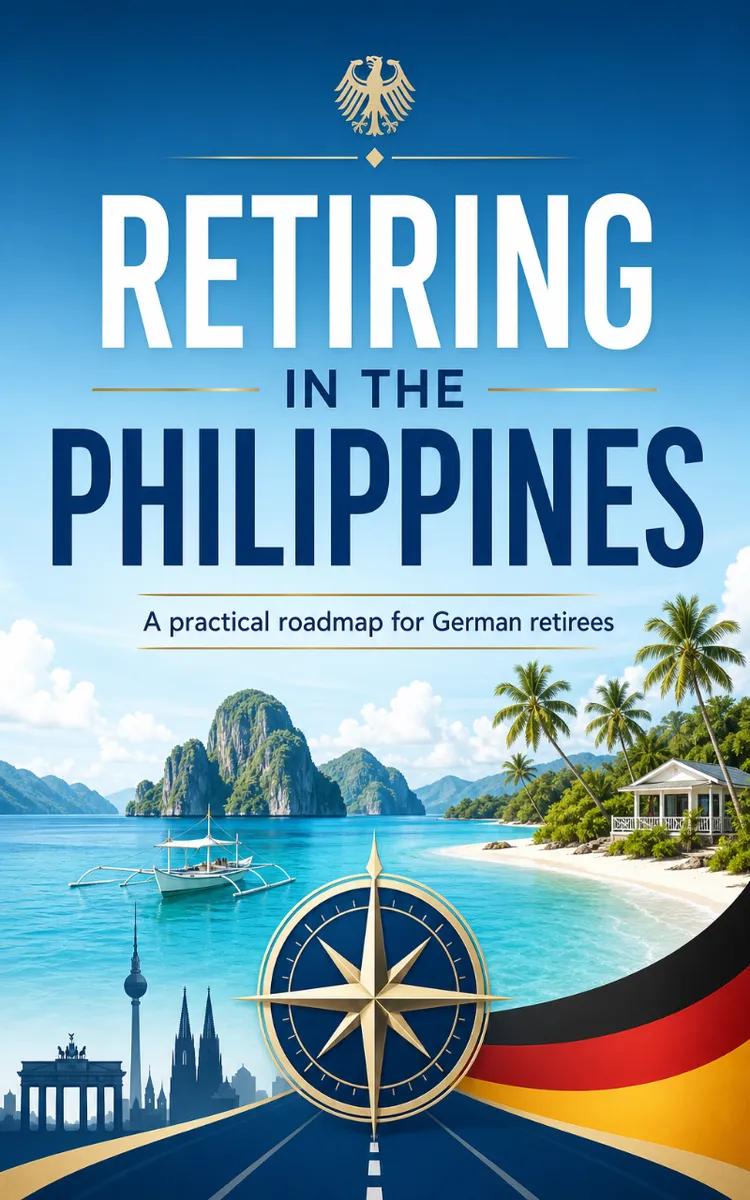
Retiring In The Philippines
Created with Inkfluence AI
Relocating and retiring in the Philippines for Germans
Table of Contents
- 1. Why Germans Are Looking Beyond Germany
- 2. Philippines Reality Check: Benefits and Tradeoffs
- 3. Monthly Budgeting With Three Lifestyle Tiers
- 4. Choosing Locations Using the 8-Score Map
- 5. Residency Planning: Visa Paths Overview
- 6. Healthcare Planning: Public vs Private Costs
- 7. Housing Decisions: Rent, Buy, or Build
- 8. Cultural Adjustment: Avoiding Costly Misunderstandings
Preview: Why Germans Are Looking Beyond Germany
A short excerpt from “Why Germans Are Looking Beyond Germany”. The full book contains 8 chapters and 15,103 words.
Why the Rising Pressure on German Retirees Is Sending People Abroad
A quick reality check: when you sit down with your pension letter, your rent notice, and your energy bill in the same week, the numbers start to feel personal. In Germany, many retirees don’t worry about “retirement abroad” because they dream of adventure. They worry because everyday costs don’t behave like the planning documents promised, and because pensions feel less predictable the longer you wait.
That pressure shows up in four places that matter a lot for Germans aged 50-75: housing and living costs, pension confidence, weather and health routines, and the lifestyle rhythm they can realistically keep. The Philippines enters the conversation because it hits these four points differently - often with more stability for day-to-day spending, more warmth for outdoor life, and a slower pace that many Germans actually find easier on the body.
In this chapter, you’ll learn how to put those drivers into one clear comparison, so you don’t rely on opinions, YouTube clips, or “someone told me” impressions. You’ll also get a practical way to judge whether the Philippines fits your finances, your pension reality, and your daily routine - before you commit.
The German Retirement Pressure Index (GRPI): Your Cost - Pension - Lifestyle Scorecard
When Germans ask, “Why are you looking beyond Germany?” they usually mean: “What exactly is pushing me, and what would change if I move?” The German Retirement Pressure Index (GRPI) helps you answer that question with a simple scorecard you can fill in an afternoon.
GRPI focuses on the drivers that push people abroad in a very direct way:
- Cost pressure (especially housing, utilities, and daily basics)
- Pension pressure (how your income behaves versus your fixed costs)
- Lifestyle pressure (weather, activity options, and how expensive “moving your body” becomes in winter)
- Risk pressure (how stressed you feel about changes in Germany)
Here’s the core idea: you score Germany and the Philippines using the same categories. Then you compare the total pressure score. A lower score doesn’t mean “the Philippines is perfect.” It means you found a place where your day-to-day stress likely drops.
Use this numbered list and keep it practical - use your own numbers, not guesses.
1. Calculate your “fixed monthly baseline” in Germany.
Write down what you pay every month no matter what: rent or mortgage, health insurance contributions, utilities, internet/phone, and basic food. Example: if your baseline already eats most of your net pension, you will feel cost pressure even when prices rise “only a little.”
Why it matters: fixed costs decide your freedom. Lifestyle choices come after the bills.
2. Estimate your “winter and maintenance costs” in Germany.
Add what winter costs you in real terms: heating, extra cleaning, transport for appointments, and the little stuff that adds up (like higher electricity for warmth and comfort).
Why it matters: retirees don’t plan for “winter reality.” They plan for average weather.
3. Translate your pension into a realistic monthly buffer.
Look at your net pension plus any other regular income (company pension, rental income). Then subtract your fixed baseline. The result becomes your monthly buffer.
Why it matters: if your buffer stays thin, you start making choices out of fear instead of preference.
4. Score the Philippines using the same categories, but with local living inputs.
For the Philippines side, don’t use “Germany logic.” Use what you can verify: rental quotes for the area you like, typical utility costs you can confirm with a contact or inspection, and local prices for your real daily items.
Why it matters: the Philippines often looks cheaper on paper, but your area choice and lifestyle level decide the actual outcome.
How to score it: for each category (cost, pension, lifestyle, risk), rate the pressure from 0 (low) to 5 (high) for Germany and 0 (low) to 5 (high) for the Philippines. Add the points to get your GRPI total for each country.
Practical takeaway / prompt: After you score both places, ask yourself one honest question: “Which country gives me more monthly breathing room without forcing me to cut the lifestyle I actually need to stay healthy?” If you can’t answer that, you haven’t measured the right numbers yet.
How the Main Drivers Actually Push Germans: Costs, Pensions, Weather, and Lifestyle
Now let’s make the drivers concrete. Germans don’t move because of one headline; they move when multiple pressures stack up.
Costs: where the pressure hides
Many retirees feel cost increases most in three “quiet” categories: housing, utilities, and daily essentials. Housing often drives everything else because it determines how much you can spend on comfort and transport....
About this book
"Retiring In The Philippines" is a how-to guide book by Anonymous with 8 chapters and approximately 15,103 words. Relocating and retiring in the Philippines for Germans.
This book was created using Inkfluence AI, an AI-powered book generation platform that helps authors write, design, and publish complete books. It was made with the AI Ebook Generator.
Frequently Asked Questions
What is "Retiring In The Philippines" about?
Relocating and retiring in the Philippines for Germans
How many chapters are in "Retiring In The Philippines"?
The book contains 8 chapters and approximately 15,103 words. Topics covered include Why Germans Are Looking Beyond Germany, Philippines Reality Check: Benefits and Tradeoffs, Monthly Budgeting With Three Lifestyle Tiers, Choosing Locations Using the 8-Score Map, and more.
Who wrote "Retiring In The Philippines"?
This book was written by Anonymous and created using Inkfluence AI, an AI book generation platform that helps authors write, design, and publish books.
How can I create a similar how-to guide book?
You can create your own how-to guide book using Inkfluence AI. Describe your idea, choose your style, and the AI writes the full book for you. It's free to start.
Write your own how-to guide book with AI
Describe your idea and Inkfluence writes the whole thing. Free to start.
Start writingCreated with Inkfluence AI


