
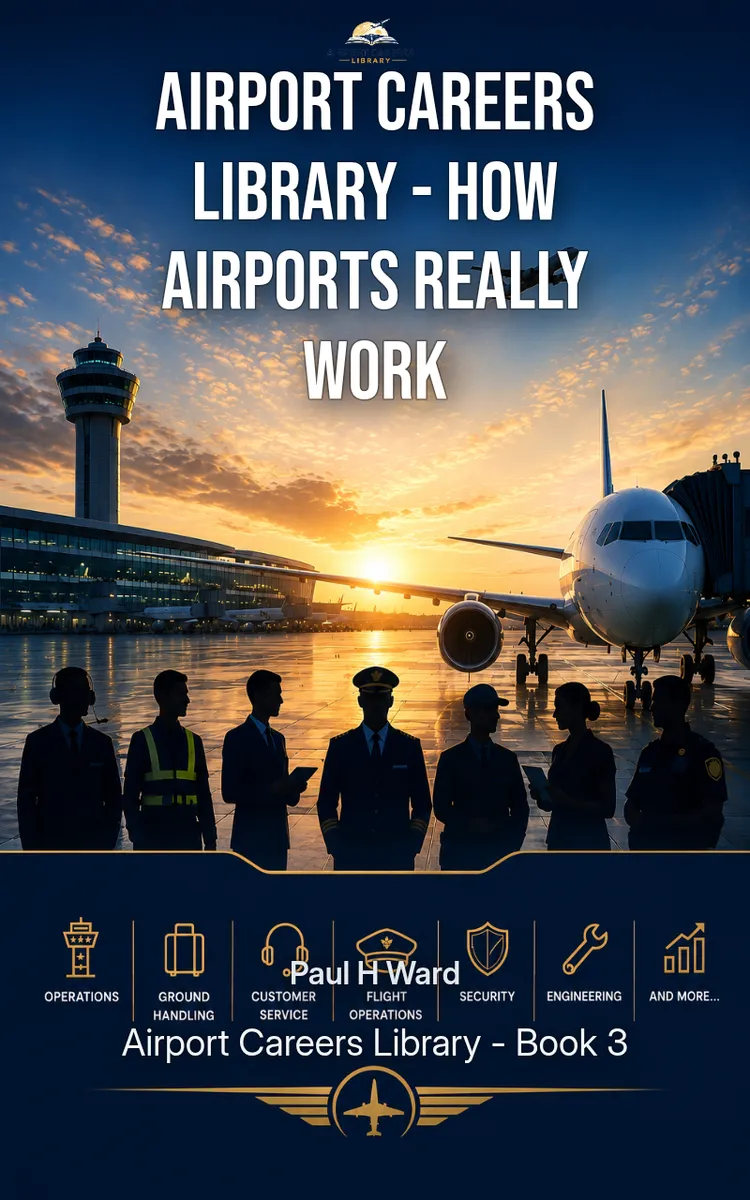
How Airports Really Work
Created with Inkfluence AI
Airport operations ecosystem: people, vehicles, aircraft, and systems
Table of Contents
- 1. Airport Zones and Movement Basics
- 2. Check-In, Bag Drop, and Screening Flow
- 3. Runway Scheduling and Traffic Sequencing
- 4. Gates, Stands, and Turnaround Orchestration
- 5. Cargo Handling and Warehouse Throughput
- 6. Security Layers and Access Control Systems
- 7. Surface Vehicles, Fueling, and Ground Services
- 8. Disruption Management and Recovery Playbooks
Preview: Airport Zones and Movement Basics
A short excerpt from “Airport Zones and Movement Basics”. The full book contains 8 chapters and 17,708 words.
Ever seen a vehicle drive the “wrong way” on an airport, then stop hard and wait for someone in a bright vest to wave them through? That moment usually comes from one problem: the driver didn’t treat the airport like a set of separate work zones. Airports feel like one big place, but they run on rules that change depending on where you are - especially for moving people and vehicles.
In this chapter you will learn how airports split into three practical areas: landside, airside, and secure zones. You’ll also learn the movement rules that keep the wrong people out of the wrong places and the right vehicles moving without chaos. After you read, you’ll be able to look at a basic airport layout and explain where you can walk, where you can drive, and what barriers you should expect to see.
You will also learn the “Airfield Map Model,” a simple way to think about zones so you can make good decisions fast. You’ll practice with a realistic first-day scenario using the kind of details you actually deal with on the job - signs, doors, checkpoints, radios, and the difference between “inside the terminal” and “on the movement area.”
Why Airport Zones and Movement Rules Matter (and how they protect your day)
Airports run on movement: passengers moving to gates, baggage moving to aircraft, staff moving between work areas, and vehicles moving supplies and equipment. The problem is that not all movement is allowed everywhere. If you let unrestricted walking mix with aircraft operations, you create safety risks. If you let unrestricted vehicles roam, you create security risks. If you mix the two during peak times, you create delays that ripple across the whole site.
That’s why airports organize their grounds into zones. Each zone has a clear purpose and a clear set of rules. Landside handles public-facing movement (like people entering the terminal and picking up baggage). Airside covers areas where aircraft operate and where many restricted jobs happen (like taxiways and loading positions). Secure zones add an extra layer: they control who can access certain areas because those areas involve security-sensitive processes or routes.
For you as a beginner, the key problem to solve is simple: you need a quick mental map that tells you what rules apply before you act. If you only remember “airports are strict,” you will still get stuck at barriers, confuse drivers, or wander into the wrong route during a busy shift. If you remember the zone logic, you can plan your movement and communicate clearly.
A practical way to remember it is the Airfield Map Model: treat the airport like a set of “rings” with different permissions. Landside is Ring 1 (public movement with normal access). Airside is Ring 2 (aircraft and restricted operations - vehicle and person movement follows strict control). Secure zones are Ring 3 (restricted access with added checks). Ask yourself: “Which ring am I in right now, and what proof do I need to move to the next ring?” That question prevents most beginner mistakes before they happen.
Practical takeaway: Before you move anywhere, pause and name your ring: Landside, Airside, or Secure. That one habit reduces wrong-turns, wrong doors, and the awkward “stop - who authorized you?” moment.
How It Works: The Airfield Map Model and the movement rules you follow
The Airfield Map Model works because it connects two things you must manage every day: access (who is allowed) and movement (how vehicles and people travel). Airports use physical controls - fences, doors, checkpoints, and road signs - plus operating rules that tell you what to do at each boundary.
Start by identifying the boundaries you can actually see. Then match your action to the boundary. Here are the core components of the model, with concrete rules you can use immediately.
1. Landside (Ring 1): Move using public routes and terminal rules
Landside covers areas open to passengers and visitors, like the terminal entrances, parking access roads, and public curbside lanes. You follow standard “follow the signs” movement here. Vehicles also follow public road markings, and staff still need to use the right lanes and stopping areas, but you do not treat the whole area like an aircraft operations space.
2. Airside (Ring 2): Treat the airfield like a working machine
Airside includes taxiways, aprons, aircraft stands, and other areas where aircraft operations happen. You follow strict route rules because aircraft can move at any time during operations. You use designated crossings, you wear required high-visibility clothing when you work there, and you never assume a shortcut is safe just because it looks open.
3. Secure zone (Ring 3): Add access control on top of airside rules
Secure zones sit inside or alongside airside. They usually involve a checkpoint process or controlled doors where you must show your authorization (commonly a security pass or credential)....
About this book
"How Airports Really Work" is a how-to guide book by Paul H Ward with 8 chapters and approximately 17,708 words. Airport operations ecosystem: people, vehicles, aircraft, and systems.
This book was created using Inkfluence AI, an AI-powered book generation platform that helps authors write, design, and publish complete books. It was made with the AI Ebook Generator.
Frequently Asked Questions
What is "How Airports Really Work" about?
Airport operations ecosystem: people, vehicles, aircraft, and systems
How many chapters are in "How Airports Really Work"?
The book contains 8 chapters and approximately 17,708 words. Topics covered include Airport Zones and Movement Basics, Check-In, Bag Drop, and Screening Flow, Runway Scheduling and Traffic Sequencing, Gates, Stands, and Turnaround Orchestration, and more.
Who wrote "How Airports Really Work"?
This book was written by Paul H Ward and created using Inkfluence AI, an AI book generation platform that helps authors write, design, and publish books.
How can I create a similar how-to guide book?
You can create your own how-to guide book using Inkfluence AI. Describe your idea, choose your style, and the AI writes the full book for you. It's free to start.
Write your own how-to guide book with AI
Describe your idea and Inkfluence writes the whole thing. Free to start.
Start writingCreated with Inkfluence AI


