
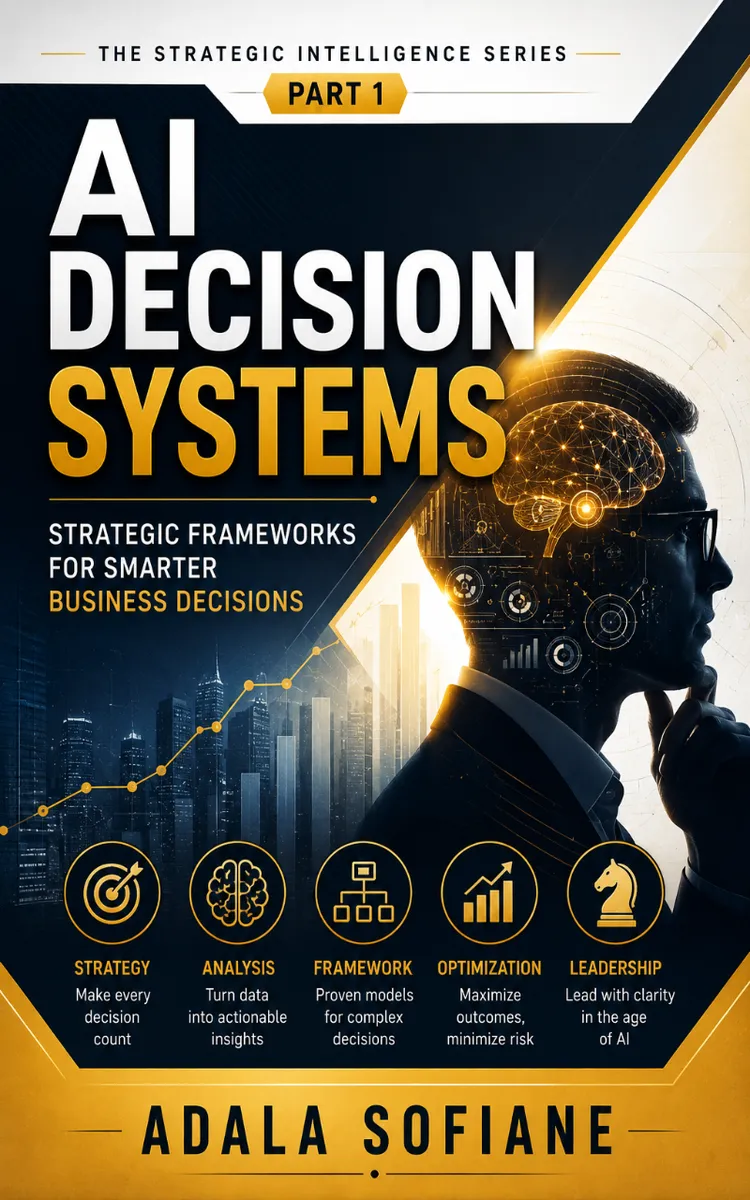
AI Decision Systems
Created with Inkfluence AI
Strategic decision-making using psychology, leadership, and competitive frameworks
Table of Contents
- 1. Decision Power Without Domination
- 2. Build Your Executive Decision System
- 3. Map Biases to Real Business Traps
- 4. Emotional Control Under Pressure
- 5. The Executive Presence Advantage
- 6. Psychological Leverage in Negotiations
- 7. Read Hidden Intentions Like a Strategist
- 8. Crisis Leadership Decision Protocols
- 9. Organizational Behavior for Faster Decisions
- 10. Competitive Strategy as a Decision Advantage
- 11. Reputation Management as Strategic Signaling
- 12. Ethical Influence and Long-Term Authority
Preview: Decision Power Without Domination
A short excerpt from “Decision Power Without Domination”. The full book contains 12 chapters and 37,264 words.
Decision Power Without Domination: The Disciplined Definition That Changes Every Executive Choice
“Power that serves no purpose turns into noise. Power that serves a purpose turns into a system.”
If you lead people, run budgets, or negotiate outcomes, you already know the uncomfortable truth: every executive decision carries a power move. You set priorities, you choose what to measure, you decide who gets heard, and you decide what gets delayed. The problem is not that power exists. The problem is that most leaders treat power like a mood - something you either have or don’t. That mindset produces domination instincts: louder meetings, sharper edicts, faster blame. It also produces paralysis: you avoid conflict, you wait for consensus, and you call it “collaboration” while the business slips.
This chapter gives you the disciplined definition of power and a practical way to apply it inside your decisions. You will learn how to influence outcomes through perception, timing, psychology, positioning, strategic communication, emotional control, and long-term thinking - without turning your leadership into domination. After you finish, you will be able to (1) diagnose where your current decisions create resistance, (2) redesign those choices to shift perceptions without coercion, and (3) run a repeatable routine for making power-aware decisions you can defend in the room.
You will also see how this approach connects to how your brain and team members react under pressure, and how those reactions show up in day-to-day leadership. You will leave with a named framework - The Influence-Through-Discipline Model - and a short set of exercises you can run within a week.
---
The Executive Problem: Why “Power” Keeps Turning Into Domination or Avoidance
Power shows up in boardrooms and budget meetings, but it also shows up in smaller moments that executives pretend don’t matter: the way you open a meeting, the order you present options, how you frame tradeoffs, and how quickly you correct a misinterpretation. When you don’t manage power consciously, it manages you. Your emotions fill the gaps. Your team senses your uncertainty or anger and reacts defensively. Your message gets interpreted as threat rather than direction.
Most leaders then reach for two bad alternatives. First, they push harder - because pushing feels like action. They issue directives, demand compliance, and treat resistance as disloyalty. That approach can win short-term compliance, but it often damages trust and slows execution later, especially in cross-functional efforts. Second, they pull back - because conflict feels risky. They soften decisions, over-explain, or keep options open until time runs out. That approach avoids domination, but it often produces decision drift and internal lobbying.
This chapter solves the root issue: it replaces “power as personality” with “power as disciplined influence.” That shift matters because executive decisions get interpreted through psychology. The same directive can land as clarity or coercion depending on how you shape it. The same strategy can feel inevitable or threatening depending on timing, language, and sequencing. Your goal is not to eliminate influence. Your goal is to govern it.
When you learn the disciplined definition of power, you stop treating every decision as a personal test. You treat it as a controlled intervention: you change what people perceive, you shape what they believe is safe, you guide what they commit to, and you keep control of the process without forcing outcomes.
---
The Disciplined Definition of Power (and Why It Drives Better Decisions)
Power is not domination. Power is the disciplined ability to influence outcomes through perception, timing, psychology, positioning, strategic communication, emotional control, and long-term thinking.
That definition sounds simple. It becomes powerful when you operationalize it - when you convert the concept into a decision lens you can use under pressure. Here is the key: domination relies on force and compulsion. Influence relies on choices people can accept. Domination makes compliance the goal. Influence makes commitment the goal. Domination tries to win. Influence tries to change conditions.
To apply this in real executive work, you need a way to measure whether your decision behaves like influence or domination. Most leaders don’t track that. They track effort (“Did I fight for it?”) or volume (“Did I argue well?”) or speed (“Did we move fast?”). None of those measures tell you how the decision will play psychologically inside the organization.
The Influence-Through-Discipline Model gives you that measurement. It forces you to ask six questions in order, before you finalize a decision and after you communicate it. Each question maps to a lever that changes perception and reduces resistance:
1....
About this book
"AI Decision Systems" is a business book by Sofiane ADALA with 12 chapters and approximately 37,264 words. Strategic decision-making using psychology, leadership, and competitive frameworks.
This book was created using Inkfluence AI, an AI-powered book generation platform that helps authors write, design, and publish complete books. It was made with the AI Business Book Writer.
Frequently Asked Questions
What is "AI Decision Systems" about?
Strategic decision-making using psychology, leadership, and competitive frameworks
How many chapters are in "AI Decision Systems"?
The book contains 12 chapters and approximately 37,264 words. Topics covered include Decision Power Without Domination, Build Your Executive Decision System, Map Biases to Real Business Traps, Emotional Control Under Pressure, and more.
Who wrote "AI Decision Systems"?
This book was written by Sofiane ADALA and created using Inkfluence AI, an AI book generation platform that helps authors write, design, and publish books.
How can I create a similar business book?
You can create your own business book using Inkfluence AI. Describe your idea, choose your style, and the AI writes the full book for you. It's free to start.
Write your own business book with AI
Describe your idea and Inkfluence writes the whole thing. Free to start.
Start writingCreated with Inkfluence AI


