
Read the first chapter
The whole of chapter one, free. About 3 min. Turn the pages with the arrows, your keyboard, or a swipe.
Chapter 1
THE TRUTH ABOUT MONEY
Overview
Most people feel stuck financially because they focus on the wrong thing: increasing income without building wealth. This chapter explains why most people stay broke, how the middle-class trap works, and the difference between income and wealth. I will give clear, actionable steps you can use right now to move from paycheck-to-paycheck living toward lasting financial independence. Expect concrete actions, simple language, and the reasons behind each recommendation.
Core Content
Why most people stay broke - Problem: They trade time for money without capturing value. Many treat a paycheck as the end goal rather than a resource to convert into long-term assets. - Action steps: 1. Track where every dollar goes for one month. Use a simple spreadsheet or a budgeting app and record each expense. Why: you can’t change what you don’t measure. 2. Identify three recurring payments you can cut or reduce within two weeks (subscriptions, unused memberships, premium services). Why: reducing leakage frees cash to invest. 3. Create a one-page priority list: essentials, commitments (debts), and opportunities (investments). Allocate any freed cash first to the opportunities column. Why: prioritizing changes behavior and directs money toward wealth formation.
The middle-class trap - What it looks like: As income rises, lifestyle expands. People buy bigger homes, pricier cars, and more conveniences that increase monthly obligations. Those lifestyle costs scale with income, so higher pay often means the same financial strain. - Action steps: 1. Implement a 50/30/20-style rule tailored to your life: essential costs, savings/investment, and discretionary spending. Stick to the percent ranges you can sustain. Why: forcing a consistent savings habit prevents lifestyle creep. 2. Apply a one-year rule before major purchases: wait 12 months after the desire appears. During that year, itemize total ownership cost (purchase, maintenance, insurance, opportunity cost). If you still want it after assessing costs, buy it consciously. Why: this stops impulse upgrades that trap you in higher fixed expenses. 3. Use lifestyle buffering: when your income increases, automatically direct a fixed portion of the raise to investments rather than spending. Example action: set your bank to split direct deposit so 30% of any pay raise goes straight into an investment account. Why: this grows assets without changing daily habits.
Income vs Wealth - Key distinction: Income is the money you receive regularly. Wealth is the collection of assets that produce income or can be converted into cash without trading your time. - Action steps: 1. Classify your money flow into three buckets: earned income (salary), saved capital (cash reserves, emergency fund), and productive assets (investments, rental property, small business equity). Why: classification shows where you rely on time-for-money and where you build sustainable income. 2. Start a small, repeatable investment plan. Choose an accessible vehicle (index funds, dividend-focused accounts, or a low-cost retirement plan) and set up automatic contributions equal to at least one month’s discretionary spending each month. Why: dollar-cost averaging removes timing risk and forces asset accumulation. 3. Build an emergency fund equal to three months of essential expenses first. Keep it liquid, then direct additional savings into productive assets. Why: this prevents selling investments at the worst time and keeps your wealth plan intact. 4. Create one asset that can scale without your daily presence: a small online business, an investment portfolio, or rental income. Start small: set milestones for month 1 (research), month 3 (pilot), month 6 (scale). Why: scalable assets turn income into wealth.
Practical weekly routine (apply this immediately) - Week 1: Track all spending and set your three cutbacks. - Week 2: Create the one-page priority list and open separate accounts for essentials, emergency fund, and investments. - Week 3: Automate transfers—pay yourself first. Allocate based on your tailored 50/30/20 split and the lifestyle buffering rule. - Week 4: Research one scalable asset option and outline a six-month plan with concrete milestones.
Why these steps work - Measurement forces awareness. Prioritization directs funds toward wealth rather than consumption. Automation removes emotional decision-making. Building one scalable asset creates the income-to-wealth conversion that stops the paycheck treadmill.
Summary
Most people stay broke because they treat income as an end rather than a tool. The middle-class trap happens when rising income fuels rising expenses. To break free, measure spending, cut recurring leaks, force savings through automation, and direct increases toward productive assets. Start now with a month of tracking, three quick cuts, and a small automated investment plan. Over time, these actions convert income into wealth and move you from paycheck to power.
CHAPTER 2:
End of chapter one. 4 more chapters in the full book.
Swipe or use the arrows to turn the page
What's inside: 5 chapters
- 1. THE TRUTH ABOUT MONEY
- 2. FINANCIAL MINDSET & BEHAVIOR
- 3. MASTERING YOUR MONEY
- 4. THE POWER OF CASHFLOW
- 5. SALES - THE HIGHEST INCOME SKILL
About this book
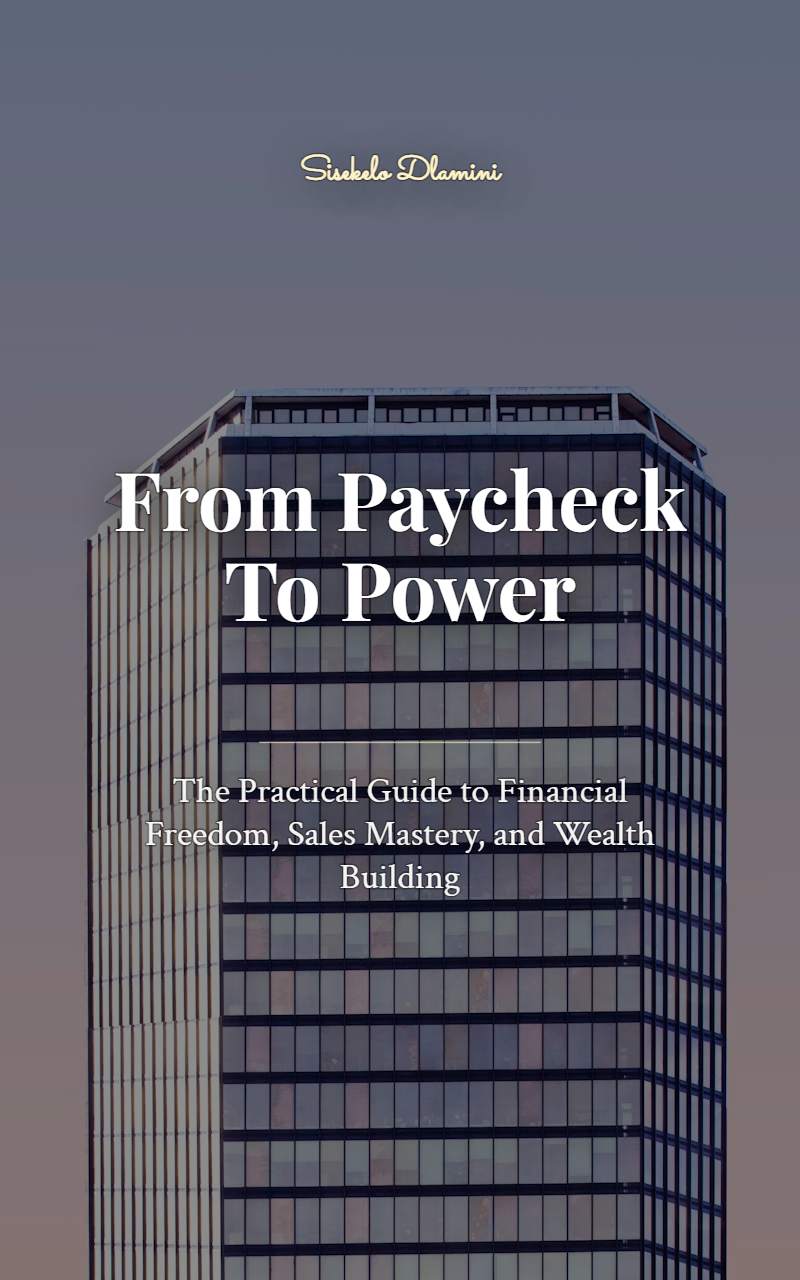
"From Paycheck To Power" is a finance book by Sisekelo Dlamini with 5 chapters and approximately 4,471 words. Financial literacy, sales skills, business growth, and wealth building strategies.
This book was created using Inkfluence AI, an AI-powered book generation platform that helps authors write, design, and publish complete books. It was made with the AI Ebook Generator.
Frequently Asked Questions
What is "From Paycheck To Power" about?
Financial literacy, sales skills, business growth, and wealth building strategies
How many chapters are in "From Paycheck To Power"?
The book contains 5 chapters and approximately 4,471 words. Topics covered include THE TRUTH ABOUT MONEY, FINANCIAL MINDSET & BEHAVIOR, MASTERING YOUR MONEY, THE POWER OF CASHFLOW, and more.
Who wrote "From Paycheck To Power"?
This book was written by Sisekelo Dlamini and created using Inkfluence AI, an AI book generation platform that helps authors write, design, and publish books.
How can I create a similar finance book?
You can create your own finance book using Inkfluence AI. Describe your idea, choose your style, and the AI writes the full book for you. It's free to start.
Write your own finance book with AI
Describe your idea and Inkfluence writes the whole thing. Free to start.
Start writingCreated with Inkfluence AI


