
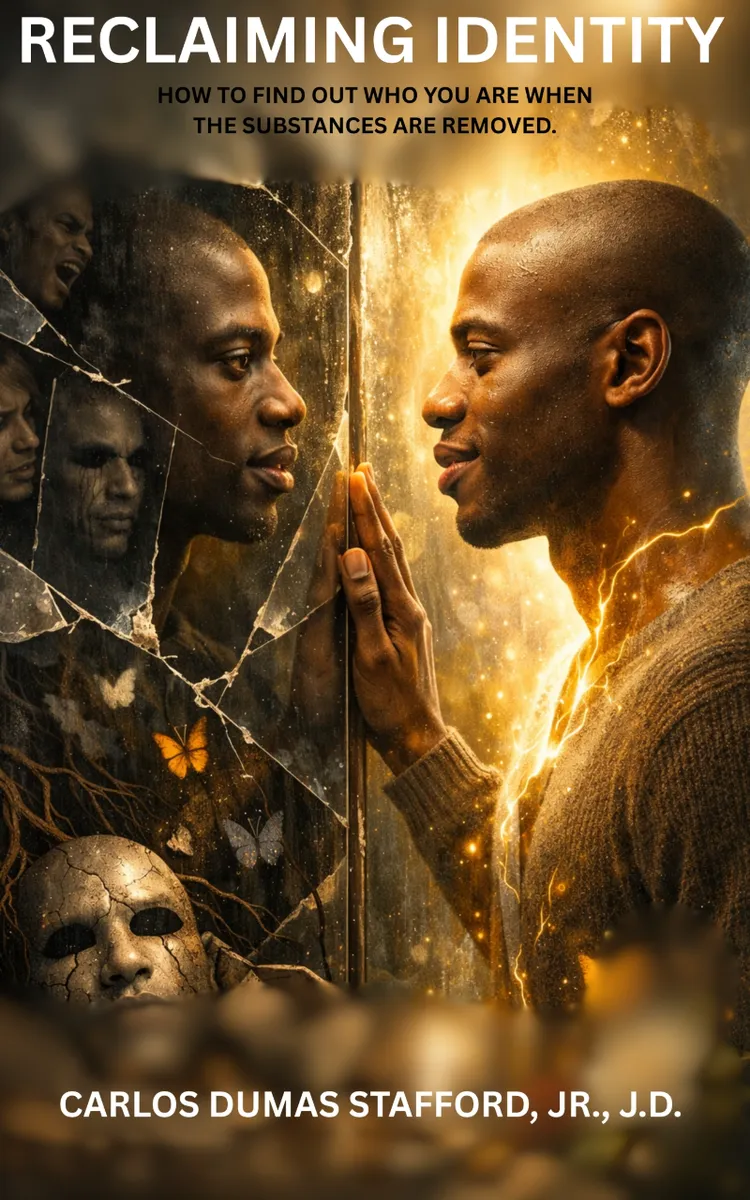
Reclaiming Identity
Created with Inkfluence AI
Your brain may be calling the old story “you,” even when you know you are trying to change. One day you are doing the right steps, showing up, staying on your taper plan, and still feeling like your identity is stuck in the past, like the only plot it knows is what you used. Reclaiming Identity helps you separate who you are from what you did, so recovery stops feeling like erasing yourself and starts feeling like building a life. You will learn how substances become identity shortcuts, how belief systems keep the cycle running, and how shame can set up the next choice. If you are ready to stop arguing with cravings and start rewriting the labels your mind uses, this book is your next step.
Table of Contents
- 1. Mapping Your Identity Beyond Substances
- 2. Rewriting Beliefs That Kept You Using
- 3. Breaking the Shame Loop With Self-Compassion
- 4. Building Boundaries Without Guilt
- 5. Designing Routines That Replace the High
- 6. Communicating Needs With the CARE Method
- 7. Practicing Urge Surfing for Identity Stability
- 8. Choosing Purpose Through Values-Based Goals
Preview: Mapping Your Identity Beyond Substances
A short excerpt from “Mapping Your Identity Beyond Substances”. The full book contains 8 chapters and 13,954 words.
The Name You Forgot You Had (and the one you keep answering to)
Tanya, 34, ER nurse on a taper plan, can clock into work and still feel like she’s wearing the wrong name tag. Not because she’s confused about her job. She knows her job. She can read a monitor, talk a patient through fear, and joke at the right moment. But later - when the shift slows down and the adrenaline fades - she catches herself thinking, So… what am I without this?
On her hardest days, the answer comes out automatic: I’m the person who did what I did. The substance becomes the headline, even when she’s trying to make it a background character. She’ll sort her pills, set her alarm, do the “right” steps… and still feel like her identity is stuck in the past, like she’s living in a story that only has one plot.
How do you tell the difference between who you are and what you used - especially when your brain keeps calling the old story “you”?
---
The Identity Layers Map: Separating “Me” From “What I Used”
Here’s the tug-of-war most people don’t talk about: substances don’t just change behavior. They change the label your mind uses for you. They become a shortcut - fast, familiar, and emotionally loaded. That shortcut can look like truth, even when it isn’t.
Old Belief: “If it was in my life, it’s part of my identity.”
New Reality: “What I used was something I did. My identity is bigger - and it can be mapped into layers that still belong to me.”
When Tanya starts her taper, she thinks she has to “replace” the thing she’s reducing. But the real shift is different. Instead of trying to erase the old chapter, she starts sorting it. Not with shame, not with denial - just with clarity. She begins building what I call the Identity Layers Map, a way to separate identity from substance history so you can see the parts of you that were running even before you used, and the parts that are still forming now.
For example, Tanya notices something small but loud: when she’s steady enough to focus, she’s careful and direct. She’s the nurse who explains things in plain language. When she’s shaky, she becomes more guarded and forgetful. The substance didn’t invent her personality - but it changed which parts got access. Once she can see that, she stops treating every emotion as a verdict about her “real self.”
And when she has a rough day, she can say, That’s a pattern my brain is using right now. Not, That’s who I am. That one sentence is the difference between spiraling and adjusting.
---
Why Your Brain Confuses “History” With “Identity”
Substances are sticky for a reason. They don’t just provide relief; they also become a coping tool your brain learns to trust. Over time, your mind starts linking “relief” with “me” - because the brain loves shortcuts. If you felt better after using, then using becomes part of the identity story: I am the kind of person who does that.
Then comes the second trap: when you remove or reduce something, your brain doesn’t only lose a substance. It loses a familiar way to regulate. So it starts asking, “If I’m not doing that, what am I?” That question can turn into panic because identity feels like it’s slipping. But identity isn’t a glass you drop and shatter. It’s more like a map that needs updating.
Tanya’s shift happens when she stops arguing with the old label and starts checking it. She asks: What layer am I in today? What’s the part of me that still shows up, even when the taper feels heavy? The “who” becomes observable instead of theoretical.
Signs this pattern is running your life
1. You introduce yourself using the substance. Even silently, you think of yourself as “the person who can’t…” or “the person who used to…”
2. Every mood becomes identity evidence. If you’re anxious, you conclude you’re “an anxious person,” instead of asking what’s happening in your system.
3. You measure progress by how much you crave, not by how you live. Cravings feel like a scoreboard for your worth.
4. When you change, you feel like you’re betraying yourself. Like reducing is cutting off “the real you,” even though it’s also bringing you back to more you.
Your identity isn’t erased when you reduce - it’s revealed in layers.
---
Getting Specific: The Identity Layers Map (What You’re Really Updating)
The Identity Layers Map is a simple way to separate “who you are” from “what you used,” without pretending your past didn’t matter. You’re not rewriting history - you’re sorting it.
Think of your identity as layers that can show up differently depending on your current season, stress level, sleep, and supports. Your substance history might have influenced some layers, but it doesn’t get to own all of them.
Start with four layers. Keep it practical - no poetry required.
Layer 1: Core Values (what you care about even when you’re not feeling great).
This is the “always” layer....
About this book
"Reclaiming Identity" is a self-help book by Carlos Dumas Stafford, Jr., J.D with 8 chapters and approximately 13,954 words. Your brain may be calling the old story “you,” even when you know you are trying to change. One day you are doing the right steps, showing up, staying on your taper plan, and still feeling like your identity is stuck in the past, like the only plot it knows is what you used.
This book was created using Inkfluence AI, an AI-powered book generation platform that helps authors write, design, and publish complete books. It was made with the AI Self-Help Book Writer.
Frequently Asked Questions
What is "Reclaiming Identity" about?
Your brain may be calling the old story “you,” even when you know you are trying to change. One day you are doing the right steps, showing up, staying on your taper plan, and still feeling like your identity is stuck in the past, like the only plot it knows is what you used. Reclaiming Identity helps you separate who you are from what you did, so recovery stops feeling like erasing yourself and starts feeling like building a life. You will learn how substances become identity shortcuts, how belief systems keep the cycle running, and how shame can set up the next choice. If you are ready to stop arguing with cravings and start rewriting the labels your mind uses, this book is your next step.
How many chapters are in "Reclaiming Identity"?
The book contains 8 chapters and approximately 13,954 words. Topics covered include Mapping Your Identity Beyond Substances, Rewriting Beliefs That Kept You Using, Breaking the Shame Loop With Self-Compassion, Building Boundaries Without Guilt, and more.
Who wrote "Reclaiming Identity"?
This book was written by Carlos Dumas Stafford, Jr., J.D and created using Inkfluence AI, an AI book generation platform that helps authors write, design, and publish books.
How can I create a similar self-help book?
You can create your own self-help book using Inkfluence AI. Describe your idea, choose your style, and the AI writes the full book for you. It's free to start.
Write your own self-help book with AI
Describe your idea and Inkfluence writes the whole thing. Free to start.
Start writingCreated with Inkfluence AI


