
Read the first chapter
The whole of chapter one, free. About 12 min. Turn the pages with the arrows, your keyboard, or a swipe.
Chapter 1
Speakeasy Nights in 1940s New Orleans
The basement stairs at the back of Rampart Street sweated through every season, and that night the air tasted of rye and wet wool. I could hear the piano before I saw it-two keys clacking too hard, then a slow settling, like a man finding his balance after a long walk. From the doorway I caught the glow of a single bulb and the smear of cigar smoke across the crowd’s faces. Somebody in the room laughed low, the kind of laugh that didn’t want to be heard upstairs, and the bandleader-if you could call him that-asked me without looking up from his sheet music, “You got it tonight, kid?”
I was twenty then, maybe twenty-one if you counted the months by how tired I felt. My hands still looked young when I held them over the keys, but they already carried the stiffness of practice-knuckles that ached when the weather turned, wrists that tightened if I went too long without sitting at a bench. I had come in from a day of odd work, carrying something heavy up and down Bourbon’s side streets, my shoes damp with street water. The music pulled at me the way the river wind pulled at loose shutters. I nodded, because nodding was easier than explaining how badly I wanted to be the kind of pianist who could make a room forget it was living under rules.
The piano sat on a platform that had been built to look steady. It wasn’t. When I leaned forward, the wood gave a small complaint under my weight, and the sound came out slightly dull at first, muffled by old felt and the years of spilled drinks. I pressed a chord anyway, just to test the room. The chord rang, then changed-sharpened, brightened-like the instrument had been waiting for a reason to wake up. The bass line from the corner drifted toward me, and the drummer tapped a brush rhythm on the rim of his snare, keeping time the way a man keeps a secret.
“Play what you know,” the bandleader said. He slid his pencil behind his ear and finally met my eyes. “But don’t make it plain. Folks been through a long day.”
I started with something I’d learned to survive on-left hand walking, right hand telling stories in smaller sentences. The melody came out careful, then quicker, as if I could coax the notes into moving faster than my nerves. A woman in a green dress-her lipstick a little too perfect for a place like this-turned her head toward the piano and smiled without showing teeth. Near the bar, a man with a hat too nice for his coat tapped ash into a saucer and leaned forward on his stool. The room listened the way people listen when they’re pretending they aren’t.
When I stumbled on a turn that I’d practiced a hundred times, I felt the bench shift and my stomach tighten. The bandleader made a sound-half click of his tongue, half warning-and I corrected myself on the next bar. The drummer grinned at the mistake like it was part of the music. I kept going, letting the wrong note become a bridge instead of a wall.
After the set, when my hands were warm and my shirt stuck to my back, I wiped them on a towel that smelled faintly of lemon and old sweat. The bandleader wiped his face with his sleeve and leaned in close, his breath carrying coffee and something sharper. “That’s different,” he said. “You listen while you play. You don’t just lay it down.”
“I been trying to,” I answered, and the truth of it made my voice sound rougher than I intended.
He watched me for a moment. Then, like he couldn’t help himself, he added, “You got to learn the place. Every room got its own kind of trouble.”
I didn’t ask what kind. In those days you learned to let men speak around what they couldn’t say directly. New Orleans didn’t explain itself; it just offered you streets, smells, and rhythms until you understood.
• * *
The first speakeasy I’d worked-if you could call it work-wasn’t one of the bigger rooms people talked about. It was a cellar behind a storefront that sold cheap watches and church hats, the kind of place where the front stayed bright but the back stayed dim. I’d found it through a friend of a friend, a trumpet player who said he needed somebody who could read enough to keep the band from falling apart. He didn’t say why he couldn’t do it himself. He didn’t have to. The smell of the place told you plenty: damp brick, spilled beer, and that sweet, stale perfume that lingered after women had gone home.
The piano there had been battered, its keys worn down by years of hands. When I sat, I felt the rough edge of one key under my finger like a small snag in a stream. The bench was too low, and every time I pressed the pedal it squeaked like it wanted attention. I adjusted anyway, because adjusting was what kept you from embarrassing yourself in front of men who’d come to hear money and forget it.
That night the band ran through a tune I knew, then another, and then the leader said, “You-start us off on this one.” He pointed at a sheet that looked like it had survived a flood. I tried to read it, but the paper trembled in my hands from the room’s heat. Somebody brushed past me and I caught the smell of their coat-rainwater and tobacco-before they disappeared again into the crowd.
I swallowed and counted under my breath. The first measure came out shaky. The second measure steadied. By the third, I was riding the rhythm instead of chasing it. A man at the edge of the room clapped on two and four, then stopped himself, like he remembered where he was. A woman’s bracelets chimed softly when she moved her shoulders to the beat. The drummer’s brush work changed slightly, and I matched it without thinking-sliding my right hand into the space he made.
During a break, the trumpet player leaned close and said, “You got to make it fit. They don’t want a show. They want a night.”
I looked at him, confused. “A night?”
He shrugged, but his eyes didn’t. “They already living in the day. The night got to be different. Like taking off your shoes at the door.”
I understood it slowly, the way you understand something after you’ve repeated it enough times. I wasn’t just playing notes. I was shaping the room’s temperature, its mood, the way people’s shoulders loosened when the melody found a safe place to land.
The obstacle wasn’t the keys or the reading. The obstacle was the expectation that a pianist could be both steady and invisible. In a speakeasy, you needed to keep time without calling attention to yourself. You had to be the floor under everybody’s dancing, the chair that didn’t wobble, the lamp that didn’t flicker. If you got too fancy, men would call you upstart. If you got too plain, women would look bored. So I learned to bargain with my own instincts, to let my playing be flexible without losing its spine.
Still, I made mistakes. Sometimes I played too hard, and the sound pressed down on the room like rain. Sometimes I held back, and the band felt like it was waiting for me to decide what song we were in. The leaders didn’t yell. They didn’t have to. Their silence could correct you faster than any scolding.
After one rough rehearsal-hands cold, fingers clumsy from a late shift-I walked home along Canal, the night air damp enough to feel like cloth against my face. I passed a storefront window where a radio was playing faintly through the glass, a brighter kind of jazz from somewhere else. It sounded clean, almost polished, like something designed for daytime listeners. I stood there a moment, hearing the difference, and felt a quiet shame I didn’t want to admit.
I wanted to be good in the way musicians in recordings were good. I wanted elegance that stayed perfect. But the speakeasies didn’t reward perfection. They rewarded accuracy under pressure, the ability to keep a room moving when the night got restless.
• * *
The shift came in a small exchange after a set that had run longer than anyone planned. My hands were tired in that deep way that meant the muscles had learned something new and didn’t want to lose it. The bandleader-different from the first one, because in New Orleans the names changed as often as the gigs-came over to the piano with his hat tilted back.
“Your left hand,” he said, tapping the air near my wrist. “It keep them from drifting.”
I wiped sweat from my forehead. “I been working on it.”
He shook his head. “Not working. Listening. When the drummer gets ahead, you pull him back. When he lags, you push him. That’s why they stay.”
I didn’t know what to say, because he’d put a feeling into words I’d never spoken aloud. I’d been doing it without realizing I was doing it. In my mind, I’d thought of the piano as a place to speak my own language. But in his words, it became a conversation-one that answered the room’s needs.
Then he leaned closer and lowered his voice, not for secrecy exactly, but because the walls carried everything. “You want a steady job? Stop trying to impress everybody. Impress the ones who decide if you come back.”
I glanced toward the bar. There were men there whose suits looked like they’d been borrowed for the night. They watched with the careful attention of gamblers. I’d avoided them before, afraid their attention would turn into a demand I couldn’t meet. Now I noticed how they listened: not to the fancy runs, but to how the band held together when the room got loud.
When my night ended and the band began to pack up, one of those men-tall, with a cigar he never seemed to light-called out, “Pianist. You coming next week?”
My first instinct was to say yes. A yes meant rent paid, meant food, meant the chance to keep learning. But I stopped myself. I didn’t want a promise that would trap me in a job I couldn’t stand.
The man’s eyes stayed on mine. His mouth didn’t move much when he spoke. “Don’t give me maybe.”
The bandleader answered for me, quick and calm. “He’s here when he says he’s here. That’s why we keep him.”
I felt heat rise in my chest-not just pride, but relief. It was the first time in a long while I’d felt like my work could be counted on. That realization-steady, not flashy, reliable-changed how I played the next week. I didn’t chase the crowd. I guided them.
I began to shape my introductions, shorter and clearer, so the band could lock in quickly. I started leaving space in the middle of a tune, letting the horns breathe and the dancers fill the gap with their own motion. When I improvised, I kept the phrases connected, like streets that didn’t dead-end. The room responded. People moved closer to the piano, and the laughter sounded less forced. Even the men who’d watched like judges seemed to relax their shoulders.
Looking back, I now understand that the first big lesson wasn’t about music at all. It was about trust-earning it one night at a time until strangers stopped treating you like a risk. In speakeasies you didn’t get to be only talented. You had to be dependable. You had to make the night feel safer, even as everyone knew the world outside wasn’t.
And I learned something else, quieter: that my playing didn’t have to be loud to be important. A pianist could be the hinge that made a room swing open to joy. I began to measure success by how the last song ended, not by how the first one started. If the band could leave the stage with the same rhythm they’d entered, if the crowd felt like they’d gotten what they came for, then I’d done my job.
The obstacle stayed, though. The speakeasy life never guaranteed a future. Men got arrested, liquor ran out, jobs shifted to other rooms where somebody else had a connection. But after that first recognition-after I saw that the people with power listened for steadiness-I stopped chasing every opportunity like it might disappear the second I blinked.
Instead, I guarded my craft. I treated every rehearsal like it mattered. I practiced until the keys felt like part of my body, until my left hand could keep walking even when my mind wandered. I watched drummers and horn players the way you watch weather on the river. If the room got restless, I changed the tempo without announcing it. If the crowd grew tired, I warmed up the harmonies until the air felt lighter.
One night, months later, I sat at the same battered piano as earlier and heard the same rough complaint from the bench when I lowered myself. The bulb overhead flickered once, then held. The smell of cigar smoke and spilled beer rushed up as if the room had been waiting for me. The bandleader from that early night nodded to the trumpet player, and the trumpet player nodded back to me.
“Let’s see what you got,” someone called from the back, not unkindly-more like a test you were supposed to pass without making a show of it.
I placed my hands on the keys and listened. The drummer’s sticks tapped, the bass murmured under the melody, and the crowd’s sound settled into a single rhythm as if it had always been there. I started with something simple, then let it open. The room responded the way a good song does: not with surprise, but with recognition.
When the tune ended, there wasn’t a rush of applause like at a concert hall. Instead, I heard the soft talk return, the clink of glasses, the steady insistence of the night continuing. It was the kind of quiet approval you only get when people feel comfortable enough to stop performing for each other.
I walked home after midnight with my fingers still warm from the keys, the street air cooling my skin. The city’s sounds followed me-distant music, a car horn, footsteps on wet pavement. I thought about that moment at the bar when the man had asked if I was coming back. I had answered with more than a yes. I had answered with the way I played: listening first, then leading.
In the years that followed, I would learn how many pianists got lost in the shuffle, how many talents never found the right room at the right time. But that was later. For now, in 1940s New Orleans, the speakeasy nights had become my school, and the piano bench had become my proof. I could still feel the wobble under me-proof that even imperfect things could hold a rhythm if you treated them with care.
End of chapter one.
Swipe or use the arrows to turn the page
What's inside: 1 chapter
- 1. Speakeasy Nights in 1940s New Orleans
About this book
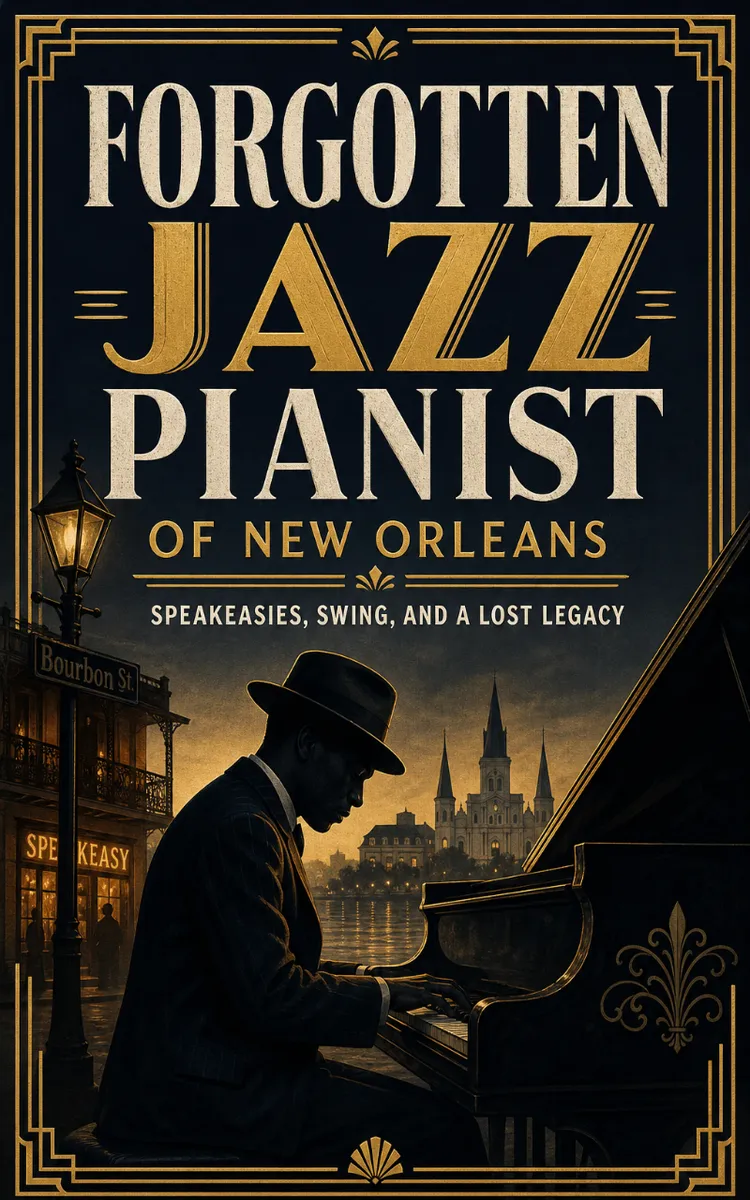
"Forgotten Jazz Pianist Of New Orleans" is a biography book by Anonymous with 1 chapters and approximately 2,537 words. Life story of a forgotten jazz pianist in 1940s New Orleans.
This book was created using Inkfluence AI, an AI-powered book generation platform that helps authors write, design, and publish complete books. It was made with the AI Biography Writer.
Frequently Asked Questions
What is "Forgotten Jazz Pianist Of New Orleans" about?
Life story of a forgotten jazz pianist in 1940s New Orleans
How many chapters are in "Forgotten Jazz Pianist Of New Orleans"?
The book contains 1 chapters and approximately 2,537 words. Topics covered include Speakeasy Nights in 1940s New Orleans.
Who wrote "Forgotten Jazz Pianist Of New Orleans"?
This book was written by Anonymous and created using Inkfluence AI, an AI book generation platform that helps authors write, design, and publish books.
How can I create a similar biography book?
You can create your own biography book using Inkfluence AI. Describe your idea, choose your style, and the AI writes the full book for you. It's free to start.
Write your own biography book with AI
Describe your idea and Inkfluence writes the whole thing. Free to start.
Start writingCreated with Inkfluence AI


