
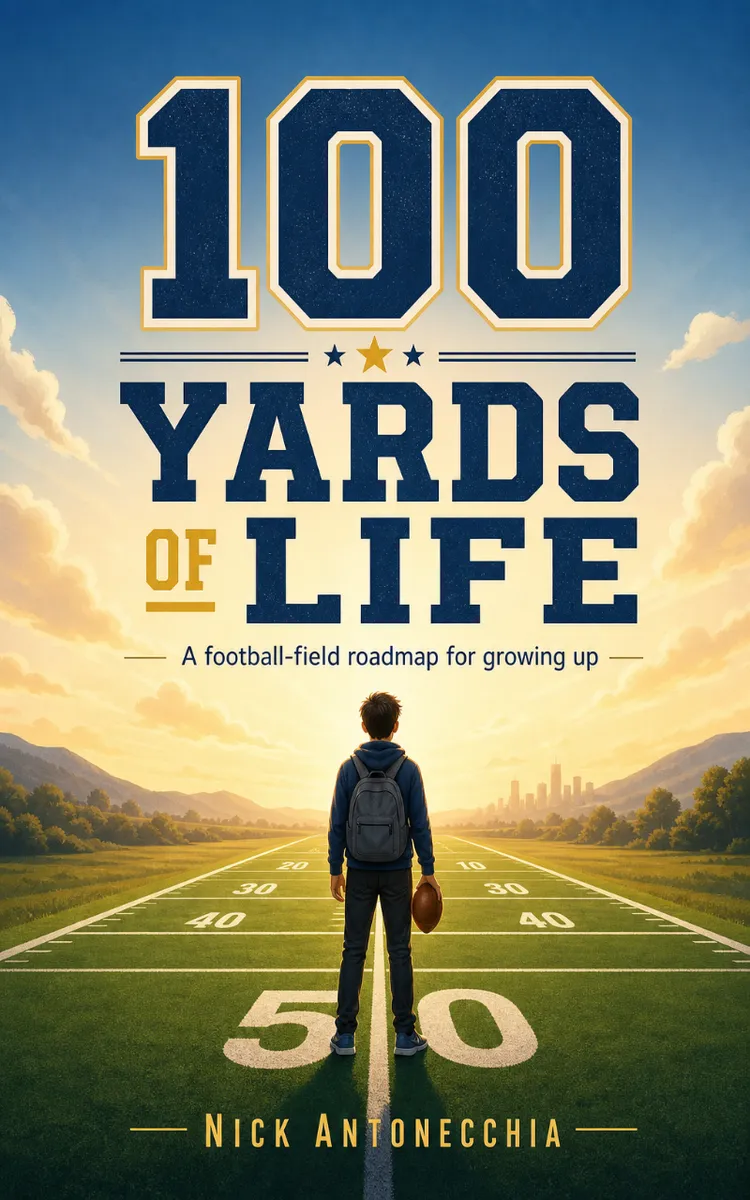
100 Yards Of Life
Created with Inkfluence AI
Life stages mapped in 10-year increments for personal planning
Table of Contents
- 1. Becoming a Person Before Everything
- 2. Choosing the Right Track in High School
- 3. Marriage and Parenting With Shared Values
- 4. Maximizing Income While Building Wealth
- 5. Red Zone Legacy: Health, Memory, Transfer
Preview: Becoming a Person Before Everything
A short excerpt from “Becoming a Person Before Everything”. The full book contains 5 chapters and 7,716 words.
The First Ten Yards: Where the Playbook Begins
Tanya was nine, in fourth grade, and already learning that responsibility rarely arrives with a marching band. It showed up as a library book left under the couch, a lunch container forgotten in her desk, and a promise to feed the dog before school. None of those moments looked important by themselves. Still, each one gave her a small choice: blame somebody else, hide the mistake, or own it and fix it.
One afternoon, Tanya’s teacher returned a worksheet with a note at the top: “You rushed.” Tanya felt her face get hot. Her first instinct was to say the questions were confusing. Instead, she took the paper home, circled the problems she had skipped, and tried them again before dinner. That was more than homework. It was an early vote for the kind of person she wanted to become.
The first ten yards don’t decide every play, but they teach you how to line up.
Before you chase success, you learn who is carrying the ball.
The Identity Shift That Changes the Game
Old Belief: Childhood is mainly about learning rules, facts, and skills.
New Reality: The first ten yards are where you begin building your lifelong playbook - your identity, values, and self-control.
A child doesn’t simply learn that homework must be done or that a room should be cleaned. A child starts forming an answer to a deeper question: “What kind of person am I when nobody is standing over me?” Every repeated choice helps write that answer.
Tanya’s worksheet gave her a chance to practice more than accuracy. She practiced responsibility. When she admitted she had rushed, she strengthened honesty. When she tried again instead of quitting, she strengthened persistence. These qualities can look small at nine, but they become useful equipment later - at a first job, in a marriage, while raising children, or when running a business.
The important shift is from “I have to do this” to “This is what I do because of who I am.” A child who only cleans a room to avoid punishment may stop when the parent leaves. A child who begins to see herself as responsible is more likely to notice the mess and handle it without a whistle blowing.
That doesn’t mean children become perfectly disciplined. Neither do adults. It means the early years provide repetitions. And repetitions become habits. Habits become evidence. Evidence shapes identity.
The 10-Yard Identity Ladder
The 10-Yard Identity Ladder is a way to see how early choices climb into lifelong character. The first rung is awareness: noticing what happened. The next is ownership: admitting your part. Then comes choice: deciding what to do next. With repetition, those choices become identity.
This is why self-control is not just about saying no to candy or waiting your turn. It’s the ability to pause between a feeling and an action. Tanya felt embarrassed by the teacher’s note. She could have argued, hidden the paper, or pushed the blame toward the worksheet. Instead, she paused long enough to choose a better response.
That pause is a muscle. It gets stronger through ordinary practice: putting away equipment after practice, telling the truth about a broken item, saving part of an allowance, or finishing a task before grabbing the tablet. These moments teach the brain, “I can manage myself even when I don’t feel like it.”
Here are signs the pattern is running your life:
1. You explain mistakes before you admit them. The story comes out quickly: traffic, a coworker, a customer, a parent. Sometimes those things matter. But if responsibility never reaches your side of the field, the old play is still running.
2. You keep promises only when someone checks. Your behavior depends on the audience. Once supervision disappears, so does the commitment.
3. You confuse a feeling with an instruction. You feel angry, so you lash out. You feel tired, so you abandon the task. You feel nervous, so you avoid the conversation.
4. You describe yourself with permanent labels. “I’m just careless.” “I’ve never had discipline.” A label can feel honest while quietly becoming an excuse not to practice a different response.
Your early identity becomes powerful when repeated choices make it feel normal.
The good news is that a playbook can be edited. You don’t need to erase every old habit before you begin. You need one honest repetition at a time. The same ladder that shaped you early can help you rebuild now: notice, own, choose, repeat.
Looking Back at the Player You’re Becoming
1. What did adults praise or punish in you when you were young?
Maybe being quiet earned approval, while asking questions caused trouble. Notice whether that old lesson still affects your choices. A person who learned to avoid mistakes may now avoid opportunities, too.
2....
About this book
"100 Yards Of Life" is a self-help book by Nick Antonecchia with 5 chapters and approximately 7,716 words. Life stages mapped in 10-year increments for personal planning.
This book was created using Inkfluence AI, an AI-powered book generation platform that helps authors write, design, and publish complete books. It was made with the AI Self-Help Book Writer.
Frequently Asked Questions
What is "100 Yards Of Life" about?
Life stages mapped in 10-year increments for personal planning
How many chapters are in "100 Yards Of Life"?
The book contains 5 chapters and approximately 7,716 words. Topics covered include Becoming a Person Before Everything, Choosing the Right Track in High School, Marriage and Parenting With Shared Values, Maximizing Income While Building Wealth, and more.
Who wrote "100 Yards Of Life"?
This book was written by Nick Antonecchia and created using Inkfluence AI, an AI book generation platform that helps authors write, design, and publish books.
How can I create a similar self-help book?
You can create your own self-help book using Inkfluence AI. Describe your idea, choose your style, and the AI writes the full book for you. It's free to start.
Write your own self-help book with AI
Describe your idea and Inkfluence writes the whole thing. Free to start.
Start writingCreated with Inkfluence AI


