
Read the first chapter
The whole of chapter one, free. About 8 min. Turn the pages with the arrows, your keyboard, or a swipe.
Chapter 1
Understanding the Fundamentals of Which Was And Is To Be
Which Was And Is To Be
“Laurence Guidry “
The Opening
One of the strangest things about the Ethiopian apocryphal Bible isn’t just what it claims-it’s how confidently it stitches together heaven, cosmic weather, and human history like they’re all part of the same machine. In The Book of Enoch, snow, hail, and lightning aren’t random forces; they’re stored, measured, and released from specific places in the sky, governed by a moral cosmos that doesn’t take “mystery” as an answer.
And here’s the paradox: these texts are wildly dramatic-giant angels, chained rebels, flaming thrones-but the “fundamentals” underneath them are oddly consistent. They treat the world as structured, not merely enchanted; as meaningful, not merely supernatural. Even when Enoch goes for the throat with visions of heaven and hell, it’s still trying to explain the same underlying question: what kind of reality are we actually standing in?
This chapter focuses on the fundamentals of Which Was And Is To Be -the idea that the past, present, and future aren’t separate rooms. They’re connected through an order the texts believe God set in motion, and that other spiritual powers try to twist. We’ll trace how Ethiopian writers-especially in Enoch and Jubilees, with their thunderous end-time visions-lay out a cosmos where the “now” is never just now.
If heaven is organized like a kingdom, what does that say about the chaos we call ordinary?
The Deep Dive
Heaven as a System, Not a Mood
When modern people talk about heaven, they often picture a place of peace-soft light, gentle music, the end of worry. Ethiopian apocryphal traditions, especially The Book of Enoch, keep that spiritual tone but add something sharper: heaven functions like a structured realm with locations, boundaries, and responsibilities.
In Enoch’s tour, the sky is not a flat ceiling. It’s layered. The writer describes multiple heavens, each with its own purpose-storehouses and guardians, appointed roles, and consequences. The most memorable piece for many readers is the way cosmic “weather” becomes administrative. Snow, hail, and lightning are handled as if they were physical items being carried out from a warehouse. That detail sounds like fantasy until you notice what it’s doing: it turns the natural world into evidence.
This is the key fundamental: reality is governed. Not governed like a metaphor, but governed like a kingdom. The text assumes that if God made order, then order leaves fingerprints. Even storms, on this view, are not just weather-they’re part of a moral architecture.
That outlook isn’t random. Ancient Jewish and early Christian thought often treated the heavens as a populated space-liturgical, angelic, and busy. But Enoch takes that older imagination and makes it vivid enough that you can almost feel the gears turning. The heavens aren’t quiet; they’re active, staffed, and accountable.
The Moral Physics of Creation and Rebellion
For Enoch, the universe isn’t only built-it’s policed. The famous story of the Watchers makes that plain. These are angelic beings who don’t stay in their assigned place. They descend, break boundaries, and the consequences spill into the human world in a way that feels both terrifying and bluntly causal: the Watchers’ corruption leads to monstrous offspring- the Nephilim -and then to widespread violence and disorder. The world doesn’t just “suffer spiritually.” It fractures socially, biologically, and morally, as if the wrong forces got into the wrong system.
Then The Book of Jubilees brings the same logic with a different angle. Jubilees retells Genesis but with added emphasis on the hidden timeline behind visible events. It treats creation as deliberate scheduling, and it pushes the idea that angels are involved from the beginning-something like a cosmic workforce that God established early. When the flood comes, Jubilees doesn’t leave it hanging as a general judgment. It ties it directly to the corruption and the giants that the Watchers’ actions helped unleash.
If you’re expecting “miracle” without mechanism, these books resist you. They offer what you might call moral physics: wrong actions don’t stay in the heart. They create fallout. A boundary crossed in the spiritual realm becomes a catastrophe on earth.
This matters for our theme- Which Was And Is To Be -because it frames time as accountable. The past is not dead; it keeps generating effects. The present is not neutral; it’s part of a chain reaction. And the future isn’t uncertain; it’s the next stage of the same moral order.
A single sentence fact shows the difference between a “mood” view of religion and this one: in these Ethiopian texts, heaven and earth are not separate realities with no contact. They’re interlinked, and when that link gets corrupted, the damage is measurable in the story.
Time Divided: Why “Now” Feels Like a Date on a Calendar
One of the most distinctive “fundamentals” in Jubilees is its obsession with time as structure. Jubilees divides history into precise periods called jubilees, each lasting 49 years. That number isn’t there for decoration. It’s a way of teaching that history moves in rhythms-measured, meaningful, and not random.
You can see what this does to the reader’s mind. If history is sectioned like a ledger, then God’s plan is not a vague destiny. It’s a timeline. The past isn’t merely remembered; it’s categorized. The present isn’t merely endured; it’s located. The future isn’t merely feared; it’s expected.
This is where the phrase Which Was And Is To Be starts to feel like more than a title. It implies a continuity so tight that the “was” already contains the “is,” and the “is” is already leaning toward “to be.” In other words, the story of the world isn’t a random collection of events-it’s a connected narrative with a direction.
The Ethiopian apocryphal writers often pair that timeline thinking with intense end-time hope. Jubilees paints a vision of a new heaven and new earth where sin no longer governs. People live far longer in peace, and the righteous enjoy eternal life. You can read those promises as comfort, yes-but also as a statement about order. The future, on this view, isn’t chaos with prettier lighting. It’s the same moral system finally healed and completed.
Worship, Power, and the Coming Reckoning
If Enoch and Jubilees give you cosmic structure and time structure, the Meqabyan books push the structure into the human arena. They focus on spiritual warfare where worship is the battleground. Satan’s pride is central: the refusal to bow to Adam becomes the original fracture-rebellion against God’s authority. From that starting point, the story develops into struggles against evil rulers and idols.
Even without turning these into modern political stories, the fundamentals are clear: worship isn’t only private devotion. It’s allegiance. It’s the way reality sorts who belongs to God’s order and who belongs to the counterfeit order.
3 Meqabyan intensifies that theme by bringing in the coming resurrection, and by treating the conflict as something that will end, not something that will just fade. Resurrection in this framework isn’t a random “after” event. It’s the final correction-when the moral order is publicly confirmed and the last lie gets shut down.
Put these together-Enoch’s heavens, Jubilees’ timeline, Meqabyan’s worship-and-war-and you get a consistent worldview: the universe is ordered, rebellion has consequences, time is structured, and worship is the decisive front.
That’s the foundation beneath all the wild scenes. The drama isn’t decoration. It’s the delivery system for a claim about how existence works.
What You Did Not Expect
The surprise is that the “wildest” parts-Enoch’s multi-heaven tour with storehouses for storm forces and chained rebel angels-aren’t only meant to shock you into fear or awe. They function like a worldview map. The geography of heaven is basically the text’s way of saying: the unseen is not vague. It has locations, roles, and rules.
That changes how you understand the genre. Instead of treating apocryphal visions as unrelated stories of wonder, you start seeing them as explanations of reality. Even the most intense imagery-like rebel angels hanging in a state of judgment-pushes the same fundamental point: the spiritual world is not just “there.” It’s arranged, and it interacts with history.
So when you read “Which was and is to be,” the phrase stops sounding like poetic phrasing and starts sounding like an insistence: past, present, and future are stitched into one accountable system.
The Human Story
The Ethiopian apocryphal books didn’t stay trapped in scrolls. They traveled with communities, sermons, and teaching, shaping how people talked about heaven, judgment, and hope. You can feel that in the way these traditions preserve dramatic images because images teach what plain speech sometimes can’t.
One concrete place to see this is in the Ethiopian church world where the apocrypha-alongside the canonical Bible-fed the imagination of believers. People didn’t need a scientific lab to grasp the point; they needed a mental picture. Enoch’s heavens with their stored storms made it easier to talk about God’s control over daily life. Jubilees’ 49-year rhythms made it easier to talk about history as something that moves under a plan rather than under blind fate. The Meqabyan focus on worship in spiritual warfare gave language for why idols and pride felt so dangerous-not just socially, but cosmically.
Even if you’ve never visited a monastery or heard a chant, you can recognize the practical effect of this storytelling: it trains attention. When a community repeats the idea that rebellion spreads and time has structure, the people inside that community learn to interpret life through those lenses. The fundamentals become living habits of thought.
And that brings us back to the central mystery of Which Was And Is To Be. If heaven is organized and time is measured, then the human story isn’t drifting. It’s moving through a corridor with doors-some opened by obedience, some slammed shut by rebellion, and some only revealed at the end.
What This Tells Us
These Ethiopian apocryphal visions show something uncomfortable and human: people don’t just want answers; they want a world that makes sense. When ordinary life feels unpredictable, the mind reaches for structure-heavens with roles, calendars with rhythms, worship as allegiance-because structure is how we survive uncertainty without lying to ourselves.
They also reveal a deep social instinct. A story like Enoch’s doesn’t only describe the cosmos; it strengthens a community’s sense of what matters. Jubilees’ measured history and Meqabyan’s worship-and-war frame the stakes in a way that keeps people paying attention.
And that leaves a question that keeps echoing long after the visions fade: if reality is organized enough to be narrated like a map, what part of our daily life is already “Which was” and “is to be” at the same time-waiting for someone to notice?
End of chapter one. 7 more chapters in the full book.
Swipe or use the arrows to turn the page


What's inside: 8 chapters
- 1. Understanding the Fundamentals of Which Was And Is To Be
- 2. Getting Started with Which Was And Is To Be
- 3. Essential Skills for Which Was And Is To Be
- 4. Building Your Which Was And Is To Be Practice
- 5. Overcoming Common Which Was And Is To Be Challenges
- 6. Developing Deeper Which Was And Is To Be Knowledge
- 7. Refining Your Which Was And Is To Be Skills
- 8. Bringing It All Together for Which Was And Is To Be
About this book
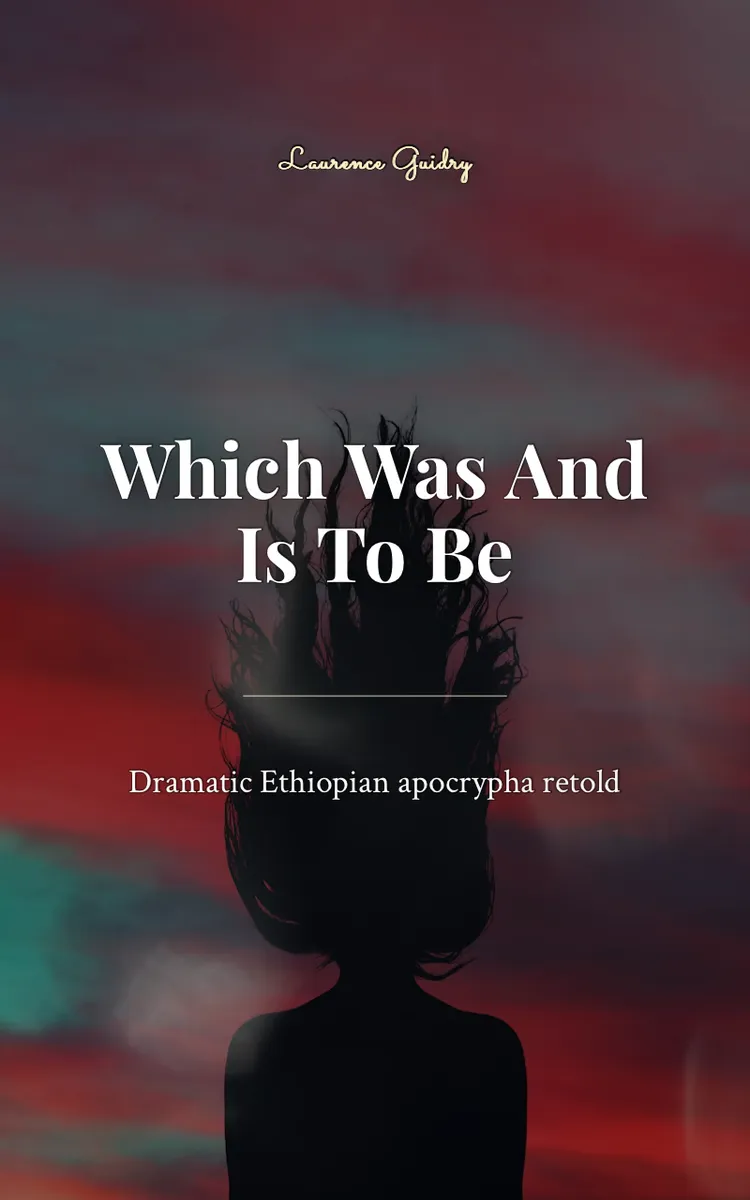
"Which Was And Is To Be" is a curiosity book by Laurence Guidry with 8 chapters and approximately 13,775 words. Exciting retellings of Ethiopian apocryphal biblical texts.
This book was created using Inkfluence AI, an AI-powered book generation platform that helps authors write, design, and publish complete books.
Frequently Asked Questions
What is "Which Was And Is To Be" about?
Exciting retellings of Ethiopian apocryphal biblical texts
How many chapters are in "Which Was And Is To Be"?
The book contains 8 chapters and approximately 13,775 words. Topics covered include Understanding the Fundamentals of Which Was And Is To Be, Getting Started with Which Was And Is To Be, Essential Skills for Which Was And Is To Be, Building Your Which Was And Is To Be Practice, and more.
Who wrote "Which Was And Is To Be"?
This book was written by Laurence Guidry and created using Inkfluence AI, an AI book generation platform that helps authors write, design, and publish books.
Write your own curiosity book with AI
Describe your idea and Inkfluence writes the whole thing. Free to start.
Start writingCreated with Inkfluence AI


