

Read the first chapter
The whole of chapter one, free. About 8 min. Turn the pages with the arrows, your keyboard, or a swipe.
Chapter 1
The Hidden Grammar in Everyday Speech
The Hidden Grammar in Everyday Rohingya Speech
A community radio producer in Cox’s Bazar once told me that the “same sentence” can sound finished or unfinished depending on how it lands in the ear - how it starts, where the stress falls, and which tiny sound stretches into the next word. For listeners, those cues feel like mood and intention; for speakers, they are grammar doing quiet work. The paradox is that the most ordinary talk - the kind people never record for study - often contains the sharpest rules.
This chapter follows that kind of rule from the ground up: not as abstract theory, but as the everyday choices Rohingya speakers make when they shape meaning. I focus on how speakers build sense through everyday word choices, sound patterns, and conversational rules - the small moves that don’t look like “language” until you notice they behave like one. Along the way, I use one anchor: Amina Rahman, 34, community radio producer, whose work turns speech into something shareable without turning it into something sterile.
The mystery is simple to state: if grammar is supposed to be visible on paper, why does it feel most decisive when it isn’t?
The Micro-Meaning Map of Word Choice and Sound
To understand Rohingya meaning in everyday speech, it helps to stop treating sentences as the main unit. In practice, speakers often negotiate meaning in smaller slices - phrases, word edges, and sound transitions. My working tool for tracking those slices is the Micro-Meaning Map, a way of describing how meaning is assembled from the smallest audible signals: the choice of a common word, the presence or absence of a particular sound, the rhythm of turn-taking, and the conversational expectations that tell a listener what kind of message this is.
Amina Rahman’s studio work makes this visible. On community radio, recordings are edited for clarity, but the “clarity” listeners trust is not only about volume; it’s about whether the speech sounds like it belongs to the moment. When Amina selects clips, she listens for how Rohingya is packaged - how a speaker marks what is known, what is being emphasized, and what is being carried forward. Even when the topic is mundane - where a bus stops, how a family plans a gathering - meaning depends on micro-signals that are easy to miss if you only look at word-by-word translation.
That’s where the Micro-Meaning Map matters. It treats word choice as more than vocabulary. A speaker may pick one ordinary term instead of a near-synonym because it fits the social temperature of the situation: whether the statement is firm, tentative, respectful, or emotionally loaded. It treats sound patterns as more than pronunciation. In Rohingya, as in many languages of the region, small differences in timing, vowel quality, or consonant strength can help a listener infer boundaries - where one unit ends and another begins, and whether the speaker is concluding or continuing.
And it treats conversational rules as part of grammar, not a separate layer of “politeness.” A listener doesn’t only decode words; they also decode how the speaker is managing turns. If a response arrives with a delay, or attaches to the prior speaker’s phrasing, the listener reads it as alignment, disagreement, correction, or elaboration. In everyday talk, these moves are as systematic as any pattern you might find in a written text.
Sound as Meaning: Why Edges Matter More Than Headlines
People often think sound is just decoration - something you can ignore if you know the “real” words. Rohingya everyday speech resists that idea. A listener’s brain is built to notice edges: the start of a phrase, the end of a phrase, the stretch between them. Those edges are where sound patterns become meaning.
In the Micro-Meaning Map, sound sits at the boundary between what is said and what is understood. Consider how many languages use subtle cues to indicate whether a clause is complete, whether a speaker is asking a genuine question or making a statement in question form, or whether a speaker is moving from narration to explanation. Even without writing anything down, speakers learn these cues through repeated exposure. They don’t need a grammar book; they need thousands of conversations that train their ears.
Amina’s radio practice shows what that means. When she edits, she’s not only removing noise; she’s protecting the audible structure that tells listeners where emphasis belongs. If a clip cuts off too early, the listener can be left guessing whether the speaker was about to make a stronger claim, soften it, or switch topics. If the clip preserves the edge but changes the rhythm - by trimming silence incorrectly - listeners may hear the same words as different intentions. That is grammar by sound: the structure of meaning encoded in timing and transitions.
This is also why everyday speech can carry information that written forms flatten. Writing often standardizes spelling and punctuation, which helps readers decode meaning reliably. But in real conversation, there’s no punctuation button. Instead, speakers rely on prosody and sound cues to do the work. Rohingya speakers, like speakers everywhere, build a shared system for those cues - and the system is most visible when you pay attention to how people talk when nobody is performing.
A single sentence can be “the same” in vocabulary and still differ in meaning because the sound edges changed. That’s not an error; it’s the point.
The Unexpected Connection: Micro-Meaning and the Shape of Non-Fiction
Here is the counterintuitive finding: the grammar that controls everyday talk does not stay inside conversation - it leaks into popular non-fiction in a way that shapes how readers trust what they hear. When Rohingya writers and speakers present history, culture, or social commentary, they often borrow the logic of spoken meaning: how emphasis is signaled, how conclusions are paced, how a claim is framed as knowledge versus suggestion, and how an audience is guided through uncertainty.
This matters because many people assume non-fiction is primarily “information.” But everyday Rohingya speech shows that non-fiction also depends on credibility cues - small signals that tell the listener whether the speaker is stating, interpreting, or persuading. In the Micro-Meaning Map, those credibility cues are micro-signals: word choice that positions a claim, sound patterns that mark closure, and conversational rules that simulate an exchange even when the text is not interactive.
That reframing changes how we read Rohingya language literature. Instead of treating written paragraphs as self-contained units, we start noticing how the writing inherits the cadence of talk. A passage can feel “clear” or “convincing” not because of big rhetorical flourishes, but because it recreates the micro-grammar listeners already know from everyday speech.
So the unexpected connection is this: the same mechanisms that help people manage disagreement and alignment in conversation also help non-fiction manage trust. When you see that, Rohingya popular non-fiction stops looking like a separate genre with separate rules. It looks like everyday meaning-making scaled up - refined, preserved, and passed along.
Amina Rahman’s Studio: Listening for the Rules Under the Words
Amina Rahman works in community radio, where speech must travel beyond the room where it was produced. In Cox’s Bazar, the daily background - market talk, announcements, family conversations - feeds into the language people share on air. Amina’s job is not only to choose topics, but to shape how speech will be received by listeners who were not present at the moment of speaking.
Her editing decisions reveal the Micro-Meaning Map in action. She listens for where a speaker’s emphasis sits, how a question is signaled, and whether a statement closes cleanly or stays open. She also listens for how speakers handle shared knowledge: sometimes they assume what others already know and compress the explanation; sometimes they expand it, choosing words that guide attention rather than merely describing facts. Those choices show that grammar is not just a system of forms - it’s a system of expectations.
One detail Amina emphasized in her work is how quickly listeners react to mismatch. If a clip is read with the wrong rhythm, or if a phrase is cut so that the edge disappears, listeners may not complain about “audio quality.” They may comment that the speaker sounded different - too harsh, too uncertain, too abrupt. That feedback is not about entertainment; it’s about meaning. It tells you that listeners are using sound patterns and conversational rules as part of decoding, and they notice when those cues are disturbed.
Amina’s radio environment also makes visible how Rohingya culture uses language to hold community together. In everyday talk, speakers coordinate respect, distance, and closeness without always naming those categories. On air, those cues matter even more, because listeners evaluate not just content but character: who is speaking, how they are framing the message, and whether their delivery matches the social frame listeners expect.
This is why everyday speech is the right starting point for studying Rohingya language literature and cultural traditions. The non-fiction tradition doesn’t float above daily interaction. It grows out of it, drawing on the micro-grammar that people already live inside.
What This Reveals About Human Meaning-Making
The hidden grammar of everyday Rohingya speech suggests something unsettling and beautiful: language is not a set of rules that we apply after the fact. It is a living method for building shared reality in real time. Word choice, sound patterns, and conversational rules are not separate layers; they are one system that lets people coordinate attention, manage uncertainty, and signal intent.
What we learn from that system is that society runs partly on signals too small to notice consciously. People may feel they are “just talking,” but their talk is doing structured work - work that later becomes literature, later becomes non-fiction credibility, later becomes cultural memory. The mind is always listening for edges, always filling gaps, always mapping micro-meaning onto human relationships.
If grammar lives most powerfully in the sounds we barely register, then the real question is what else we treat as “background” when it is actually carrying the whole message. What if the most important rules in a language are the ones you never see on the page?
End of chapter one. 4 more chapters in the full book.
Swipe or use the arrows to turn the page
What's inside: 5 chapters
- 1. The Hidden Grammar in Everyday Speech
- 2. Why Stories Sound Like Home
- 3. Poetry as a Refuge for Grief
- 4. The Festival Calendar That Teaches Values
- 5. Reading Rohingya Literature Across Borders
About this book
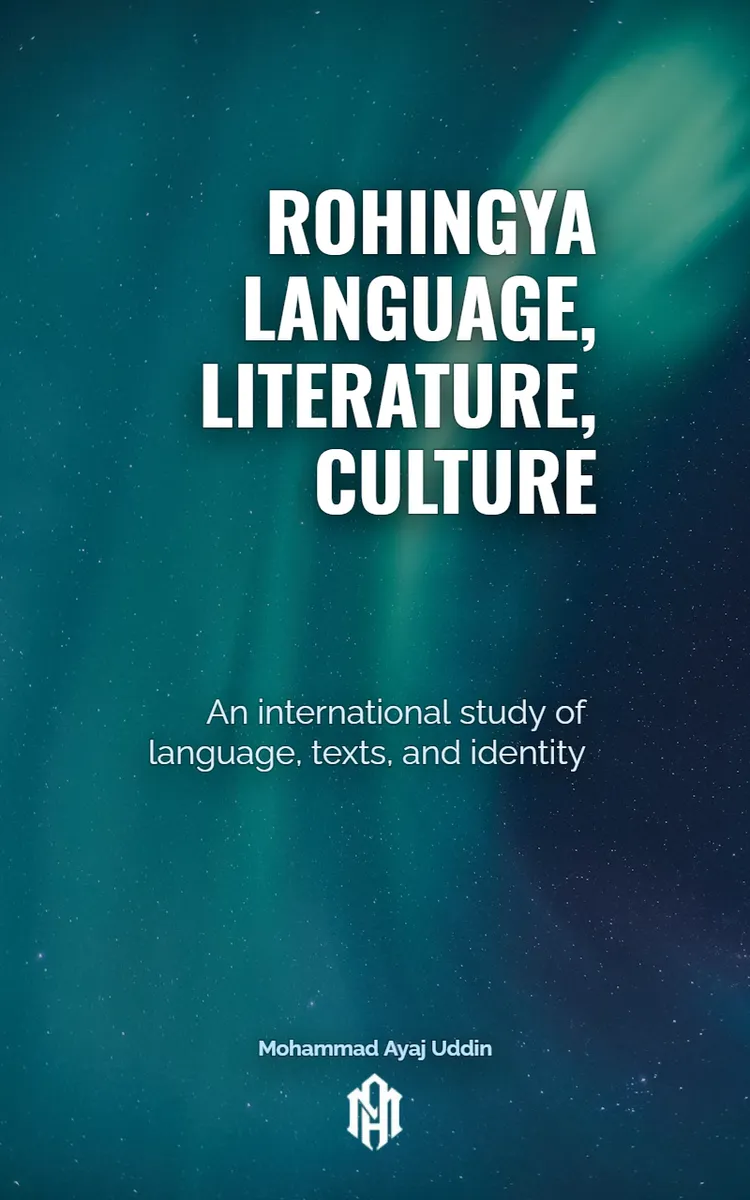
"Rohingya Language, Literature, Culture" is a curiosity book by Mohammad Ayaj Uddin with 5 chapters and approximately 7,800 words. Rohingya language literature and cultural traditions.
This book was created using Inkfluence AI, an AI-powered book generation platform that helps authors write, design, and publish complete books.
Frequently Asked Questions
What is "Rohingya Language, Literature, Culture" about?
Rohingya language literature and cultural traditions
How many chapters are in "Rohingya Language, Literature, Culture"?
The book contains 5 chapters and approximately 7,800 words. Topics covered include The Hidden Grammar in Everyday Speech, Why Stories Sound Like Home, Poetry as a Refuge for Grief, The Festival Calendar That Teaches Values, and more.
Who wrote "Rohingya Language, Literature, Culture"?
This book was written by Mohammad Ayaj Uddin and created using Inkfluence AI, an AI book generation platform that helps authors write, design, and publish books.
Write your own curiosity book with AI
Describe your idea and Inkfluence writes the whole thing. Free to start.
Start writingCreated with Inkfluence AI


