
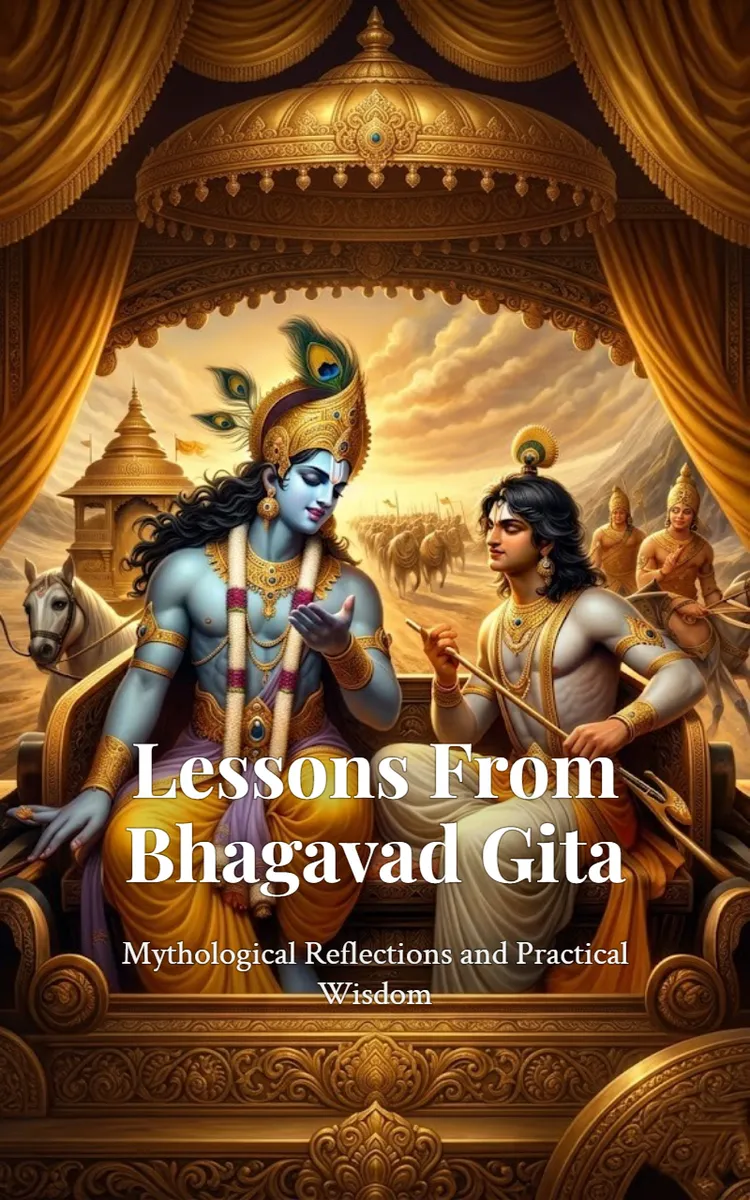
Lessons From Bhagavad Gita
Created with Inkfluence AI
Daily lessons and reflections from the Bhagavad Gita
Table of Contents
- 1. Hearing the Call: Awakening Faith
- 2. Prayer in the Midst of Doubt: Turning Toward Krishna
- 3. Work as Worship: Hope Through Right Action
- 4. The Way of Surrender: Letting Go of the Ego
- 5. Steadfast in Love: Living the Gita’s Promise
Preview: Hearing the Call: Awakening Faith
A short excerpt from “Hearing the Call: Awakening Faith”. The full book contains 5 chapters and 4,371 words.
Scripture FocusBG 2.3klaibyaṁ mā sma gamaḥ pārtha naitat tvayyupapadyate
kṣhudraṁ hṛidaya-daurbalyaṁ tyaktvottiṣhṭha parantapa"
When your mind is tangled, the first step is not winning an argument inside yourself-it’s hearing what is true.
That verse sits right at the opening of the Gita’s battlefield. Arjuna is conflicted, and his mind keeps reaching for reasons to justify his fear. The Gita doesn’t pretend that conflict isn’t real. It starts where the inner struggle is loudest-then invites you to listen instead of spiral.
ReflectionArjuna isn’t calm. He’s not “in control.” He’s overwhelmed by what he’s facing, and his heart is already arguing with itself: How can I do this? What if I’m causing harm? What if I lose everything? The Gita meets that moment without shaming him. It treats inner conflict as a real starting point, not a failure.
So many of us do the same thing on smaller scales. Maybe you’re staring at a calendar full of responsibilities and you feel stuck-like every option costs someone something. Maybe you’re trying to follow your faith but you’re also trying to pay bills, keep peace at home, and do your job well. Your mind says, “If I choose this, I’ll regret it.” Then it says, “If I don’t choose, I’ll still regret it.” Sound familiar?
Here’s the key insight the Gita teaches right at the beginning: faith is awakened by listening to divine truth, not by obeying fear’s volume. Fear is loud and fast. Divine truth is steady. The difference isn’t that fear is “wrong” or that conflict is “bad.” The difference is what you do next-do you keep feeding the fear with more thoughts, or do you pause and seek guidance from what God reveals?
In practical terms, that “listening” can look like choosing one honest statement over ten rehearsed worries. For example, instead of only thinking, “I’m scared I’ll mess it up,” you name what’s under it: “I’m scared of disappointing someone.” Or, “I’m scared I’ll be trapped in a decision I can’t undo.” Naming doesn’t solve everything instantly-but it brings the fog into focus. And when the fog clears even a little, it becomes possible to choose again.
The Gita’s opening also nudges you to notice where your attention goes. Arjuna’s mind is stuck on outcomes: who will suffer, what will happen, how things will end. Divine guidance keeps bringing the focus back to what is right for this moment-what you can do faithfully, with sincerity, and with clarity. That’s why the very first lessons are not about big spiritual feats. They’re about turning your ear toward truth when your heart is trembling.
If you’ve ever stood in front of a work schedule, a family conversation, or a difficult decision and felt your confidence drain out-good. You’re not alone. The Gita doesn’t start with perfect people. It starts with a person whose inner world is shaking, and it teaches that faith begins when you stop treating fear as your only counselor.
Practice for TodayName your fear in one sentence (2 minutes).
Sit quietly and write: “Right now I feel afraid that __ because __.” Keep it simple-no essays. If you want a real-world example, try this: “I’m afraid I’ll fall behind on my bills because I can’t see a clear plan.” Then underline the reason part. That reason is usually where the work begins.
Listen for guidance for 7 minutes using a single verse.
Choose one short line from BG 2.3 (or read the verse aloud) and then read it again slowly. Ask, “What truth is being offered right now?” Don’t force an answer. Just write one phrase you sense the Gita is pointing toward-something like “pause,” “truth,” “steady,” or “seek.”
If you like structure, set a timer for 7 minutes, journal for 3, and sit in silence for 4.
Do one faith-based action that doesn’t feed the fear.
Pick one small step you can take today that aligns with divine guidance rather than panic. Examples:
Send the honest message you’ve been delaying (kindly, clearly, without drama).
Spend 10 minutes organizing the next practical task instead of doom-scrolling.
Offer a short service: help someone with a simple need, or do one quiet household task as an act of worship.
Then write a line: “I chose __ instead of __. What changed in my heart was __.”
Journaling prompt for the day:“What is the outcome my fear is trying to control? What is the right next step I can take with integrity?”
Guidance idea: if you’re stuck, answer with only one word for the “right next step” (like “listen,” “speak,” “serve,” or “rest”), then build one sentence around it.
Closing PrayerLord Krishna, when my mind starts shouting, help me hear Your truth instead. I bring You my fear honestly, and I ask for guidance that steadies my hands and softens my heart. Teach me to listen before I leap, and to choose the next faithful step today. Amen.
About this book
"Lessons From Bhagavad Gita" is a religious devotional book by Anonymous with 5 chapters and approximately 4,371 words. Daily lessons and reflections from the Bhagavad Gita.
This book was created using Inkfluence AI, an AI-powered book generation platform that helps authors write, design, and publish complete books.
Frequently Asked Questions
What is "Lessons From Bhagavad Gita" about?
Daily lessons and reflections from the Bhagavad Gita
How many chapters are in "Lessons From Bhagavad Gita"?
The book contains 5 chapters and approximately 4,371 words. Topics covered include Hearing the Call: Awakening Faith, Prayer in the Midst of Doubt: Turning Toward Krishna, Work as Worship: Hope Through Right Action, The Way of Surrender: Letting Go of the Ego, and more.
Who wrote "Lessons From Bhagavad Gita"?
This book was written by Anonymous and created using Inkfluence AI, an AI book generation platform that helps authors write, design, and publish books.
Write your own religious devotional book with AI
Describe your idea and Inkfluence writes the whole thing. Free to start.
Start writingCreated with Inkfluence AI


