
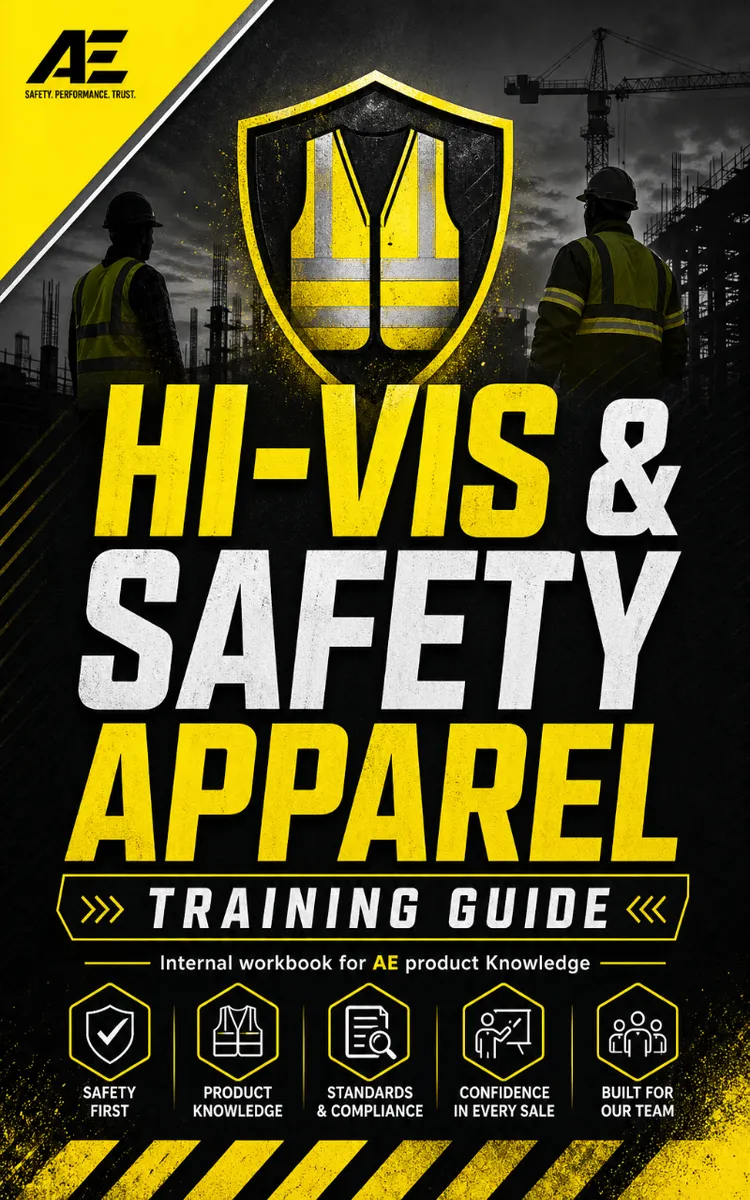
Hi-Vis & Safety Apparel Sales Enablement
Created with Inkfluence AI
Internal workbook for selling hi-vis and safety apparel
Table of Contents
- 1. ANSI Hi‑Vis Gear
- 2. Understanding Types and Classes
Preview: ANSI Hi‑Vis Gear
A short excerpt from “ANSI Hi‑Vis Gear”. The full book contains 2 chapters and 2,350 words.
ANSI Hi‑Vis Gear: What It Is, Why It Exists, and What the Standard DoesHigh‑visibility (hi‑vis) gear exists for one reason: to make sure a worker is recognized in time. In workplaces where vehicles, mobile equipment, and people share space-roadways, yards, warehouses, ramps, construction zones-many of the most serious incidents happen because someone wasn’t seen soon enough. ANSI’s hi‑vis standard isn’t about “bright clothing.” It’s about engineered visibility: using proven design and performance expectations so a person stands out, is recognized as a person, and can be avoided before a situation turns into an incident. The current benchmark for this in the U.S. is ANSI/ISEA 107‑2020, the American National Standard for High‑Visibility Safety Apparel.
1) Visibility as Prevention, Not ReactionHi‑vis gear works best when it prevents the need for last‑second reaction. When a driver or equipment operator recognizes a person earlier, they gain time to slow down, steer, stop, or pause movement before a close call becomes an injury. The key idea is recognition-being seen early enough that others can make a safer decision with more distance and more options.
ANSI’s own discussion of high‑visibility apparel connects it directly to reducing struck‑by harm-incidents where a worker is hit by a vehicle or equipment-and emphasizes that these outcomes are preventable when workers are made more noticeable.
Hi‑vis is especially important in the real world, where attention is divided and backgrounds are busy: headlights, signage, equipment lights, cones, barriers, shadows, weather, and jobsite motion all compete for attention. In those settings, visibility must do more than look bright up close. It needs to support recognition at a distance and under changing light conditions-daylight, dawn/dusk, and nighttime illumination.
2) What ANSI Is?ANSI (the American National Standards Institute) is not a manufacturer and not an enforcement agency. Instead, ANSI approves national standards that are developed through a consensus process-meaning knowledgeable stakeholders agree on what “good” looks like for safety, quality, and performance.
For hi‑vis apparel, that matters because jobsites vary. One organization may operate in a controlled yard, another may work next to live traffic, and another may respond to emergencies. Consensus standards help create a common baseline-shared expectations that travel across employers, roles, and conditions. That consistency is one reason ANSI/ISEA 107 is broadly used as the standard that helps determine which hi‑vis garment is appropriate when workers are on foot around moving vehicles or equipment.
Think of ANSI standards as a shared “rulebook” for performance. Instead of guessing whether a vest “seems visible,” a standard gives you a dependable reference point for what visibility needs to accomplish.
3) What ANSI/ISEA 107 Is Designed to SolveBefore a modern hi‑vis standard existed, visibility practices were inconsistent. Apparel varied widely in color brightness, reflective striping, and coverage. That inconsistency created risk because drivers and equipment operators rely on fast visual cues-often at speed, in low light, or in complex environments-to identify and avoid workers.
ANSI/ISEA 107 exists to reduce that unpredictability by setting clear, measurable expectations for high‑visibility safety apparel. It defines performance requirements so that “hi‑vis” means more than “bright.” It means the garment is designed and evaluated to support conspicuity (standing out) and recognition in the environments where workers face struck‑by hazards.
The ANSI discussion of the standard frames high‑visibility apparel as a practical way to help protect workers because bright colors attract attention and reflective materials help in darker conditions-improving the chance a worker is noticed in time.
4) What ANSI/ISEA 107 Governs (High‑Level)At a high level, ANSI/ISEA 107‑2020 provides guidance for selecting and using high‑visibility safety apparel and sets performance expectations for garments intended to make workers visible when exposed to moving vehicles or equipment.
The standard’s structure helps organizations make consistent decisions by organizing hi‑vis garments into categories (often described as garment types and performance classes) and by defining minimum performance criteria related to conspicuity and visibility.
Most importantly for understanding the “why,” ANSI/ISEA 107 treats visibility as a full‑conditions problem, not a single‑lighting problem. The standard addresses visibility in daytime conditions and visibility when illuminated at night (for example, by headlights). The goal is for the apparel to support recognition across the conditions workers actually face-bright daylight, dusk, dawn, and darkness.
Why fluorescent and reflective elements matter (conceptually)ANSI/ISEA 107 is built around the idea that visibility changes with lighting....
About this book
"Hi-Vis & Safety Apparel Sales Enablement" is a study guide book by MCM Team with 2 chapters and approximately 2,350 words. Internal workbook for selling hi-vis and safety apparel.
This book was created using Inkfluence AI, an AI-powered book generation platform that helps authors write, design, and publish complete books. It was made with the Study Guide Generator.
Frequently Asked Questions
What is "Hi-Vis & Safety Apparel Sales Enablement" about?
Internal workbook for selling hi-vis and safety apparel
How many chapters are in "Hi-Vis & Safety Apparel Sales Enablement"?
The book contains 2 chapters and approximately 2,350 words. Topics covered include ANSI Hi‑Vis Gear, Understanding Types and Classes.
Who wrote "Hi-Vis & Safety Apparel Sales Enablement"?
This book was written by MCM Team and created using Inkfluence AI, an AI book generation platform that helps authors write, design, and publish books.
How can I create a similar study guide book?
You can create your own study guide book using Inkfluence AI. Describe your idea, choose your style, and the AI writes the full book for you. It's free to start.
Write your own study guide book with AI
Describe your idea and Inkfluence writes the whole thing. Free to start.
Start writingCreated with Inkfluence AI


