
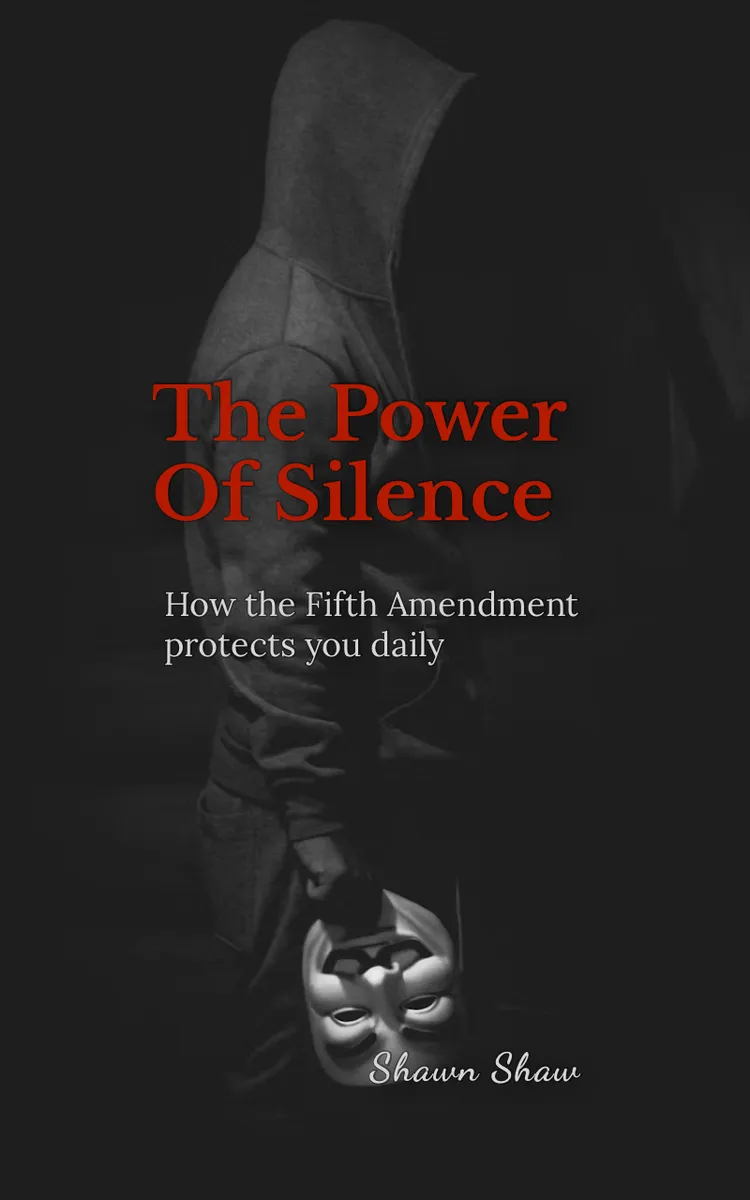
The Power Of Silence
Created with Inkfluence AI
Everyday importance of the Fifth Amendment right to remain silent
Table of Contents
- 1. What “Remain Silent” Means
- 2. When to Invoke It
- 3. How to Say It Clearly
- 4. What Happens After You Stay Silent
- 5. Everyday Mistakes to Avoid
Preview: What “Remain Silent” Means
A short excerpt from “What “Remain Silent” Means”. The full book contains 5 chapters and 8,289 words.
Have you ever answered a question fast - then later thought, “Why did I say that?” One sentence can get you deeper than you meant to go. The Fifth Amendment right to remain silent gives you a way to slow down and protect yourself when someone asks questions that could put you at risk.
This chapter teaches the plain-English meaning of that right and when it applies in everyday situations - at work, at school, at home, and in the community. You’ll learn what “remain silent” actually means in real life, how to say it in a simple, respectful way, and how to avoid the common slip-ups that turn “I’m being careful” into “I accidentally gave details.” After you read, you’ll be able to recognize the moment silence matters and take immediate, practical steps to keep control of what you say.
The Fifth Amendment Right to Remain Silent: What It Means in Plain English
The Fifth Amendment is part of the United States Constitution. In plain terms, it gives you a choice when you face questions from law enforcement (police, deputies, federal agents) or sometimes when you’re in a situation where you could be forced to answer under threat of legal consequences. You can refuse to answer questions that might help someone build a case against you.
“Remain silent” does not mean you freeze completely or refuse to be polite. It means you stop answering questions that could expose you to criminal risk. It also does not mean you can ignore lawful instructions. You can still follow directions like “Step over here,” “Show your ID,” or “Don’t move,” while you choose not to answer questions.
Here’s a concrete place this shows up: Talia, age 19, works as a retail cashier. One afternoon, a store manager asks her to explain what happened during an incident near the register. Later, two police officers arrive and ask Talia questions about the incident. If Talia answers too quickly - especially questions about who did what, what she saw, or what she heard - she might give information that later becomes a problem. The right to remain silent helps her pause before she provides details.
Ask yourself this simple check: “Could my answer help someone claim I did something wrong?” If the answer is yes or “I’m not sure,” the Fifth Amendment right is a tool you can use to avoid making things worse with your words.
Practical takeaway to hold onto
When questions could create criminal risk, silence can be a smart choice - not because you did something, but because you control what you say.
How the Fifth Amendment Right Works: The Plain Rules You Can Use
To use this right in daily life, you need a few plain rules. Think of them like buttons on a control panel: you press the one that fits the moment.
1. Identify who is asking (law enforcement matters).
The Fifth Amendment right to remain silent most directly applies when law enforcement asks questions. If a coworker or manager asks you questions, that is not the same legal situation. Your safest move is to stay calm and not give details, but the Fifth Amendment right is about protecting you from self-incrimination when the legal pressure is there.
2. Decide what kind of question it is (answering details can create risk).
If the question asks about events, actions, timing, or what you saw or heard - especially in a way that could connect you to wrongdoing - treat it as risky. If you’re unsure whether it could create criminal exposure, assume it could.
3. State your choice clearly and stop answering questions.
You can say something like: “I’m going to remain silent.” Then stop talking about the substance of the questions. Keep your answers short and focused on basic needs like your name and address if you must provide them - without adding extra facts.
4. Follow instructions while you stay quiet.
You can usually comply with lawful directions (stay where you are, provide required identification, keep your hands visible) while you do not answer investigative questions. This reduces confusion and keeps you from escalating the situation while you protect your rights.
Now let’s apply these rules with Talia’s retail setting, using real details you might recognize. Suppose a customer reports that money went missing from a register and claims Talia was involved. The manager asks Talia questions first. Talia should avoid guessing and avoid filling in details that aren’t asked. Later, police show up and ask, “Did you take any money?” and “What happened right before the register was short?” Those questions aim at facts that could connect her to wrongdoing. That’s the moment where “remain silent” matters most.
Practical takeaway to hold onto
You don’t need to argue about your innocence. You need to control the conversation - especially when law enforcement asks for details.
Putting the Plain-Speak Silence Map Into Practice in Real Life
Use the Plain-Speak Silence Map when you face questions that might put you at legal risk....
About this book
"The Power Of Silence" is a how-to guide book by Shawn Shaw with 5 chapters and approximately 8,289 words. Everyday importance of the Fifth Amendment right to remain silent.
This book was created using Inkfluence AI, an AI-powered book generation platform that helps authors write, design, and publish complete books. It was made with the AI Ebook Generator.
Frequently Asked Questions
What is "The Power Of Silence" about?
Everyday importance of the Fifth Amendment right to remain silent
How many chapters are in "The Power Of Silence"?
The book contains 5 chapters and approximately 8,289 words. Topics covered include What “Remain Silent” Means, When to Invoke It, How to Say It Clearly, What Happens After You Stay Silent, and more.
Who wrote "The Power Of Silence"?
This book was written by Shawn Shaw and created using Inkfluence AI, an AI book generation platform that helps authors write, design, and publish books.
How can I create a similar how-to guide book?
You can create your own how-to guide book using Inkfluence AI. Describe your idea, choose your style, and the AI writes the full book for you. It's free to start.
Write your own how-to guide book with AI
Describe your idea and Inkfluence writes the whole thing. Free to start.
Start writingCreated with Inkfluence AI


