
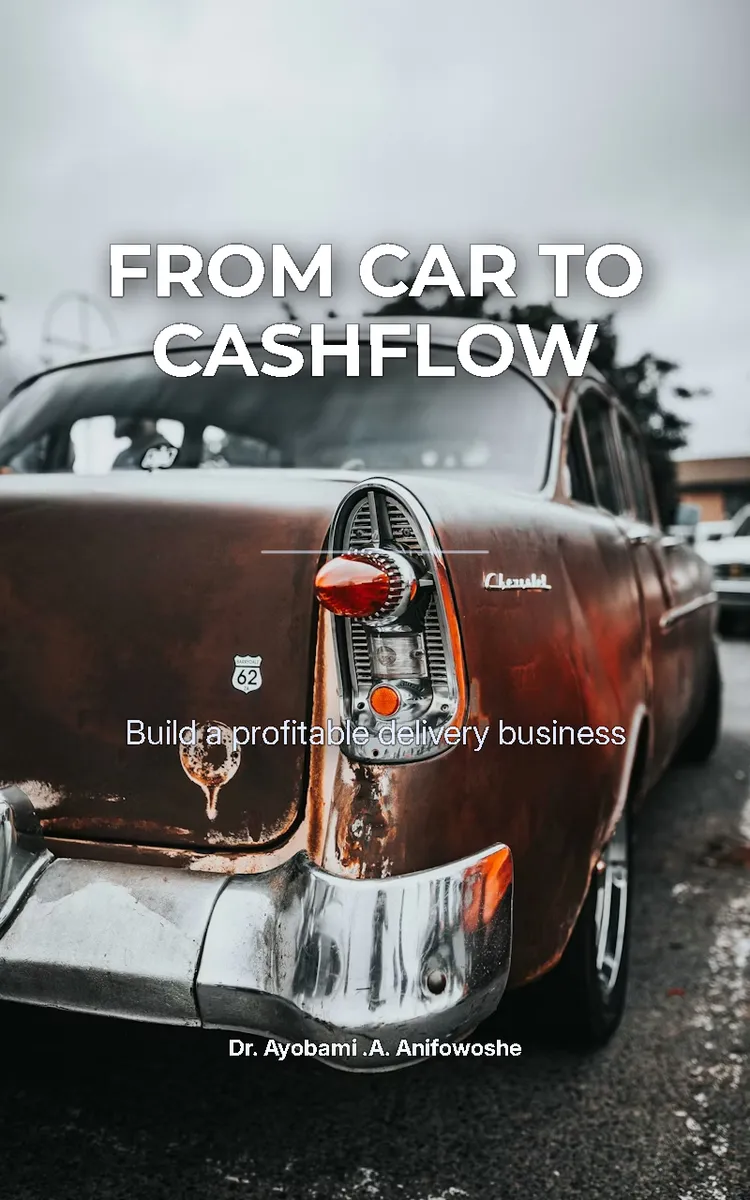
From Car To Cashflow
Created with Inkfluence AI
Starting and scaling a delivery driving logistics business
Table of Contents
- 1. Delivery Economy as a Supply Chain
- 2. Is Delivery Driving Right for You?
- 3. Setup Checklist for First-Day Deliveries
- 4. Choosing the Best Delivery Opportunities
- 5. Earnings vs Profit Tracking System
Preview: Delivery Economy as a Supply Chain
A short excerpt from “Delivery Economy as a Supply Chain”. The full book contains 5 chapters and 6,866 words.
A delivery run looks simple until you track where the order “starts” and where it “fails.” One missed handoff at the wrong point in the chain can turn a $20 day into a $0 day, even when you drive perfectly. That’s why this chapter matters: you need to stop thinking like a task-taker and start thinking like a participant in the logistics ecosystem.
If you’ve ever chased earnings by grabbing the next offer, you’ve probably felt the frustration: inconsistent work, weird pickup instructions, long waits, and customers who blame you when the order goes sideways. The problem isn’t just “bad luck.” It’s that you operate only at the final step, while the system decisions happen upstream.
After this chapter, you’ll understand how delivery platforms and drivers fit into the broader delivery supply chain, so you can predict where the friction will show up and choose better runs. You’ll also get a practical framework-The Supply-Chain Lens-to help you look at every job and know what to check before you waste miles.
Why This Matters
Delivery platforms don’t just “send you jobs.” They connect businesses that sell goods to customers who want those goods fast. Your car sits at one link in that chain, and every link has its own failure points: inventory, packing, routing, pickup timing, handoff rules, and proof-of-delivery.
Most aspiring drivers and side-hustlers lose money because they treat each order like a one-off. They wait for instructions, hope the route makes sense, and only react when something goes wrong. When you understand the supply chain, you stop reacting to chaos and start spotting patterns. You’ll know when a job carries risk (late-ready pickups, wrong addresses, multi-stop confusion) and when a job runs clean.
In this chapter, I’ll also use a real-world baseline: Tanya, 34, a retail manager exploring side income. She didn’t fail because she couldn’t drive. She failed because she didn’t know which part of the chain she actually controlled. Once she used The Supply-Chain Lens, she started picking runs that matched how the chain worked, not just what looked profitable on the screen.
How It Works
The core idea is simple: every delivery job comes from a chain of decisions, and you only control certain parts. The Supply-Chain Lens helps you identify the link you’re in and what you must verify so the chain doesn’t break on your shift.
Use these pieces as your mental checklist before you accept and while you execute:
1. Order origin (where the demand starts)
Delivery jobs usually start when a customer places an order with a store or marketplace. Platforms then translate that order into a pickup request. If the origin takes too long to prepare, you inherit the delay. Check whether the pickup is a “ready now” style request or a “wait for them” setup.
2. Fulfillment link (who prepares and tags the package)
The fulfillment link includes picking, packing, and labeling. If labels don’t match the order or items sit in the wrong staging area, your pickup becomes a dispute. You reduce this risk by reading pickup notes carefully and confirming the package details at the counter or in the staging area.
3. Dispatch and routing (how the platform groups and assigns work)
Platforms assign jobs based on availability, distance, and time windows. Multi-stop routes often look efficient but can create time pressure at every handoff. If you see “tight windows” or stacked stops, you need to plan your parking and arrival buffer like you manage store transfers.
4. Handoff and proof (what ends the job cleanly)
The handoff is where drivers get blamed: wrong unit, missing gate code, unclear “leave at” instructions, or proof that didn’t capture the right thing. Your job ends when you complete the handoff rules exactly, using the platform’s required proof method.
Here’s the practical difference between thinking like a driver and thinking like a link in a chain: drivers ask, “How much is this paying?” Participants ask, “How likely is this chain to break where I’m standing?”
Putting It Into Practice
Tanya’s first week looked busy, but it felt messy. She accepted offers quickly, drove fast, and still lost time at pickups. She averaged a few good hours, then hit long waits and re-dos. The moment she applied The Supply-Chain Lens, she started scoring risk before she committed.
Run this exact process on your next shift:
1. Before you accept, scan the chain signals
Open the offer details and look for pickup timing and pickup instructions. If the platform shows a pickup window that feels narrow, treat it like a “ready or you pay” job. If the pickup notes say “call when you arrive” or “wait for staff,” treat it as a wait-heavy link.
2....
About this book
"From Car To Cashflow" is a business book by Dr. Ayobami .A. Anifowoshe with 5 chapters and approximately 6,866 words. Starting and scaling a delivery driving logistics business.
This book was created using Inkfluence AI, an AI-powered book generation platform that helps authors write, design, and publish complete books. It was made with the AI Business Book Writer.
Frequently Asked Questions
What is "From Car To Cashflow" about?
Starting and scaling a delivery driving logistics business
How many chapters are in "From Car To Cashflow"?
The book contains 5 chapters and approximately 6,866 words. Topics covered include Delivery Economy as a Supply Chain, Is Delivery Driving Right for You?, Setup Checklist for First-Day Deliveries, Choosing the Best Delivery Opportunities, and more.
Who wrote "From Car To Cashflow"?
This book was written by Dr. Ayobami .A. Anifowoshe and created using Inkfluence AI, an AI book generation platform that helps authors write, design, and publish books.
How can I create a similar business book?
You can create your own business book using Inkfluence AI. Describe your idea, choose your style, and the AI writes the full book for you. It's free to start.
Write your own business book with AI
Describe your idea and Inkfluence writes the whole thing. Free to start.
Start writingCreated with Inkfluence AI


