
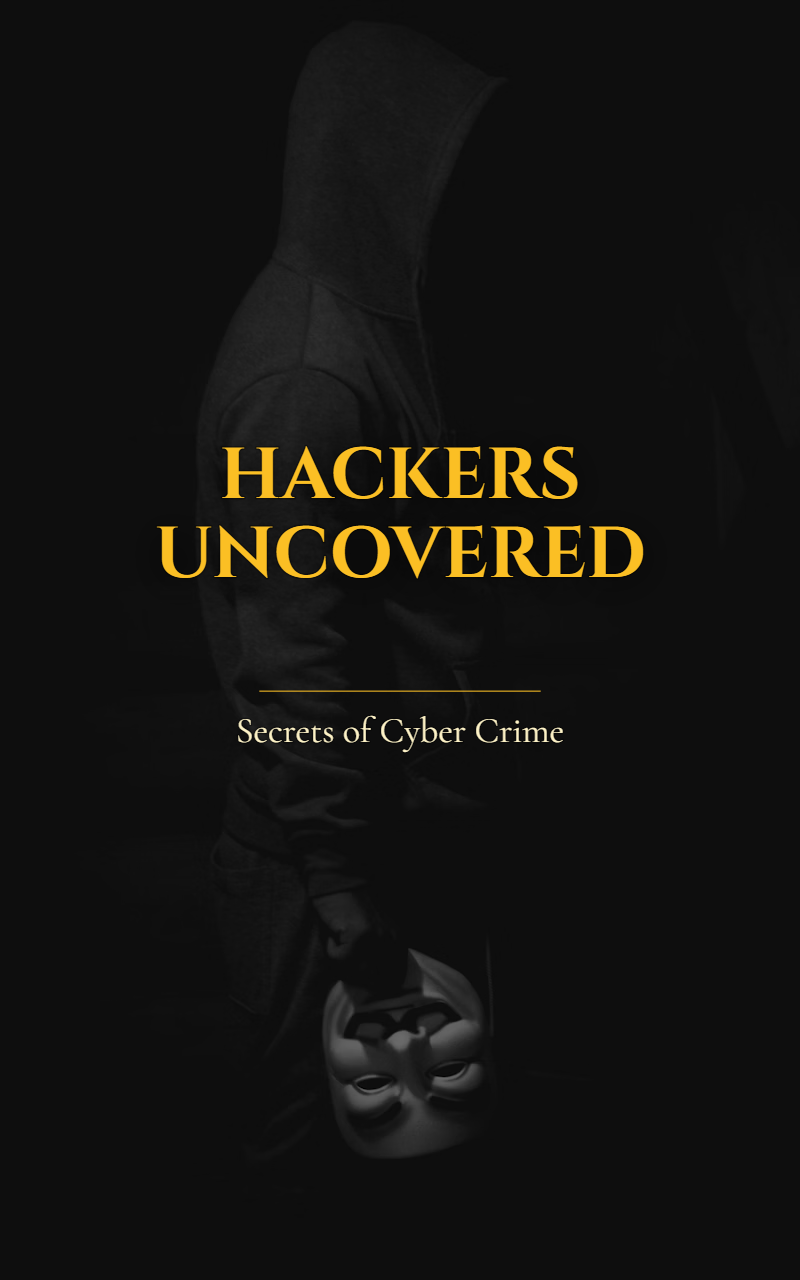
Hackers Uncovered
Created with Inkfluence AI
Exploration of cyber crime methods and hacker activities
Table of Contents
- 1. Inside the Mind of a Hacker
- 2. Tools of the Digital Underworld
- 3. Anatomy of a Cyber Heist
- 4. The Dark Web’s Secret Marketplace
- 5. Guardians of the Cyber Frontier
Preview: Inside the Mind of a Hacker
A short excerpt from “Inside the Mind of a Hacker”. The full book contains 5 chapters and 4,875 words.
A staggering paradox sits at the center of cyber crime: most of it doesn’t start with a “magic hack,” but with something as ordinary as a human being clicking a link. The machine work can be elegant-code, automation, forged identities-but the decisive moment often comes in a fraction of a second, on a screen lit by an office lamp or a phone balanced on a kitchen counter.
That’s what makes hacking such a strange subject. People imagine it as a lone mind battling locked doors, yet the reality is closer to a market of incentives, misunderstandings, and carefully staged errors. This chapter wanders inside the hacker’s psychology-how motives shape methods, how attackers think about defenders, and why the same vulnerabilities keep reappearing in different costumes.
A Room Full of Intentions
Long before “cyber” became a word on everyone’s lips, computer crime already had a personality. Early incidents in the 1970s and 1980s were often driven by curiosity, thrill, or status-sometimes by people who treated access as a kind of proof-of-intelligence. Over time, the culture shifted. Networks got bigger, money got attached to information, and the incentives hardened. What began as trespass became commerce, and commerce demanded predictability.
Even today, the psychology of a cybercriminal isn’t one thing. Some offenders are bargain hunters, chasing easy payoffs. Others are ideologues, drawn to disruption or influence. Many are opportunists, motivated less by a grand mission than by the chance that something will work today. In practice, these motives show up as different kinds of attention: a scammer watches for hesitation; a thief watches for delay; a disruptor watches for visibility.
One overlooked detail is that attackers don’t just exploit systems-they exploit the way people respond to uncertainty. When something is ambiguous, humans reach for cues: tone, formatting, authority, urgency. Those cues become the attacker’s materials, like stage props that look harmless until the play begins.
The Mind Game: Predicting Defenders
If you’ve ever watched a lockpick demonstration, you know the trick isn’t only in the metal-it’s in the assumptions about how the lock is built and how the person holding the tools will behave. Cybercriminals do something similar, but their “locks” are security teams, processes, and monitoring systems. They study patterns: what gets flagged, what gets ignored, how quickly incidents get escalated, which alerts analysts can afford to chase.
The scientific grounding here is less glamorous than the movies suggest. Human decision-making tends to follow cognitive biases-systematic shortcuts that can be exploited. Attackers lean on predictable reactions: the tendency to trust familiar branding, the urge to act under time pressure, the habit of believing that official-looking messages must be legitimate. Even when the message is technically plausible, the psychological payload is about reducing friction for the target’s brain.
There’s also a brutal asymmetry in information. Defenders see symptoms; attackers often see causes they engineered themselves. That gap can distort how each side estimates risk. A security team might assume a certain technique is rare, because their environment rarely sees it. Meanwhile, an attacker might repeat it because it works somewhere else consistently enough to keep the operation profitable.
Why “Sophisticated” Isn’t Always the Point
Here’s the surprise that changes how the whole landscape looks: some of the most consequential compromises have been driven by mundane weaknesses-password reuse, unpatched software, and social engineering-rather than exotic vulnerabilities. The common image of a hacker as a sorcerer of zero-days collapses when you examine what actually produces outcomes. Sophistication can help, but it also raises complexity, cost, and detection risk.
Why does that matter? Because it reframes “hacker psychology” from a quest for technical supremacy into a balancing act of effort versus return. Attackers weigh whether a clever exploit is worth the fragility of trying to make a perfect chain of events. If a simpler approach-one that manipulates attention-delivers results with fewer moving parts, the attacker’s mind quietly chooses the less glamorous path.
In other words, the psychology isn’t just about breaking; it’s about choosing what to break. That choice is shaped by uncertainty, and uncertainty is where human beings-attackers and defenders alike-start making the same kinds of errors.
The Human Story Behind the Payload
A useful real-world anchor is the 2013 Target breach, which became a case study for how attackers can blend technical reach with behavioral expectations inside large organizations....
About this book
"Hackers Uncovered" is a curiosity book by Anonymous with 5 chapters and approximately 4,875 words. Exploration of cyber crime methods and hacker activities.
This book was created using Inkfluence AI, an AI-powered book generation platform that helps authors write, design, and publish complete books.
Frequently Asked Questions
What is "Hackers Uncovered" about?
Exploration of cyber crime methods and hacker activities
How many chapters are in "Hackers Uncovered"?
The book contains 5 chapters and approximately 4,875 words. Topics covered include Inside the Mind of a Hacker, Tools of the Digital Underworld, Anatomy of a Cyber Heist, The Dark Web’s Secret Marketplace, and more.
Who wrote "Hackers Uncovered"?
This book was written by Anonymous and created using Inkfluence AI, an AI book generation platform that helps authors write, design, and publish books.
Write your own curiosity book with AI
Describe your idea and Inkfluence writes the whole thing. Free to start.
Start writingCreated with Inkfluence AI


