
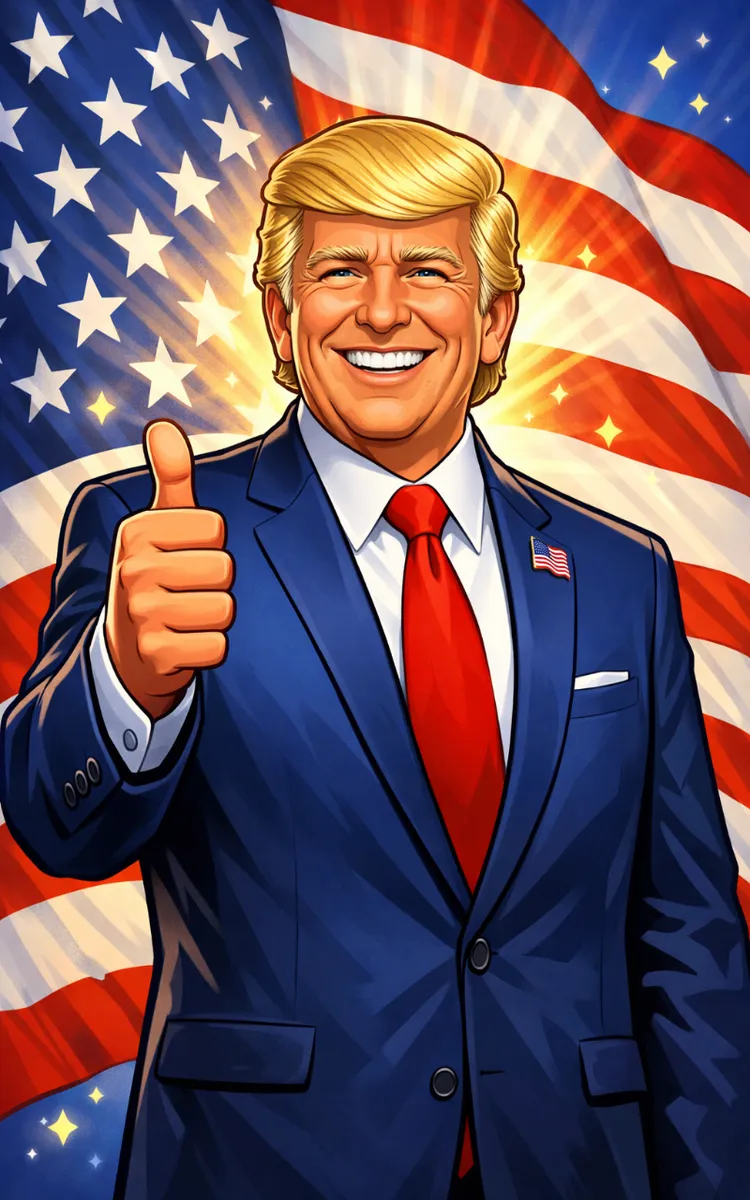
This Is Why We Hate Trump
Created with Inkfluence AI
Trump’s political actions and claimed benefits to America
Table of Contents
- 1. Understanding the Fundamentals of This Is Why We Hate Trump
- 2. Getting Started with This Is Why We Hate Trump
- 3. Essential Skills for This Is Why We Hate Trump
- 4. Building Your This Is Why We Hate Trump Practice
- 5. Overcoming Common This Is Why We Hate Trump Challenges
- 6. Developing Deeper This Is Why We Hate Trump Knowledge
- 7. Refining Your This Is Why We Hate Trump Skills
- 8. Bringing It All Together for This Is Why We Hate Trump
- 9. Understanding the Fundamentals of This Is Why We Hate Trump (Phase 2)
- 10. Getting Started with This Is Why We Hate Trump (Phase 2)
- 11. Essential Skills for This Is Why We Hate Trump (Phase 2)
- 12. Building Your This Is Why We Hate Trump Practice (Phase 2)
- 13. Overcoming Common This Is Why We Hate Trump Challenges (Phase 2)
- 14. Developing Deeper This Is Why We Hate Trump Knowledge (Phase 2)
- 15. Refining Your This Is Why We Hate Trump Skills (Phase 2)
- 16. Bringing It All Together for This Is Why We Hate Trump (Phase 2)
- 17. Understanding the Fundamentals of This Is Why We Hate Trump (Phase 3)
- 18. Getting Started with This Is Why We Hate Trump (Phase 3)
- 19. Essential Skills for This Is Why We Hate Trump (Phase 3)
- 20. Building Your This Is Why We Hate Trump Practice (Phase 3)
Preview: Understanding the Fundamentals of This Is Why We Hate Trump
A short excerpt from “Understanding the Fundamentals of This Is Why We Hate Trump”. The full book contains 20 chapters and 44,221 words.
The Opening
There’s a paradox at the heart of modern American politics: the loudest arguments about Donald Trump often claim to be about facts-but the most intense reactions come from how people feel those facts should work. One person hears a policy announcement and thinks, “Finally, someone understands how the country runs.” Another hears the same words and thinks, “This is the opposite of how the country is supposed to run.” The gap isn’t just political. It’s about basic expectations for leadership, evidence, and trust.
So when people say “This is why we hate Trump,” they’re often trying to name something bigger than a single decision-something about the shape of his political style and the consequences that follow. This chapter explores the fundamentals behind that reaction: the rules of the game people think they’re playing, how those rules clash with Trump’s methods, and what that clash reveals about the country itself.
We’ll move from the older machinery of American politics-how campaigns, media, and institutions normally behave-to the more chaotic reality of the Trump era, where outrage can function like a kind of fuel. We’ll also ground the discussion in the psychology of attention and the social science of trust, because politics isn’t only about policy; it’s about human brains trying to make sense of uncertainty in public.
What if the most important “facts” in the Trump story aren’t the ones he claims at all, but the ones his supporters and critics believe must be true for the system to stay stable?
The Deep Dive
The Ground Rules: How Americans Expect Politics to Work
To understand why so many people experience Trump’s presence as intolerable-whether they call it anger, disgust, betrayal, or simply exhaustion-you have to start with the expectations that most Americans carry around without noticing. In the United States, politics isn’t just a set of laws. It’s also a public performance of credibility. Even when people disagree, they tend to rely on a shared idea that leaders should at least appear to respect the basic process: elections have rules, institutions have boundaries, and public claims should be checkable.
Campaigns, for example, are built to reduce uncertainty. They offer a candidate’s story, a plan, and a sense of competence. Debates and interviews function like stress tests for credibility: Do you sound like you understand the world? Can you answer questions without sliding away? In normal political life, there’s a kind of informal contract between candidates and the public: you don’t just say things; you give reasons.
That contract matters because people don’t experience politics like a spreadsheet. They experience it through signals-tone, timing, consistency, and the willingness to acknowledge mistakes. When a leader breaks those signals, the reaction can feel personal, even if the underlying issue is not personal at all. It’s the difference between “I disagree with your policy” and “I can’t trust your method.” Many of the sharpest criticisms of Trump-across decades and across media ecosystems-center on that second category.
It helps to remember how Trump’s political rise happened. He didn’t come up through the long apprenticeship of party committees, donor networks, or policy staffs. He entered politics with the instincts of a media personality and businessman, and he used spectacle the way other politicians used briefing books. His rallies, his signature lines, his insistence on directness, and his tendency to frame opponents as enemies of the people created a different atmosphere than the one traditional politicians usually try to maintain.
In earlier eras, candidates could count on a slower rhythm. News cycles were still fast, but the feedback loop between statement and response wasn’t as immediate, and the social media layer wasn’t as dominant. Trump arrived right as the system became more reactive. That matters because political disagreement doesn’t just happen in public; it happens in real time, in front of millions of watchers who can amplify each other’s reactions.
One counterintuitive detail, grounded in the mechanics of modern communication: the things that spread fastest are often the things that are easiest to interpret quickly. That doesn’t mean they’re false. It means they’re simple. If you tell a story with a clear villain and a clear promise, it can travel farther than a nuanced explanation. Trump’s style-whether you love it or hate it-leaned heavily into that kind of speed.
And when people believe the speed is coming at the cost of accuracy, they don’t just disagree. They worry. They worry that the country’s decision-making process is being pushed off balance.
Institutions as Targets: Why Trust Becomes the Whole Story
In the United States, institutions are supposed to do two things at once: make decisions and justify those decisions afterward. Courts explain their reasoning. Agencies publish rules....
About this book
"This Is Why We Hate Trump" is a curiosity book by Anonymous with 20 chapters and approximately 44,221 words. Trump’s political actions and claimed benefits to America.
This book was created using Inkfluence AI, an AI-powered book generation platform that helps authors write, design, and publish complete books.
Frequently Asked Questions
What is "This Is Why We Hate Trump" about?
Trump’s political actions and claimed benefits to America
How many chapters are in "This Is Why We Hate Trump"?
The book contains 20 chapters and approximately 44,221 words. Topics covered include Understanding the Fundamentals of This Is Why We Hate Trump, Getting Started with This Is Why We Hate Trump, Essential Skills for This Is Why We Hate Trump, Building Your This Is Why We Hate Trump Practice, and more.
Who wrote "This Is Why We Hate Trump"?
This book was written by Anonymous and created using Inkfluence AI, an AI book generation platform that helps authors write, design, and publish books.
Write your own curiosity book with AI
Describe your idea and Inkfluence writes the whole thing. Free to start.
Start writingCreated with Inkfluence AI


