
Read the first chapter
The whole of chapter one, free. About 4 min. Turn the pages with the arrows, your keyboard, or a swipe.
Chapter 1
Coconut Lemongrass Chicken Rendang
At a Glance Prep: 20 min | Cook: 55 min | Total: 75 min | Serves: 4 | Difficulty: Medium.
Introduction Coconut Lemongrass Chicken Rendang is a weeknight-friendly rendang-style curry where the flavour is built fast: toasted spices first, then coconut milk, lemongrass, and a simmer until the sauce turns thick, glossy, and deeply fragrant. Instead of long hours, you get that “rendang feel” with caramelised aromatics and reduced coconut milk - so it tastes rich even when you’re cooking on a busy day.
The key differentiator is how you treat the spice paste. Toasting the spices briefly before grinding (or blending) makes the cumin, coriander, and pepper taste rounder and more “roasty”. Pair that with coconut milk and a short, controlled simmer, and you’ll end up with chicken coated in a sauce that clings - not watery, not dry.
Ask yourself as you prep: do you want a curry that’s pourable, or a rendang-style sauce that reduces and clings? This recipe aims for the second. Your final result should look darker than coconut-based curries and smell warm, lemongrass-forward, and spice-deep rather than sharp.
Ingredients - Protein - 800 g chicken thigh (bone-in or boneless), cut into 3-4 cm pieces - Produce - 3 stalks lemongrass, lower 6-8 cm only, cut and lightly bruised - 6 shallots, peeled - 3 cloves garlic, peeled - 1 thumb-sized piece ginger, peeled - 1-2 fresh red chilies (optional), deseeded if you prefer mild heat - Pantry / Liquids - 400 ml thick coconut milk - 250 ml water or chicken stock - 1-2 tbsp tamarind paste (or 2 tbsp lime juice for a brighter finish) - 2 tbsp cooking oil - Spices - 1 tbsp coriander seeds - 1 tsp cumin seeds - 1 tsp black peppercorns - 2 tsp turmeric powder - 2 tbsp rendang spice powder (optional if you want it simpler; otherwise increase toasted spices) - Seasoning - 1½ tsp salt, to taste - 2 tbsp palm sugar (or brown sugar)
Instructions 1. Toast the spices (6-8 min): In a dry pan on medium-low heat, toast coriander seeds, cumin seeds, and peppercorns until fragrant. They should look slightly darker, not burnt. Cool 2 minutes, then crush with a mortar and pestle or grind coarsely in a blender. 2. Blend the paste (5 min): Blend shallots, garlic, ginger, chilies (if using), turmeric powder, toasted spices, and 2-3 tbsp water into a thick paste. Keep it coarse for better texture. 3. Sear the chicken (8-10 min): Heat oil in a heavy pot on medium-high. Add chicken in a single layer (work in batches if needed). Sear until you see browned edges and the surface looks opaque, about 2-3 minutes per side. Remove chicken to a plate. 4. Cook the spice paste (8-10 min): Lower heat to medium. In the same pot, fry the paste until it darkens slightly and smells deeper, and the oil starts to separate around the edges. Stir often so it doesn’t stick. 5. Simmer with coconut milk (25-30 min): Return chicken to the pot. Add lemongrass, thick coconut milk, and water/stock. Bring to a gentle simmer (small bubbles). Cover partially and simmer, stirring every 5-7 minutes to prevent scorching. 6. Reduce to rendang-style thickness (10-15 min): Uncover and keep simmering until sauce reduces and clings to the chicken. The chicken should be tender when pierced, and the sauce should look glossy, not split. 7. Balance the sauce (2-3 min): Stir in tamarind paste and palm sugar. Taste and adjust salt. If it’s too sharp, add a bit more sugar; if too sweet, add a tiny splash more tamarind or a squeeze of lime. 8. Rest before serving (5 min): Turn off heat and let it rest. The sauce thickens as it cools slightly. Serve with steamed rice or ketupat.
Pro Tip: If your coconut milk is thin, use only 200-250 ml water/stock and simmer uncovered in the last 10 minutes. That keeps the sauce from staying watery.
Chef Notes & Variations Storage is straightforward: cool the rendang quickly, then refrigerate in a sealed container. It tastes even better the next day because the spices settle into the sauce. Reheat gently on the stove with a splash of water if needed; avoid high heat, which can cause coconut milk to look grainy.
For plating, scoop chicken and sauce together so each bite gets the thick coating. If you like it more “Singapore kopi shop” style with extra richness, add a small knob of butter at the very end - only once the heat is off - so it melts smoothly without breaking the coconut.
Swap It: If you can’t find coriander or cumin seeds, use 2 tsp coriander powder + 1 tsp cumin powder, but toast them in the dry pan for only 30-40 seconds before adding to the paste. That brief toast keeps them from tasting flat.
Note: Rendang can go from thick to dry fast. When you see the sauce coating the back of a spoon, start checking your salt and sweetness rather than waiting for a very dark paste.
Quick Version Toast coriander + cumin + pepper, blend with shallot/garlic/ginger/turmeric into a paste, sear chicken, fry paste until darker and fragrant, simmer with lemongrass + coconut milk + stock until tender, then reduce uncovered and finish with tamarind + palm sugar. Serve with rice.
End of chapter one. 4 more chapters in the full book.
Swipe or use the arrows to turn the page
What's inside: 5 chapters
- 1. Coconut Lemongrass Chicken Rendang
- 2. Charred Satay Chicken with Peanut Sauce
- 3. Nasi Lemak-Style Coconut Rice Bowl
- 4. Singapore Chilli Crab-Style Tomato Lobster
- 5. Pandan Gula Melaka Crème Brûlée
About this book
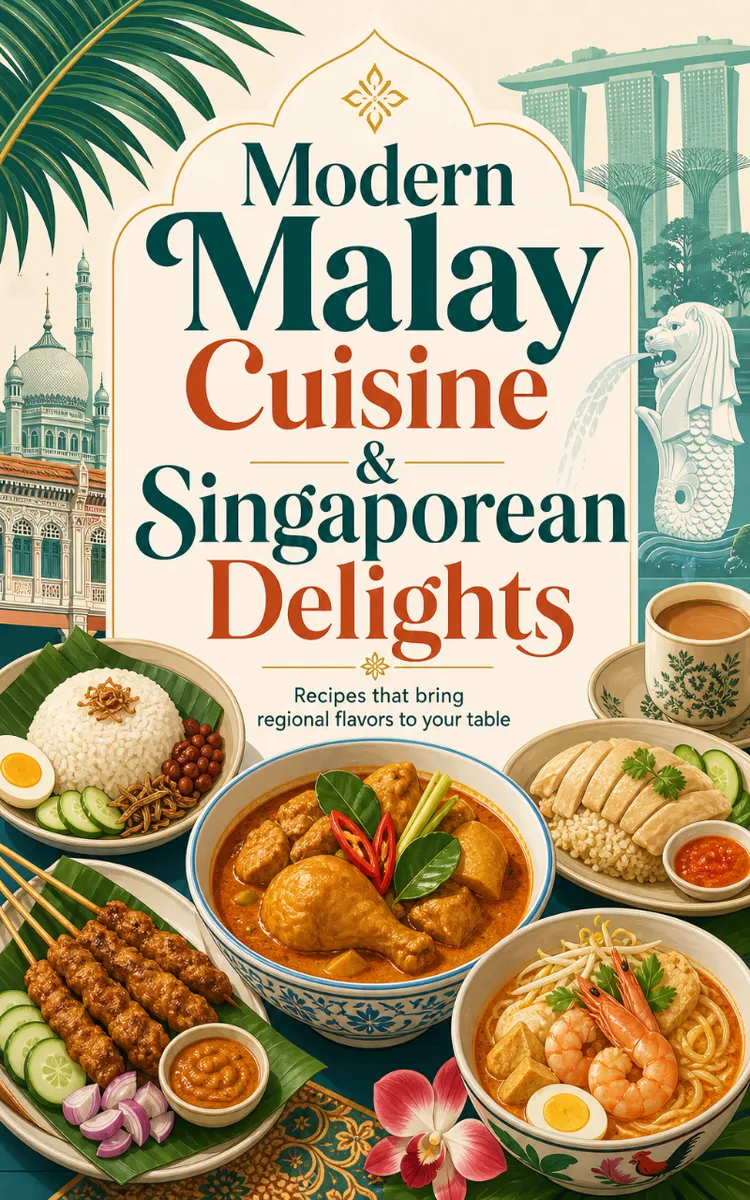
"Modern Malay Cuisine & Singaporean Delights" is a cookbook by Anonymous with 5 chapters and approximately 4,821 words. Malay cuisine and Singaporean delicatessen-style recipes.
This book was created using Inkfluence AI, an AI-powered book generation platform that helps authors write, design, and publish complete books. It was made with the AI Cookbook Generator.
Frequently Asked Questions
What is "Modern Malay Cuisine & Singaporean Delights" about?
Malay cuisine and Singaporean delicatessen-style recipes
How many chapters are in "Modern Malay Cuisine & Singaporean Delights"?
The book contains 5 chapters and approximately 4,821 words. Topics covered include Coconut Lemongrass Chicken Rendang, Charred Satay Chicken with Peanut Sauce, Nasi Lemak-Style Coconut Rice Bowl, Singapore Chilli Crab-Style Tomato Lobster, and more.
Who wrote "Modern Malay Cuisine & Singaporean Delights"?
This book was written by Anonymous and created using Inkfluence AI, an AI book generation platform that helps authors write, design, and publish books.
How can I create a similar cookbook?
You can create your own cookbook using Inkfluence AI. Describe your idea, choose your style, and the AI writes the full book for you. It's free to start.
Write your own cookbook with AI
Describe your idea and Inkfluence writes the whole thing. Free to start.
Start writingCreated with Inkfluence AI


