
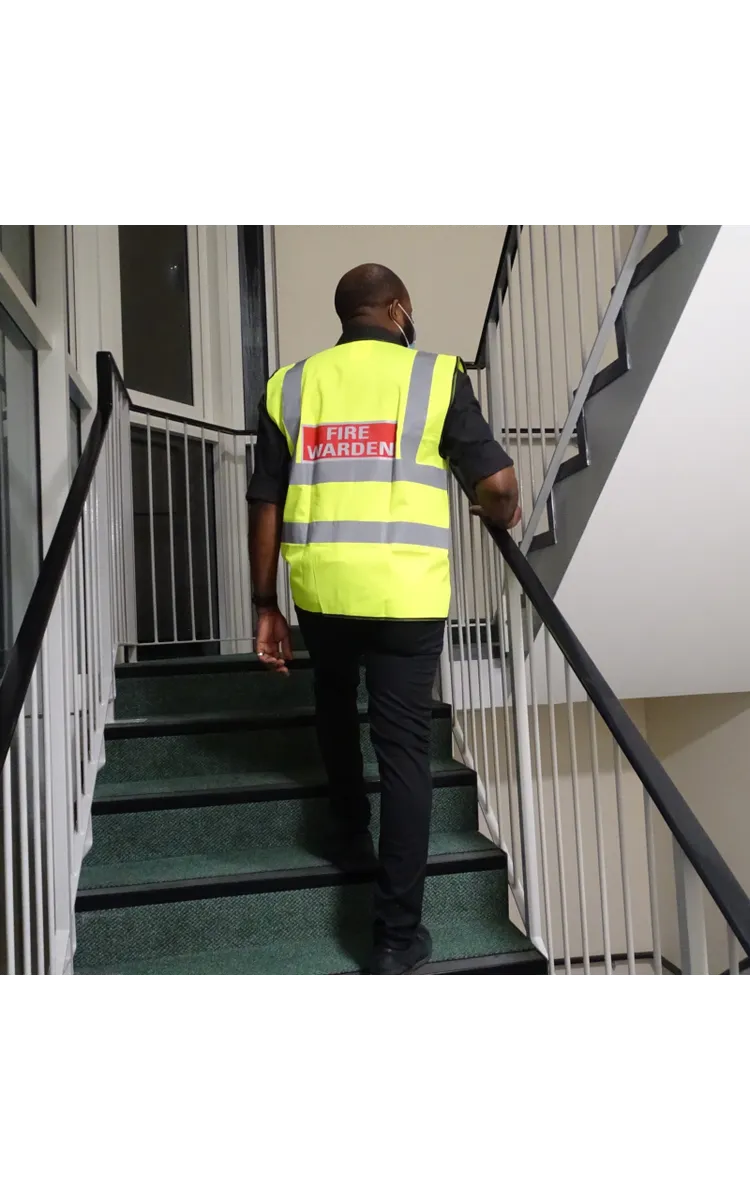
UK Level 2/3 Fire Marshal Course
Created with Inkfluence AI
Preparing for UK Level 2 or Level 3 Fire Marshal/Warden course
Table of Contents
- 1. Fire Risk Assessment and Recording
- 2. Fire Safety Management Systems
- 3. Evacuation Planning and Fire Drills
- 4. Fire Detection, Alarm, and Emergency Lighting
- 5. Use of Fire Extinguishers and Fire Control
Preview: Fire Risk Assessment and Recording
A short excerpt from “Fire Risk Assessment and Recording”. The full book contains 5 chapters and 4,998 words.
Key ConceptsThis chapter covers how to conduct and record a compliant fire risk assessment (FRA) for UK Level 2/3 Fire Marshal/Warden duties. For exams, you must show you understand the FRA process, what evidence to keep, and how to write findings clearly and legally.
You MUST know:What an FRA is for: identify fire hazards, people at risk, evaluate risk, remove/reduce risk, and record findings.
The “5-step” structure typically expected in FRA training:
Identify hazards
Identify people at risk
Evaluate, remove/reduce, protect
Record findings
Review/update (especially after changes)
Legal compliance focus: the FRA must be suitable and sufficient, and the significant findings must be recorded where required.
Recording standards: dates, assessor details (role/company), premises description, significant findings, actions with priorities, and review schedule.
Action linkage: each control measure should connect to a hazard/risk finding (not a generic list).
Common exam expectation: “What would you record?” is as important as “What would you do?”.
Before you continue:What are the “significant findings” you should record in a fire risk assessment?
Key TermsFire Risk Assessment (FRA) - a structured process to identify hazards, people at risk, evaluate risk, and implement controls.
Hazard - something with potential to cause harm (e.g., ignition sources, faulty wiring, storage practices).
People at Risk - anyone who could be affected, including visitors, contractors, and people with mobility/understanding limitations.
Risk - the likelihood of a fire occurring and the severity of harm if it happens.
Significant Findings - the important results of the FRA (key hazards, people at risk, and main control measures/action points).
Control Measures - actions taken to reduce likelihood and/or impact (e.g., fire detection, compartmentation, housekeeping).
Suitable and Sufficient - the FRA level of detail and scope is appropriate for the premises and competent for decision-making.
Review / Update - checking the FRA remains valid, especially after changes or incidents.
Active Recall (definitions blank):Fire Risk Assessment (FRA): __________
__________
Hazard: __________
__________
People at Risk: __________
__________
Risk: __________
__________
Significant Findings: __________
__________
Control Measures: __________
__________
Suitable and Sufficient: __________
__________
Review / Update: __________
__________
Worked ExamplesWorked Example 1 (straightforward recording)Scenario: Small office. Portable heaters used in winter. No faults reported.
Task: What should the FRA record?
Identify hazards: portable heaters, charging points, general combustibles (paper storage).
People at risk: staff, visitors, cleaners.
Evaluate risk: heater use location, housekeeping levels, supervision/controls.
Record significant findings:
Heater use control (e.g., permitted locations, no unattended use)
Housekeeping expectations (combustibles kept away from heat sources)
Any actions with priority and target date
Include review: date completed and when it will be reviewed (e.g., after changes in heating arrangements).
Now you try:Scenario: Same office, but now there is a contractor storing pallets in a corridor overnight.
Identify two new hazards: ________
Identify one new group at risk: ______
State two significant findings you would record:
__________
__________
__________
Worked Example 2 (linking actions to findings)Scenario: Warehouse with blocked fire exits due to storage.
Hazard: blocked escape routes.
People at risk: shift workers, agency staff, late arrivals.
Risk evaluation: increased likelihood of entrapment and delayed evacuation.
Control measures (and what to record):
Clear routes policy (immediate removal of stored items)
Monitoring responsibility (who checks)
Timescale and verification method
Record actions: “Remove obstructions from all escape routes by [date] and implement weekly checks by [role].”
...
About this book
"UK Level 2/3 Fire Marshal Course" is a study guide book by Anthony Chiazor with 5 chapters and approximately 4,998 words. Preparing for UK Level 2 or Level 3 Fire Marshal/Warden course.
This book was created using Inkfluence AI, an AI-powered book generation platform that helps authors write, design, and publish complete books. It was made with the Study Guide Generator.
Frequently Asked Questions
What is "UK Level 2/3 Fire Marshal Course" about?
Preparing for UK Level 2 or Level 3 Fire Marshal/Warden course
How many chapters are in "UK Level 2/3 Fire Marshal Course"?
The book contains 5 chapters and approximately 4,998 words. Topics covered include Fire Risk Assessment and Recording, Fire Safety Management Systems, Evacuation Planning and Fire Drills, Fire Detection, Alarm, and Emergency Lighting, and more.
Who wrote "UK Level 2/3 Fire Marshal Course"?
This book was written by Anthony Chiazor and created using Inkfluence AI, an AI book generation platform that helps authors write, design, and publish books.
How can I create a similar study guide book?
You can create your own study guide book using Inkfluence AI. Describe your idea, choose your style, and the AI writes the full book for you. It's free to start.
Write your own study guide book with AI
Describe your idea and Inkfluence writes the whole thing. Free to start.
Start writingCreated with Inkfluence AI


