
Read the first chapter
The whole of chapter one, free. About 7 min. Turn the pages with the arrows, your keyboard, or a swipe.
Chapter 1
The Money Map: Flows and Traps
A receipt can look like a finished story, but it is really just one frame in a bigger movie: your money enters, gets split, gets delayed, and sometimes disappears behind fees you never agreed to. Ava learned that the hard way when she started working part-time at a coffee shop. One week her paycheck looked “good,” but a few days later she checked her balance and realized she had less than expected. The difference wasn’t magic. It was the flow: taxes, spending, debt payments, and a couple of small charges that added up.
That is what this chapter fixes. You will learn how money moves through income, expenses, debt, and investing, using a simple tool called The Money Map Flowchart. After you read, you will be able to draw your own map, spot where your cash gets stuck, and catch teen traps early-before they turn into long-term habits.
Why This Matters
Most money problems start the same way: you treat your paycheck like it is the whole system. When you earn more, you feel better for a moment, then reality hits-rent, food, subscriptions, car costs, interest, and “I’ll fix it later” spending. Without a money map, you guess. Guessing feels normal, but it makes it hard to build wealth because you can’t see the exact path your money takes.
This chapter solves that by showing you a clear flow you can track. You will learn how income turns into available cash, how expenses drain it, how debt adds a “tax” on top of borrowing, and how investing reroutes money toward future you. Then you will learn the early warning signs for common teen traps: overspending that hides behind “just this once,” debt that grows faster than your income, and investing that turns into gambling because you skip the basics.
By the end, you will be able to answer three questions quickly: Where did my money go? Why did it go there? What should happen next week so I keep more of it and grow it on purpose?
How It Works
Money movement becomes easy when you stop thinking in totals and start thinking in directions. Use The Money Map Flowchart to trace every dollar from where it enters to where it exits. If you do this with one month’s real numbers, you will stop relying on vibes and start using proof.
Follow these steps:
1. Write your income sources (money in). List every regular source you can count on for the next month: paychecks, tips, allowances you actually receive, and any side income. For Ava, this included her part-time barista pay and a consistent student-leader stipend from the school club she ran. Add the expected amount, not the best-case fantasy.
2. Sort expenses into two bins: “needs” and “wants.” Needs cover housing share, food, transport, school costs, and basic utilities you personally pay. Wants cover anything you can pause without losing the ability to function: extra food runs, new clothes “because,” games, and non-essential subscriptions. Ava pulled her expenses into two columns and noticed her “wants” column looked small-until she counted the small charges that hit most days.
3. Track your debt as a cash drain, not just a balance. Debt does two things: it takes minimum payments now, and it grows through interest over time. When you map cash flow, you include the payment you make each month and the interest cost you can expect if you keep carrying the balance. If you have credit card debt, treat it like a leak that keeps running even when you “pay on time.”
4. Add your investing (money out to future growth). Investing means you put money into assets with the goal of growing over time. For a teen, that usually means a retirement account through your country’s system, or a simple brokerage account if you are allowed. Include the amount you plan to invest each month. If you invest $10, you include $10. If you invest $0, you include $0. The map doesn’t judge; it shows the direction.
To make the flow concrete, use this simple “direction view”:
• Income enters. - Needs and wants pull money out. - Debt payments pull money out and interest often adds extra cost. - Investing pulls money out on purpose, so you can grow wealth later.
A key detail: your available cash each month equals income minus all outflows (needs, wants, debt payments, and investing). If your available cash stays low even when you “earn enough,” your map will show you which outflow steals the difference.
Putting It Into Practice
Let’s use Ava’s situation and turn it into a working money map. She wants to stop the paycheck surprise and start building. Here is a realistic monthly setup you can copy with your numbers.
Step-by-step scenario (one month)
1. Gather one month of real money numbers. Use your last paycheck stub, bank transactions, and any bills you already pay. Write them down on paper or in a notes app.
2. Enter Ava’s income for a typical month. - Paycheck: $420 - Tips average: $40 - Student-leader stipend: $30 Total income: $490
3. List her needs and wants for the month. Needs (examples that fit a student life): - School supplies and printing: $20 - Bus or gas for school: $60 - Groceries and basic meals: $140 - Phone plan: $35 - One “must-have” clothing item replacement: $25 Total needs: $280
Wants (examples that often sneak in): - Eating out and coffee runs: $70 - Clothes and accessories: $60 - Subscriptions (music, videos, apps): $25 - Games / small purchases: $30 Total wants: $185
4. Map her debt if she has any. Ava had a small credit card balance from last school year. She pays: - Minimum payment: $25 She also carries interest, so the balance can grow if she only pays the minimum. Debt cash outflow for the month: $25
5. Decide investing and record it as an outflow. Ava chooses a simple goal: invest $20 per month starting now. Investing cash outflow: $20
6. Calculate her “available cash” and find the leak. Available cash = Income ($490) − Needs ($280) − Wants ($185) − Debt ($25) − Investing ($20) Ava’s available cash = $490 − $510 = −$20
That negative number explains the surprise. She didn’t “just have bad luck.” Her outflows exceeded her income by $20. The fix is not more motivation. The fix is changing the map.
7. Make one change that improves cash flow next month. Ava picks one lever: reduce wants by $20 without touching needs. She sets a rule: she buys only two eating-out meals per week and she cancels one subscription for a month. Expected outcome: wants drop from $185 to $165. New available cash = $490 − $280 − $165 − $25 − $20 = $0
That turns a surprise month into a controlled month. Next, she can aim for positive available cash and then grow investing.
Quick checklist
• Write down your income for the next month (not last year). - Split expenses into needs and wants. - Add debt minimum payments as a monthly cash outflow. - Add your investing amount (even if it is small). - Subtract everything from income. If you get a negative number, fix the map before you “try harder.”
What to Watch For
The Money Map Flowchart works because it exposes patterns early. Watch for these mistakes and fix them fast.
Mistake 1: Treating “small” spending as harmless Small purchases often feel too minor to matter, but they multiply when they hit daily. Ava realized her “coffee and snacks” line wasn’t $10 here and there. It was $70 last month, and it showed up clearly once she mapped wants instead of trusting her memory.
Do this: Track your wants for one month using bank transactions. Group them into one category called “wants” and total them. Not this: Trust your gut when you decide what you “usually” spend. Guesses hide the real total and keep you stuck.
Mistake 2: Paying minimum debt and calling it “handled” Minimum payments keep your account in good standing, but they often slow your progress because interest keeps charging while the balance remains. When you map debt as cash flow, you see the truth: you pay now, and you may still pay later with extra cost.
Do this: Write your monthly debt payment on your Money Map Flowchart and ask one question: “What stops the interest from growing my balance?” Then choose a plan that you can repeat every month, like paying a fixed extra amount you can afford. Not this: Only look at the balance and ignore the monthly cash drain. If you only check the balance, you miss the part that affects your spending freedom today.
Mistake 3: Starting investing before you control cash flow Investing too early can still be smart, but it becomes a trap when you fund it by borrowing or by cutting necessities. If your map shows negative available cash, investing can turn into a cycle where you pull money from debt or miss bills.
Do this: Only increase investing after you get your available cash to at least zero for a full month, then aim for a small positive amount. For many teens, that means building a steady “extra cash” buffer before raising contributions. Not this: Push investing higher while your map still shows you run out of money. That turns investing into another expense category you can’t sustain.
When you keep your flow visible, you stop reacting to money and start directing it. Next, you will learn how to turn this map into a simple plan you can follow week to week, so your money movement stays aligned with your goals instead of getting hijacked by the next surprise charge.
End of chapter one. 4 more chapters in the full book.
Swipe or use the arrows to turn the page
What's inside: 5 chapters
- 1. The Money Map: Flows and Traps
- 2. Budgeting With the 50/30/20 Rule
- 3. Debt Escape: Interest Math and Payoff
- 4. Index Investing Basics for Teens
- 5. The Freedom Plan: Build Wealth Habits
About this book
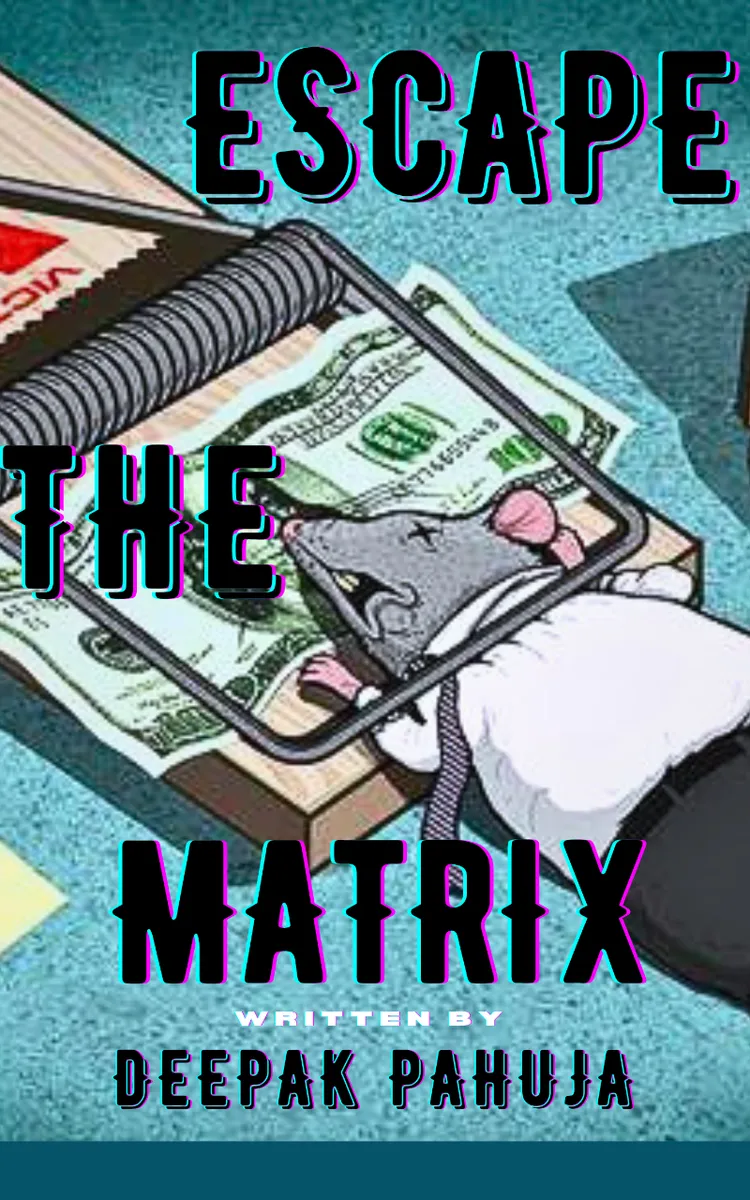
"Escape The Matrix" is a finance book by Deepak Pahuja with 5 chapters and approximately 8,586 words. Teen financial literacy for market understanding and freedom.
This book was created using Inkfluence AI, an AI-powered book generation platform that helps authors write, design, and publish complete books. It was made with the AI Ebook Generator.
Frequently Asked Questions
What is "Escape The Matrix" about?
Teen financial literacy for market understanding and freedom
How many chapters are in "Escape The Matrix"?
The book contains 5 chapters and approximately 8,586 words. Topics covered include The Money Map: Flows and Traps, Budgeting With the 50/30/20 Rule, Debt Escape: Interest Math and Payoff, Index Investing Basics for Teens, and more.
Who wrote "Escape The Matrix"?
This book was written by Deepak Pahuja and created using Inkfluence AI, an AI book generation platform that helps authors write, design, and publish books.
How can I create a similar finance book?
You can create your own finance book using Inkfluence AI. Describe your idea, choose your style, and the AI writes the full book for you. It's free to start.
Write your own finance book with AI
Describe your idea and Inkfluence writes the whole thing. Free to start.
Start writingCreated with Inkfluence AI


