
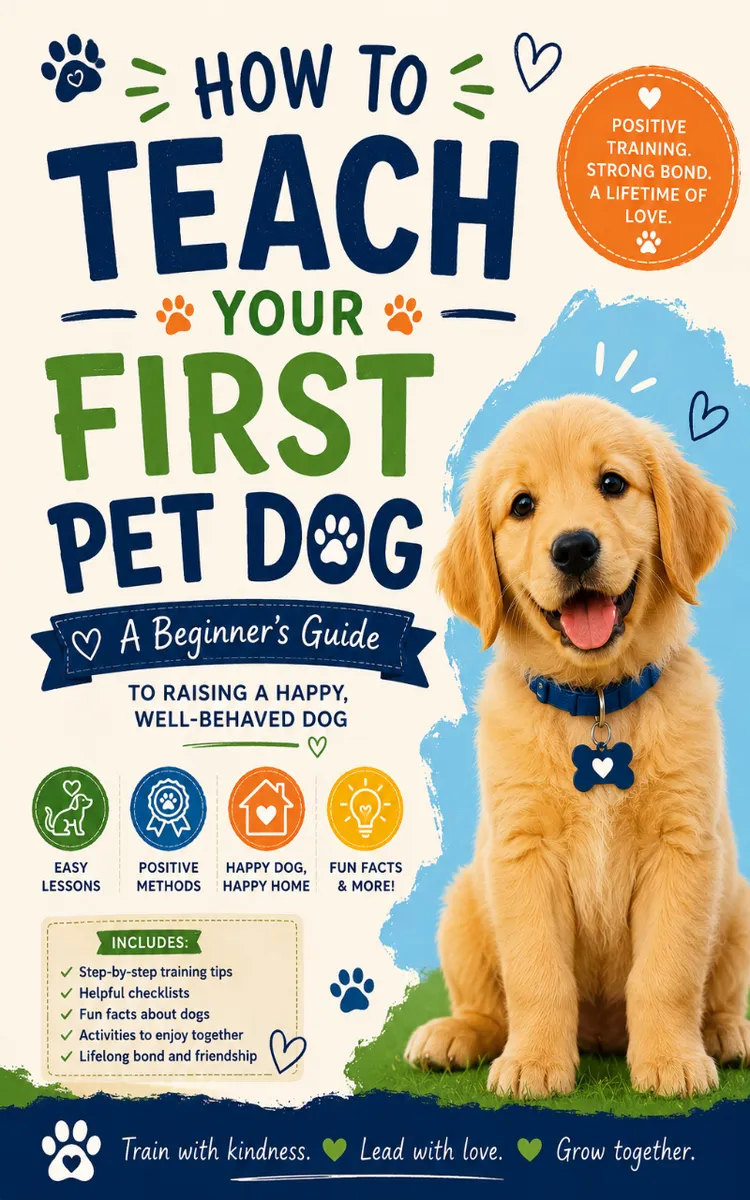
Teach Your First Pet Dog
Created with Inkfluence AI
Beginner dog training and care for a first pet
Table of Contents
- 1. Choosing the Right First Dog
- 2. Preparing Your Home for Arrival
- 3. Building Trust in the First Week
- 4. House Training and Crate Training Basics
- 5. Teaching Sit, Stay, and Come
Preview: Choosing the Right First Dog
A short excerpt from “Choosing the Right First Dog”. The full book contains 5 chapters and 9,710 words.
Why matching breed, age, and temperament matters (and what you’ll be able to do)
Have you ever met a “perfect dog” on paper that turned into a daily struggle at home? That happens when your dog’s breed traits, age needs, and temperament don’t fit your real schedule, space, and patience. Training still works - but when you start with the wrong match, you spend weeks fighting basics like leash manners, calm settling, or not jumping, instead of building smooth routines.
This chapter solves that problem. You’ll learn how to choose a first dog using a simple tool called the Lifestyle Match Compass. You’ll match what your dog needs (not just what you want) to what your life can provide - so your first training sessions feel realistic, not frustrating. After reading, you’ll be able to:
- pick the right dog type for your daily routine,
- set fair training expectations based on age and temperament,
- and plan the first two weeks of training around your dog’s natural strengths.
Here’s the key: you don’t need a “genius” dog or a “perfect” owner. You need a dog whose common behaviors fit your environment and your available time. When that clicks, positive training (rewarding what you want) becomes easier because your dog isn’t constantly overwhelmed or under-stimulated.
Takeaway prompt: Before you look at any dogs, ask yourself: “Do I want an easy dog - or do I want a good match that I can train with consistent rewards?”
How the Lifestyle Match Compass works (breed, age, temperament → your training plan)
The Lifestyle Match Compass helps you make a decision using three directions: Breed tendencies, Age needs, and Temperament style. You’ll use it to predict how your dog will likely behave in your home, then you’ll plan your first training steps around that reality.
Start by thinking in “likely behaviors,” not “guarantees.” Even within the same breed, dogs vary. But breed, age, and temperament still give you strong clues about what training will feel like day to day.
Use this numbered process when you’re choosing a dog (or deciding between two candidates). Write your answers down so you can compare clearly:
1. List your daily schedule in blocks (hours, not vibes).
Example: “Work from home: 9:00-11:30, lunch break: 11:30-12:00, office work: 12:00-3:30, away time: 3:30-5:30.”
Why this matters: age and temperament determine how long your dog can comfortably wait before you need a potty break, play, or training.
2. Choose the right “training effort level” for your time.
If you can do short sessions (2-5 minutes) several times a day, you can handle many dog types. If you can only train once or twice daily, choose a calmer, more settled temperament.
Differentiator example: A remote worker with focused work blocks often succeeds with a dog that can settle near you, not one that needs constant chasing.
3. Match age to your realism.
Use this quick guide:
- Puppies (under ~6 months): expect more chewing, more accidents, and more frequent potty needs. Train in very short bursts.
- Young dogs (about 6-18 months): often strong and curious; you’ll work hard on impulse control and leash skills.
- Adult dogs (about 2-7 years): usually better at settling and routines; you still train manners, but you’ll spend less time on basic bodily needs.
Why this matters: training goals change as the dog’s body and brain mature.
4. Read temperament like a “behavior pattern,” not a personality label.
Look for these common patterns in a dog’s reactions:
- Confidence: Does the dog explore new spaces or freeze?
- Bounce: Does the dog turn everything into play or get easily overstimulated?
- People-focus: Does the dog notice you and respond to simple guidance?
Why this matters: positive training works best when your dog can learn - meaning they can take treats, follow cues, and calm down enough to practice.
Now add a simple scoring habit: for each direction (breed tendencies, age needs, temperament style), write “Low / Medium / High” for how much active management you expect. Then compare dogs. You’re not hunting for “perfect” - you’re hunting for “manageable.”
Ask yourself: If your dog gets excited, do you have the time and tools to redirect them into a calm reward? If you can’t, choose a calmer match.
Putting it into practice: Tanya’s first-dog decision using the Compass
Tanya is 32 and works remotely. She lives in an apartment and wants a dog that helps her feel grounded, not trapped in a constant cycle of emergencies. She also knows she’s new, so she wants training that builds momentum instead of draining her.
Here’s how Tanya uses the Lifestyle Match Compass step by step when she compares two candidates she finds through local listings.
...
About this book
"Teach Your First Pet Dog" is a how-to guide book by Sam Jean-Louis with 5 chapters and approximately 9,710 words. Beginner dog training and care for a first pet.
This book was created using Inkfluence AI, an AI-powered book generation platform that helps authors write, design, and publish complete books. It was made with the AI Ebook Generator.
Frequently Asked Questions
What is "Teach Your First Pet Dog" about?
Beginner dog training and care for a first pet
How many chapters are in "Teach Your First Pet Dog"?
The book contains 5 chapters and approximately 9,710 words. Topics covered include Choosing the Right First Dog, Preparing Your Home for Arrival, Building Trust in the First Week, House Training and Crate Training Basics, and more.
Who wrote "Teach Your First Pet Dog"?
This book was written by Sam Jean-Louis and created using Inkfluence AI, an AI book generation platform that helps authors write, design, and publish books.
How can I create a similar how-to guide book?
You can create your own how-to guide book using Inkfluence AI. Describe your idea, choose your style, and the AI writes the full book for you. It's free to start.
Write your own how-to guide book with AI
Describe your idea and Inkfluence writes the whole thing. Free to start.
Start writingCreated with Inkfluence AI


