
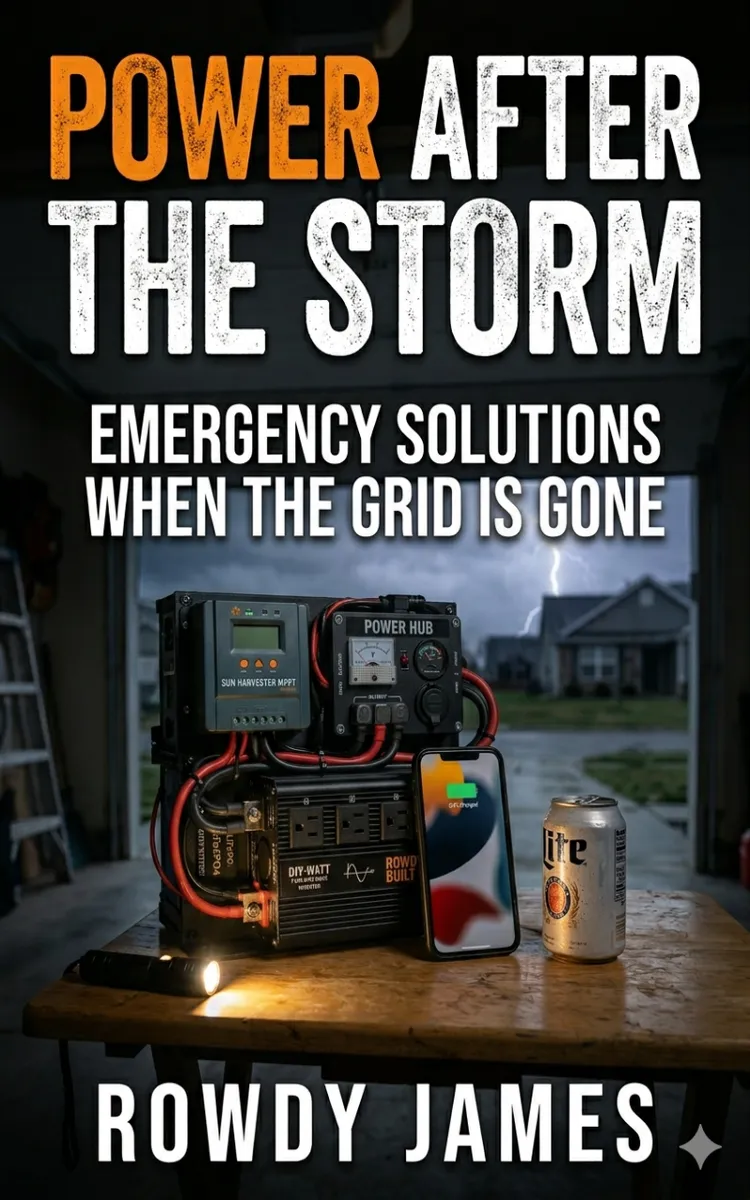
Power After The Storm Field Manual
Created with Inkfluence AI
Off-grid power systems design, repair, and protection
Table of Contents
- 1. Understanding the Basics of Power After The Storm Field Manual
- 2. Essential Equipment and Setup for Power After The Storm Field Manual
- 3. Your First Steps with Power After The Storm Field Manual
- 4. Building Confidence with Power After The Storm Field Manual
- 5. Solving Everyday Power After The Storm Field Manual Problems
- 6. Taking Power After The Storm Field Manual to the Next Level
- 7. Fine-Tuning Your Power After The Storm Field Manual Approach
- 8. Making Power After The Storm Field Manual Part of Your Routine
- 9. Understanding the Basics of Power After The Storm Field Manual (Phase 2)
- 10. Essential Equipment and Setup for Power After The Storm Field Manual (Phase 2)
- 11. Your First Steps with Power After The Storm Field Manual (Phase 2)
- 12. Building Confidence with Power After The Storm Field Manual (Phase 2)
- 13. Solving Everyday Power After The Storm Field Manual Problems (Phase 2)
- 14. Taking Power After The Storm Field Manual to the Next Level (Phase 2)
- 15. Fine-Tuning Your Power After The Storm Field Manual Approach (Phase 2)
- 16. Making Power After The Storm Field Manual Part of Your Routine (Phase 2)
- 17. Understanding the Basics of Power After The Storm Field Manual (Phase 3)
- 18. Essential Equipment and Setup for Power After The Storm Field Manual (Phase 3)
- 19. Your First Steps with Power After The Storm Field Manual (Phase 3)
- 20. Building Confidence with Power After The Storm Field Manual (Phase 3)
First chapter preview
A short excerpt from chapter 1. The full book contains 20 chapters and 37,706 words.
Why This Matters
When the grid dies, the first thing you feel isn’t darkness-it’s silence. No hum from transformers, no steady glow from the hallway, no background “stuff just works” sound. That silence tells you one brutal truth: your power plan can’t depend on a utility company, and it can’t depend on luck. You need a system you understand well enough to repair, protect, and run when you’re tired, cold, and the storm already took its cut.
Most people fail after a storm for one simple reason: they treat electricity like a mysterious substance instead of a set of rules. They slap in a battery, plug in a device, and hope the inverter behaves. Then the fridge warms, the lights flicker, a breaker trips, or worse-something gets hot and starts smelling like burnt plastic. This chapter gives you the basics you need to stop guessing. You’ll learn how power moves, how loads behave, and how to build a quick “read” of your system so you can make safe choices without turning every problem into a full rebuild.
By the end, you’ll be able to look at any off-grid setup-solar + batteries + inverter, generator backup, or even a small “scout” system-and answer four questions on the spot: What kind of power am I making? What kind of power do my devices need? How much stress will my loads put on the system? What protection keeps the system from turning into a fire? Hold onto that. It’s the foundation for every build and repair you’ll do next.
Takeaway / reflection prompt: After you finish reading, pick one device in your house (fridge, router, well pump, microwave) and write down what power it needs and what part of your system delivers it. If you can’t do that yet, you’ll learn it here.
---
How It Works
Power after the storm runs on a few basic ideas. If you lock these in, you stop panicking when something changes. You also stop buying the wrong gear. The core pieces you’ll see in almost every off-grid system are a power source (solar panels and/or a generator), an energy storage (batteries), a power converter (charge controller and inverter), and your loads (lights, fridge, electronics). Each piece has a job. Your job is to make sure the jobs match.
Here’s the simplest way to understand the flow, with concrete rules you can use immediately:
1. Match the “kind” of power: DC vs AC
- Direct Current (DC) flows one direction (typical from solar and batteries).
- Alternating Current (AC) flips direction back and forth (typical for most household outlets).
- If you feed AC devices with DC (or the other way around), you get either zero power or damaged gear.
Ask yourself: Does the device label say “Input: 120V AC” or “Input: 12V DC”?
2. Know what your inverter must deliver: power and waveform
- Inverter: the device that turns DC battery power into AC for your outlets.
- Many sensitive electronics hate dirty output. That’s why you’ll see the insistence on Pure Sine Wave inverters later in the manual: they produce a smooth waveform that behaves more like grid power.
- If your inverter output doesn’t match your load needs, you’ll see weird symptoms: buzzing audio, overheated chargers, router resets, or a fridge that struggles to run.
Practical check: If you have an inverter with a “modified” waveform, test one sensitive device first (router + phone charger), not the fridge.
3. Understand load behavior: running watts vs surge watts
- Running watts (also called continuous power) is what a device uses while it runs steadily.
- Surge watts (also called starting power) is what a motor or compressor needs when it starts.
- A system can “look fine” until a motor kicks on, then the inverter browns out or shuts down.
Rule you can use: Size your inverter and battery support for the highest surge you’ll hit, not just the running watts.
4. Use protection to keep failures from turning into disasters
- Circuit protection (like fuses and breakers) stops current from climbing into “burning” territory.
- Battery protection prevents deep discharge and reduces the risk of damage.
- Wiring protection prevents heat buildup from loose connections and wrong cable sizing.
Reality check: If you skip protection, you don’t “save money”-you trade money for smoke.
Now put those rules into a simple mental map you can use during repairs: Source makes energy → Battery stores energy → Controller/inverter converts energy → Loads use energy → Protection stops unsafe conditions.
Takeaway / reflection prompt: Write down the chain for your current setup (even if it’s just a small backup). Source → storage → converter → load → protection. If any link is missing, you’ll feel it fast when you test.
---
Putting It Into Practice
Let’s run a real, field-style setup check you can do with basic tools. You’ll use this process whether you’re designing a system or troubleshooting one that failed during the storm.
...
About this book
"Power After The Storm Field Manual" is a how-to guide book by Anonymous with 20 chapters and approximately 37,706 words. Off-grid power systems design, repair, and protection.
This book was created using Inkfluence AI, an AI-powered book generation platform that helps authors write, design, and publish complete books. It was made with the AI Ebook Generator.
Frequently Asked Questions
What is "Power After The Storm Field Manual" about?
Off-grid power systems design, repair, and protection
How many chapters are in "Power After The Storm Field Manual"?
The book contains 20 chapters and approximately 37,706 words. Topics covered include Understanding the Basics of Power After The Storm Field Manual, Essential Equipment and Setup for Power After The Storm Field Manual, Your First Steps with Power After The Storm Field Manual, Building Confidence with Power After The Storm Field Manual, and more.
Who wrote "Power After The Storm Field Manual"?
This book was written by Anonymous and created using Inkfluence AI, an AI book generation platform that helps authors write, design, and publish books.
How can I create a similar how-to guide book?
You can create your own how-to guide book using Inkfluence AI. Describe your idea, choose your style, and the AI writes the full book for you. It's free to start.
Write your own how-to guide book with AI
Describe your idea and Inkfluence writes the whole thing. Free to start.
Start writingCreated with Inkfluence AI


