
Read the first chapter
The whole of chapter one, free. About 8 min. Turn the pages with the arrows, your keyboard, or a swipe.
Chapter 1
Chapter 1: The Biology of Burnout and the Science of Stress
The Human Engine Under Pressure
Your body reacts to modern work stress the same way it reacts to physical danger. When a deadline approaches, your brain triggers the release of cortisol and adrenaline. These hormones increase your heart rate and sharpen your focus. This response helps you survive short-term emergencies.
However, remaining in this state for months or years destroys your health. Chronic stress prevents your cells from repairing themselves, weakens your immune system, and disrupts your sleep. Burnout occurs when your physical and mental resources are completely empty.
How Rest Heals Your Cells
Stepping away from your daily stressors changes your biology. When you go on vacation, your nervous system switches from the sympathetic mode (fight-or-flight) to the parasympathetic mode (rest-and-digest).
In this restful state, your body lowers its production of cortisol. Your blood pressure drops, your heart rate variability improves, and your immune system creates more infection-fighting cells. True rest allows your body to heal at a cellular level, reducing inflammation and lowering the risk of long-term illness.
[Stress State: High Cortisol] ---> [Vacation Reset] ---> [Rest State: High Immunity]
The Warning Signs You Are Ignoring
Many people normalize chronic exhaustion. You might believe that feeling tired every morning, having difficulty focusing, or feeling irritable are just facts of adult life. These are actually warning signs from your nervous system.
If you find yourself staring at your computer screen without processing information, or if you feel anxious during your days off, your brain is demanding a hard reset. Recognizing these signs early allows you to take action before burnout causes permanent damage to your health and relationships.
Overview
Your body treats prolonged work stress like repeated small injuries: over time they add up and make you fragile. This section expands on how the cascade from acute stress to chronic burnout happens, and what biological changes you can expect to reverse when you intentionally step away and rest. You'll get clear signs that your nervous system is asking for a reset, plus straightforward reasons why a vacation or planned break can produce measurable healing.
Who this is for: people who feel persistently drained, struggle to focus, wake unrefreshed, or push through anxiety on days off. If you're a small-business owner, shift worker, parent juggling multiple roles, or anyone riding a long run of stress, this is written for you.
Key benefits:
• Learn the specific biological shifts that happen during rest (lower cortisol, better heart-rate variability, reduced systemic inflammation).
• Recognize the early warning signs so you can act before burnout deepens.
• Understand why even short, purposeful breaks produce real cellular recovery so you can plan practical resets you’ll actually take.
Health Foundations
Stress starts in the brain but plays out in the whole body. When your brain perceives a threat - real or deadline-related - it signals the adrenal glands to release cortisol and adrenaline. These hormones mobilize energy, sharpen attention, and suppress non-essential functions like digestion and immune activity. That's useful in short bursts, but when the signal stays on, several harmful patterns develop.
First, chronic cortisol exposure reduces heart rate variability (HRV), a simple measure of how well your autonomic nervous system balances fight-or-flight with rest-and-digest. Low HRV links to fatigue, poor sleep, and a weaker stress response over time. Second, persistent stress increases systemic inflammation - measured by markers like C-reactive protein - which contributes to aches, mood shifts, and higher long-term risks for metabolic and cardiovascular issues. Third, sleep architecture fragments: you spend less time in deep and REM sleep, which are the stages where the brain clears metabolic waste and consolidates memory.
Key risk factors that push someone from stress into burnout include:
• Prolonged high workload without recovery windows (no full day off for weeks).
• Repeated poor sleep (under 6 hours most nights or irregular sleep timing).
• Lack of meaningful detachment during non-work hours (checking work email at night, not switching psychological gears).
A concrete example: a restaurant manager who works six-day weeks, sleeps 5-6 hours, and checks the schedule at midnight will show higher resting heart rate, lower HRV, and report both mental fog and increased colds. When that person takes a structured four-day break with no work contacts, those physiological markers begin to shift toward recovery within 48-72 hours.
Practical Protocol
To trigger the biological reset described above, aim for a sequence of intentional steps you can repeat. Start with short, measurable targets and build up.
• Immediate 48-hour reset: stop checking work communications for two full days. Sleep opportunity: aim for 7-9 hours each night; lights out within one hour of your usual bedtime improves consistency. Movement: 20-30 minutes of light aerobic activity once per day (walking, easy cycling).
• Weekend reset every 2-3 weeks: take 48-72 hours with one full day of digital disconnection. Add one longer restorative activity - two hours in nature, a restorative yoga session, or a social meal that feels relaxing.
• Vacation reset (every 3-6 months): plan 5-10 consecutive days where you avoid work-related tasks completely. Priorities during this period: consistent sleep (7-9 hours), at least 30 minutes of movement daily, two meals timed regularly, and one activity that induces slow breathing (e.g., guided breathing for 10 minutes twice a day).
Progression milestones: within 48-72 hours you should notice improved sleep onset and clearer thinking; within a week, reduced irritability and fewer physical aches; after a 5–10-day break, measurable improvements in morning HRV and lower perceived stress. Use a simple tracker (sleep log, HRV app, or symptom checklist) to confirm progress.
Warning signs to seek professional help: if you experience persistent suicidal thoughts, significant memory loss, extreme withdrawal from daily life, fainting, or sustained chest pain - reach out to a licensed clinician or emergency services promptly. Also consult a primary care provider if fatigue persists despite following these steps for several weeks, as other medical issues can mimic burnout.
Common Mistakes
Trying to “power through” with productivity tricks
Why it happens: We assume efficiency hacks can replace rest.
What to do instead: Schedule recovery like a meeting - block 48 hours of no work and treat it as non-negotiable. You’ve got this if you protect that time first.
Thinking a single weekend will fix months of stress
Why it happens: Short breaks feel better, so we believe they’re enough.
What to do instead: Use short resets as maintenance but plan a 5–10-day vacation every 3-6 months to allow deeper cellular repair.
Doing busy vacations instead of restorative ones
Why it happens: We equate “doing more” with value - touring, meetings, or chores fill the days.
What to do instead: Choose one restorative activity per day (long walk, nap, breathing practice) and keep other plans optional. This lets your body shift toward real parasympathetic rest.
You’re already noticing the signals your body sends; honoring them with the right kind of rest makes recovery real. Next, we’ll look at how to use travel and environment to amplify these biological resets, so you come back sharper and more resilient. You've got this - one deliberate break at a time. Choose travel or local retreats that reduce decision fatigue: pick accommodations with simple amenities, limit daily choices to two or three, and let someone else handle logistics when possible. That means booking a place with meal options on-site or arranging one guided activity rather than an itinerary packed with back-to-back obligations. When you offload planning, your nervous system gets permission to rest - and that permission translates into measurable gains in sleep quality and mood within days.
Pair your break with two simple tracking habits: a nightly 60-second check-in (rate sleep, mood, energy 1-5) and a morning HRV or resting pulse reading if you use a wearable. Those small data points make it easier to see progress and maintain motivation for future resets. If you don’t have a device, a consistent morning note - "slept 8 hrs, woke refreshed" - works just as well.
Finally, create a recovery ritual to bridge back to work. Schedule a half-day buffer between travel returns and the first workday: use it to unpack, sort email, and plan your first two days back with low-demand tasks. Re-entry rituals reduce the rebound into stress and help sustain the biological benefits you earned on break.
You’ve built a practical, evidence-aware approach: recognize the early warning signs, follow a clear sequence for short and long resets, avoid common mistakes, and use simple tracking and rituals to lock in gains. Keep practicing these steps and treat recovery as part of your professional toolkit - not indulgence but maintenance.
Quarterly Checkpoints: Measuring Progress Without Obsession
Set a simple quarterly checkpoint - every three months - to take stock of how your resets are changing your body and life. Pick a consistent morning (first week of the quarter) and do three quick things: 1) record average nightly sleep for the prior month, 2) note your baseline morning resting pulse or HRV if you use a wearable, and 3) rate energy, focus, and mood each on a 1-5 scale. Put these three datapoints in one place (a dedicated notebook, a notes app, or a simple spreadsheet). Over four checkpoints a year you’ll see trends: small steady gains in sleep, clearer mornings, or fewer days of low energy. That evidence makes it easier to prioritize future breaks and convincing your team or family that these resets are necessary.
Using Little Gifts as Positive Reinforcement
Pair each successful checkpoint with a small, planned reward. The gift should be simple, immediate, and restorative - think a 90-minute massage, a cookbook you’ve been eyeing, a new pair of walking shoes, or a locally made treat. Schedule the reward when you hit a milestone (e.g., three consistent weekly reset practices or a vacation taken) and budget for it in advance so it feels earned, not impulse. These tiny celebrations reinforce the habit loop: cue (checkpoint), routine (rest practices), reward (a gift). Keep rewards modest and meaningful so they boost motivation without creating financial stress - you’ve got this, one thoughtful reward at a time.
End of chapter one. 19 more chapters in the full book.
Swipe or use the arrows to turn the page
What's inside: 20 chapters
- 1. Chapter 1: The Biology of Burnout and the Science of Stress
- 2. Chapter 2: The Neural Playground: How Travel Rewires Your Brain
- 3. How Sporting Events and Group Viewing Reduce Stress
- 4. Chapter 4: Northeast USA: Coastal Serenity, Historic Trails, and Ocean Delicacies
- 5. Chapter 5: The American South: Slow Living, Sweet Tea, and Lowcountry Hospitality
- 6. Chapter 6: The Midwest: Lakefront Solitude, Heartland Trails, and Harvest Feasts
- 7. The Maui Prescription: Why Ocean Air and Shoreline Rhythm Change Your Body
- 8. Chapter 8: The Pacific Northwest: Emerald Forests, Misty Peaks, and Pacific Flavors
- 9. Chapter 9: Italy: "Il Dolce Far Niente" and the Mediterranean Rhythm
- 10. Chapter 10: Japan: "Shinrin-Yoku," Onsens, and Mindful Balance
- 11. Costa Rica's Healthful Rhythm and the Role of Coffee
- 12. Chapter 12: France: "L'Art de Vivre" and the Gastronomic Celebration
- 13. Chapter 13: Greece: The Aegean Horizon and the Blue Zone Longevity
- 14. Chapter 14: Iceland: Geothermal Rejuvenation and the Arctic Wilderness
- 15. Chapter 15: New Zealand: The Adventure Paradigm and Maori Connection
- 16. Chapter 16: Thailand: The Land of Smiles, Ancient Temples, and Tropical Healing
- 17. Chapter 17: Peru: Andean Heights, Mystic Trails, and Culinary Innovation
- 18. Chapter 18: Morocco: Oasis Retreats, Souk Adventures, and Desert Solitude
- 19. Chapter 19: South Africa: Safari Horizons, Wild Oceans, and Communal Braais
- 20. Chapter 20: Creating Your Sustainable Vacation Plan: The Blueprint for a Lifelong Reset
About this book
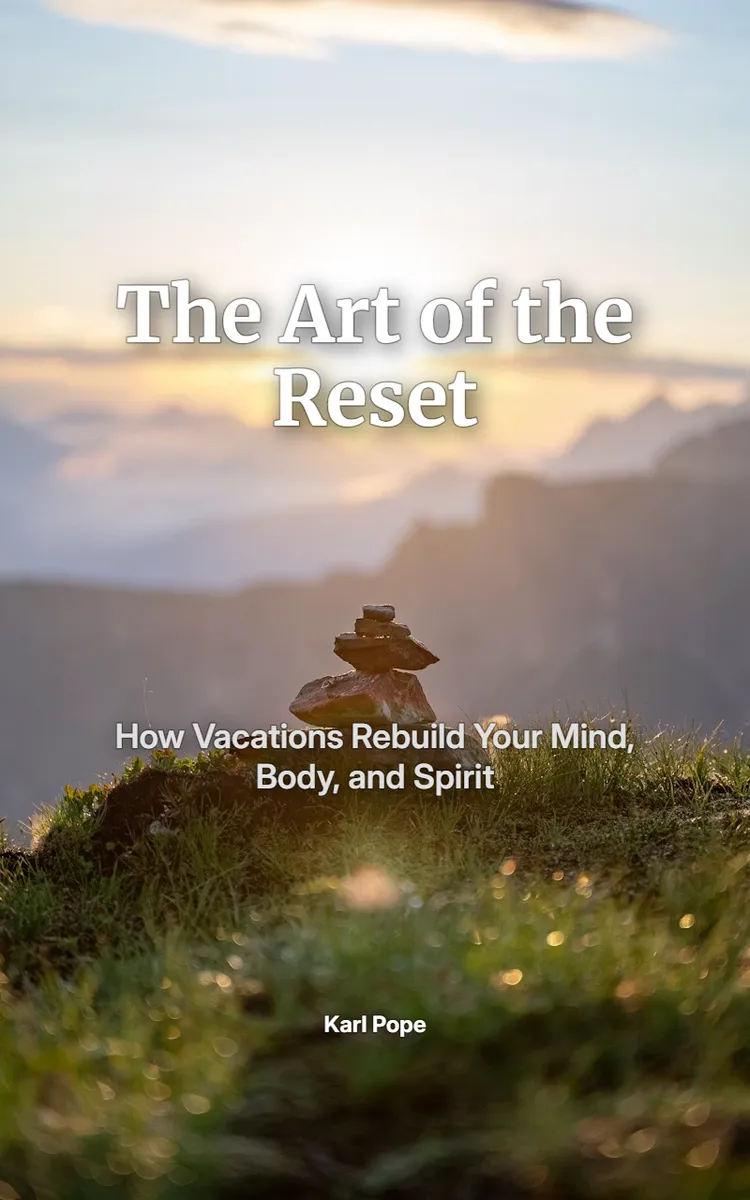
"The Art of the Reset" is a health & wellness book by Karl Pope with 20 chapters and approximately 9,308 words. You are not “just tired.” You are running your body in emergency mode, day after day, until your cells stop repairing themselves.
This book was created using Inkfluence AI, an AI-powered book generation platform that helps authors write, design, and publish complete books. It was made with the AI Health Book Generator.
Frequently Asked Questions
What is "The Art of the Reset" about?
You are not “just tired.” You are running your body in emergency mode, day after day, until your cells stop repairing themselves. The Art of the Reset explains how modern stress floods your system with cortisol and adrenaline, why burnout becomes your new normal, and what your body does when it finally gets true recovery. You will learn how rest heals at the cellular level, how travel rewires your brain through neuroplasticity, and how small breaks can restore deep sleep, strengthen immunity, and calm your cardiovascular system. This is not motivation. It is a practical, science grounded reset plan built from real biological mechanisms, so you can stop surviving and start healing.
How many chapters are in "The Art of the Reset"?
The book contains 20 chapters and approximately 9,308 words. Topics covered include Chapter 1: The Biology of Burnout and the Science of Stress, Chapter 2: The Neural Playground: How Travel Rewires Your Brain, How Sporting Events and Group Viewing Reduce Stress, Chapter 4: Northeast USA: Coastal Serenity, Historic Trails, and Ocean Delicacies, and more.
Who wrote "The Art of the Reset"?
This book was written by Karl Pope and created using Inkfluence AI, an AI book generation platform that helps authors write, design, and publish books.
How can I create a similar health & wellness book?
You can create your own health & wellness book using Inkfluence AI. Describe your idea, choose your style, and the AI writes the full book for you. It's free to start.
Write your own health & wellness book with AI
Describe your idea and Inkfluence writes the whole thing. Free to start.
Start writingCreated with Inkfluence AI


