
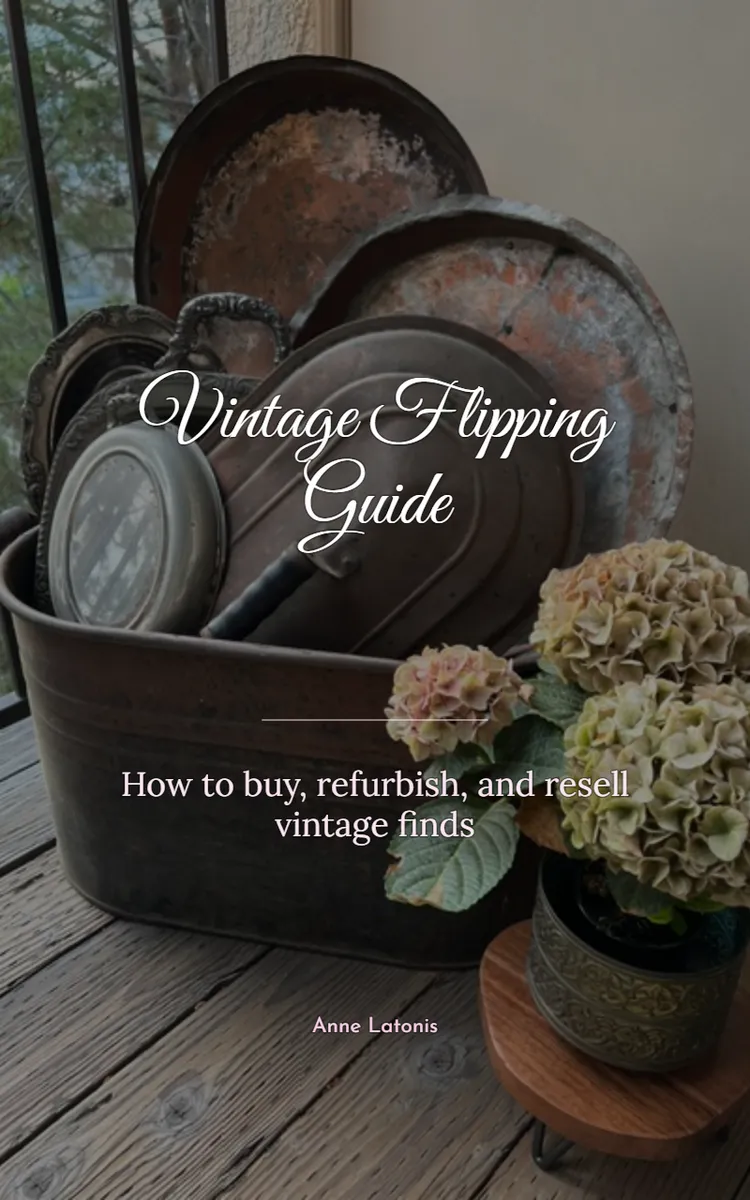
Vintage Flipping Guide
Created with Inkfluence AI
Buying, refurbishing, and reselling vintage items for profit
Table of Contents
- 1. Sourcing Vintage Finds That Flip
- 2. Assessing Condition and Hidden Costs
- 3. Refurbishing Basics for Beginners
- 4. Pricing and Profit Math That Works
- 5. Listing, Photos, and Shipping Setup
Preview: Sourcing Vintage Finds That Flip
A short excerpt from “Sourcing Vintage Finds That Flip”. The full book contains 5 chapters and 10,260 words.
She found the item before she found the profit: a box fan with a faded logo at the edge of a thrift aisle, sitting under a stack of mismatched cookware. Talia didn’t buy it because it looked “cool.” She bought it because it matched a pattern she’d learned to spot fast - clean lines, working controls, and a brand that showed up in listings when she searched. That one decision came from knowing where to hunt and how to judge value before you spend money.
For a beginner, the hardest part of vintage flipping isn’t refurbishing. It’s sourcing - finding items that will actually sell, not just things that look old. This chapter gives you a repeatable way to hunt profitable inventory quickly, then filter it so you spend your time and cash on pieces with a real chance to flip.
After you finish, you’ll know exactly where to look, what to check in the first 60-90 seconds, and how to use a simple “Three-Source Radar” so you don’t rely on luck. You’ll also learn the common traps that drain your budget - like buying damaged items you can’t fix cheaply or overpaying for items that don’t match what people search for.
Use the Three-Source Radar to hunt profitable vintage items fast
Most beginners search one place and hope the right thing appears. That works until it doesn’t. The Three-Source Radar fixes that by giving you three distinct sourcing lanes so you always have options - and you can compare what you find against what sells.
Your goal: build a steady stream of flip-worthy inventory by rotating through three sources on a schedule. The “why” is simple: every source has different pricing rules, different item quality, and different types of goods. If you only check one, you’ll hit dry spells and you’ll start buying whatever you can get instead of what can profit.
Here are the three lanes, and what each one usually delivers:
1. Estate sales and liquidation auctions (high variety, uneven condition)
- These often bring you real vintage goods in lots: furniture, appliances, tools, decor, and sometimes brand-name items. You can find deals, but you must inspect fast because condition varies and competition can rise near the end of the sale.
2. Thrift stores and donation hubs (repeatable basics, quick testing)
- You’ll see the same categories again and again - small appliances, home decor, frames, kitchenware, and clothing accessories. Pricing is usually consistent, and you can train your eye quickly. The “why” here: you can practice sourcing judgment daily without risking huge cash.
3. Local marketplaces and “moving” listings (fresh inventory, faster pickup)
- People selling because they’re moving or clearing out often list items with less research. You can sometimes grab working electronics, vintage lamps, or small furniture at a discount. The “why” here: you can message quickly, confirm details fast, and pick up before other buyers respond.
When you hunt, you also need a fast filter. Use a flip-worthy check that you can do in person or from photos without becoming an expert overnight. Ask yourself two questions immediately: “Can I test it in 2 minutes?” and “Is it something people search for by type or brand?” If the answer is no, skip it - even if it looks vintage.
Here’s your speed rule: spend your first minute scanning for (1) brand or clear maker marks, (2) obvious damage, and (3) missing parts. Then spend your second minute checking whether the item supports a repair or cleaning fix you can afford. For example, a vintage lamp with a intact shade and a working switch can often be cleaned, rewired, and resold. A vintage lamp missing the socket parts usually costs more to restore than it will bring back.
Practical takeaway: Use the Three-Source Radar to avoid relying on one lucky find. Then use the “test in 2 minutes + searchable by type/brand” filter so every purchase has a path to a sale.
Putting it into practice: a day of sourcing and a 60-90 second flip check
Let’s run a realistic sourcing day using Talia’s approach, because it shows how fast you can move without buying junk. Talia is a thrift-store regular and part-time reseller, so she already knows the rhythm of local stores. She also rotates her sourcing lanes instead of freezing when one place disappoints.
Step-by-step scenario (with expected outcomes)
1. Start with one lane and set a time box
- Talia chooses thrift stores first because they let her test quickly and build momentum.
- She sets a strict limit: 45 minutes of browsing, then she buys only items that pass her flip check.
- Expected outcome: she avoids “just looking” fatigue and makes decisions while she still has a fresh eye.
2. Run the 60-90 second flip check on every candidate
- She uses the same check each time:
- Look for a maker mark (logo, stamp, label, or engraved name).
- Check for missing pieces (cords, bulbs, hardware, lids, grips, attachments)....
About this book
"Vintage Flipping Guide" is a how-to guide book by Anonymous with 5 chapters and approximately 10,260 words. Buying, refurbishing, and reselling vintage items for profit.
This book was created using Inkfluence AI, an AI-powered book generation platform that helps authors write, design, and publish complete books. It was made with the AI Ebook Generator.
Frequently Asked Questions
What is "Vintage Flipping Guide" about?
Buying, refurbishing, and reselling vintage items for profit
How many chapters are in "Vintage Flipping Guide"?
The book contains 5 chapters and approximately 10,260 words. Topics covered include Sourcing Vintage Finds That Flip, Assessing Condition and Hidden Costs, Refurbishing Basics for Beginners, Pricing and Profit Math That Works, and more.
Who wrote "Vintage Flipping Guide"?
This book was written by Anonymous and created using Inkfluence AI, an AI book generation platform that helps authors write, design, and publish books.
How can I create a similar how-to guide book?
You can create your own how-to guide book using Inkfluence AI. Describe your idea, choose your style, and the AI writes the full book for you. It's free to start.
Write your own how-to guide book with AI
Describe your idea and Inkfluence writes the whole thing. Free to start.
Start writingCreated with Inkfluence AI


