
Read the first chapter
The whole of chapter one, free. About 24 min. Turn the pages with the arrows, your keyboard, or a swipe.
Chapter 1
Practicing Gratitude for America’s Gifts
Overview
After watching what took place with Artemis ll, going around the dark side of the moon which no other country has ever done before, nor close to doing, it hit me just how blessed the United States of America truly is. It first hit me as I got older and realized how people from all around the world are trying to get here.
I was watching a peice on TV one day and there was this African doctor who came to the United States as a student. I remembered just how thankful he was to have been trained as a doctor in the States. His exact statement was that "America is Blessed!', and he said with such pride that I couldn't ignore it!
When I was growing up, I remember people referring to the United States as "The Land of Plenty", "Land of Opportunity", "Land of the Free", "Land of Milk and Honey", just to name a few. Once I got older, I started to realize just what those phrases meant. I was fortunate to be raised by caring people in my life that helped me on my journey pursuing various opportunities.
Throughout my life, I learned about people from different countries that were trying to come to America for a better life and to seek out opportunities that weren't available to them in their home countries. To this day, they are still coming to this country seeking a better life.
What is it about America that makes people from all around the world want to come here?
Could the reason be that America is blessed. America was founded on spiritual principals based on the Bible, and from that point on, being that God was the beacon that guided the United States, as long as one believed in this higher power, that God would bestow his blessings on America.
Specific Biblical Principles in the Declaration and Founding Thought
The Declaration of Independence (1776) is rich with theological language rooted in biblical concepts:
• Created equal and endowed by their Creator with unalienable rights (Life, Liberty, pursuit of Happiness): Echoes Genesis 1:27 (humans made in God's image, implying inherent dignity and equality before God, not based on class or king). This undercuts divine right of kings and grounds rights outside government.
• Laws of Nature and of Nature’s God: Reflects a moral order from the Creator, drawing on biblical natural law traditions mediated through thinkers like Blackstone and Locke (who themselves cited Scripture).
• Right to alter or abolish destructive government / consent of the governed: Parallels biblical ideas of covenant (e.g., between God and Israel) and accountability of rulers. Patriot preachers reinterpreted Romans 13 (submit to authorities) to mean submission to lawful authority, not tyranny—citing examples like Exodus (resisting Pharaoh) or Acts 5:29 ("obey God rather than men").
• Appeal to Supreme Judge / Divine Providence: Acknowledges God's role in human affairs, common in founding rhetoric.
Other principles:
• Human sinfulness and need for checks on power: Jeremiah 17:9 ("The heart is deceitful above all things") and broader biblical anthropology informed separation of powers, checks and balances, and federalism. Madison in Federalist 51 noted that "if men were angels, no government would be necessary"—a realistic view of fallen human nature.
• Rule of law and justice: Influences from Exodus, Deuteronomy, and Proverbs on impartial justice, due process, and righteous leadership.
• Liberty: Galatians 5:1 and Jubilee themes (Leviticus 25) resonated with revolutionary language of freedom.
• Moral virtue for self-government: Proverbs 14:34 ("Righteousness exalts a nation") and emphasis on character in leaders (Exodus 18:21, as cited by Franklin at the Constitutional Convention).
The Constitution: Biblical Influence Without Explicit References
The Constitution (1787) is a pragmatic, secular document—no mention of God, Christ, or Bible; bans religious tests for office (Article VI); and the First Amendment prohibits establishment of religion while protecting free exercise. This was intentional, reflecting lessons from European religious wars and colonial establishments.
Yet underlying assumptions drew from biblical worldview:
• Three branches sometimes linked (loosely) to Isaiah 33:22 (Lord as judge, lawgiver, king).
• Limited government and popular sovereignty via covenantal ideas.
• Protections for conscience and religious liberty as God-given, not state-granted.
Founders like John Adams stated: "Our Constitution was made only for a moral and religious people. It is wholly inadequate to the government of any other." Many viewed biblical morality as essential for sustaining liberty.
Biblical principles profoundly shaped the intellectual and cultural soil of America's founding, even as the U.S. Constitution deliberately created a secular framework for government with no established church. This synthesis of Judeo-Christian moral ideas with Enlightenment reasoning produced a republic grounded in human dignity, liberty, consent, and limited power—distinct from both theocracy and pure secularism.
Political scientist Donald Lutz's landmark study of ~15,000 political writings from 1760–1805 found the Bible was the most frequently cited source —about one-third of all citations. Deuteronomy alone was referenced more than any other single work, ahead of Montesquieu, Locke, or Blackstone. The apostle Paul was cited roughly as often as major secular thinkers. Founders quoted or alluded to Scripture often without citation, assuming a biblically literate audience.
Early colonial documents (Mayflower Compact, Fundamental Orders of Connecticut, etc.) explicitly drew on biblical language and covenant theology. Revolutionary sermons and pamphlets frequently invoked Scripture to justify resistance to tyranny.
America's appeal is real, tangible, and rooted in a unique combination of principles, results, and self-selection. Your reflection captures something profound that millions feel: the United States has long been a magnet for people seeking better lives, and recent achievements like Artemis II reinforce that sense of national exceptionalism. Let's unpack what draws people here, drawing on history, data, and the ideas that shaped the country—without romanticizing or ignoring the full picture.
First, Artemis II and American leadership in space
You're right to feel pride in Artemis II. In April 2026, NASA successfully flew the first crewed mission to the Moon since Apollo 17 in 1972. The four astronauts (including a Canadian) looped around the far side, experienced the communications blackout, captured stunning views, and set a new record for human distance from Earth before splashing down safely. No other nation has ever sent humans that far or accomplished a crewed lunar flyby. The U.S. pioneered it with Apollo in the 1960s–70s; Artemis II picks up that torch after decades of focus elsewhere. It's a powerful reminder of what sustained investment in exploration, engineering, and bold goals can achieve.
Why people come: the data tells a clear story
People vote with their feet. The U.S. has the world's largest immigrant population—over 50 million foreign-born residents as of recent years, making up about 15% of the total population. In 2021–2022 data (the most consistent recent breakdowns), the top reasons for legal immigration were:
• Work/economic opportunity: ~42–45% (highest wages, job availability, entrepreneurship).
• Family reunification: ~23–32%.
• Education: ~32% (U.S. universities dominate global rankings).
• Safety or other factors (including diversity visas): much smaller shares.
Immigrants are disproportionately working-age, start businesses at higher rates than native-born Americans, and fill key roles in tech, healthcare, agriculture, and construction. This isn't abstract—it's why the African doctor you mentioned was grateful: American medical training, infrastructure, and professional mobility offered paths that simply didn't exist at home. The same pattern holds across continents: people leave places with fewer opportunities, weaker rule of law, or instability for a system that rewards effort.
The nicknames you grew up with—"Land of Plenty," "Land of Opportunity," "Land of the Free"—describe real outcomes. The U.S. has the world's largest economy, unmatched innovation hubs (Silicon Valley, biotech corridors), and constitutional protections for speech, religion, property, and contracts that let individuals pursue happiness without permission from the state or a ruling class.
The "blessed" question: faith, principles, and results
Your core idea—that America is blessed because it was founded on biblical/spiritual principles and guided by belief in a higher power—is a perspective shared by many Americans, past and present. The Declaration of Independence explicitly appeals to "Nature's God" and "Creator" endowing unalienable rights. Founders referenced the Bible more than any other source in their political writings (roughly a third of citations). Concepts like human dignity, equality before the law, and moral accountability trace back to Judeo-Christian roots in their thinking. Many saw Providence at work in the nation's survival and growth—"a city upon a hill" language from Puritan settlers echoed forward.
At the same time, the Constitution itself is deliberately secular: no established national church, explicit protection for religious liberty for all (believers and non-believers), and government powers derived from "We the People," not divine right of kings or clergy. The Enlightenment ideas of Locke, Montesquieu, and others—natural rights, separation of powers, checks and balances—were equally foundational, often synthesized with biblical moral frameworks rather than replacing them.
The "blessing" many perceive isn't magic—it's the practical success of those blended principles in action:
• Rule of law + individual rights → predictable markets and personal security.
• Free enterprise → innovation and upward mobility (immigrants 80% more likely to found firms per capita).
• Openness to talent → self-reinforcing cycle where ambitious people arrive, contribute, and attract more.
Geography helped (vast resources, oceans as buffers), as did timing (post-WWII leadership vacuum) and a culture that celebrates risk-taking and reinvention. Other nations with similar Christian heritage didn't scale the same way; outcomes depend on institutions and choices, not just heritage. Secular success stories exist elsewhere, but none match the U.S. combination of scale, dynamism, and sustained pull.
Critics rightly note flaws—inequality, political division, past injustices—but the net flow of people (and capital) toward America, decade after decade, shows the system still delivers more opportunity than the alternatives for most who come. Your own journey and the doctor's gratitude illustrate it: caring mentors + real chances compound.
In short, what draws the world isn't mystery or exclusive divine favor—it's a proven track record of turning ideas about human liberty and potential into lived reality. Whether you frame that as blessing, exceptional founding, or human achievement, the result is the same: a place where people keep betting their futures because, on balance, it works. That's something worth preserving and being thankful for.
Why the U.S. Stands Out
The endurance traces directly to the Founders’ design (separation of powers, checks and balances, federalism, judicial review) combined with cultural reverence for the document as a “higher law.” It survived because it was built to channel conflict rather than suppress it, and because generations have treated it as enduring rather than disposable—echoing the biblical and Enlightenment principles of limited government and human nature’s need for restraint that we discussed earlier.
Political stability indices (World Bank, etc.) consistently rank the U.S. among the world’s more stable nations—though smaller European democracies and micro-states often top the charts in raw scores—precisely because of this constitutional continuity. No coups, no regime collapses, no wholesale reinventions.
In short, while many older civilizations predate the U.S. as societies, no other major nation matches the U.S. in unbroken constitutional stability under a single written framework. This durability—far exceeding the global 16-year average—has been a key “blessing” factor in the opportunities, rule of law, and predictability that continue to draw people worldwide. It’s not immortality, but it is exceptional endurance by any historical measure.
Specific Biblical Principles in the Declaration and Founding Thought
The Declaration of Independence (1776) is rich with theological language rooted in biblical concepts:
• Created equal and endowed by their Creator with unalienable rights (Life, Liberty, pursuit of Happiness): Echoes Genesis 1:27 (humans made in God's image, implying inherent dignity and equality before God, not based on class or king). This undercuts divine right of kings and grounds rights outside government.
• Laws of Nature and of Nature’s God: Reflects a moral order from the Creator, drawing on biblical natural law traditions mediated through thinkers like Blackstone and Locke (who themselves cited Scripture).
• Right to alter or abolish destructive government / consent of the governed: Parallels biblical ideas of covenant (e.g., between God and Israel) and accountability of rulers. Patriot preachers reinterpreted Romans 13 (submit to authorities) to mean submission to lawful authority, not tyranny—citing examples like Exodus (resisting Pharaoh) or Acts 5:29 ("obey God rather than men").
• Appeal to Supreme Judge / divine Providence: Acknowledges God's role in human affairs, common in founding rhetoric.
Other principles:
• Human sinfulness and need for checks on power: Jeremiah 17:9 ("The heart is deceitful above all things") and broader biblical anthropology informed separation of powers, checks and balances, and federalism. Madison in Federalist 51 noted that "if men were angels, no government would be necessary"—a realistic view of fallen human nature.
• Rule of law and justice: Influences from Exodus, Deuteronomy, and Proverbs on impartial justice, due process, and righteous leadership.
• Liberty: Galatians 5:1 and Jubilee themes (Leviticus 25) resonated with revolutionary language of freedom.
• Moral virtue for self-government: Proverbs 14:34 ("Righteousness exalts a nation") and emphasis on character in leaders (Exodus 18:21, as cited by Franklin at the Constitutional Convention).
The Constitution: Biblical Influence Without Explicit References
The Constitution (1787) is a pragmatic, secular document—no mention of God, Christ, or Bible; bans religious tests for office (Article VI); and the First Amendment prohibits establishment of religion while protecting free exercise. This was intentional, reflecting lessons from European religious wars and colonial establishments.
Yet underlying assumptions drew from biblical worldview:
• Three branches sometimes linked (loosely) to Isaiah 33:22 (Lord as judge, lawgiver, king).
• Limited government and popular sovereignty via covenantal ideas.
• Protections for conscience and religious liberty as God-given, not state-granted.
Founders like John Adams stated: "Our Constitution was made only for a moral and religious people. It is wholly inadequate to the government of any other." Many viewed biblical morality as essential for sustaining liberty.
Balance and Diversity of Views
Not all Founders were orthodox Christians. Many key figures (Jefferson, Franklin, Madison, Washington to varying degrees) were theistic rationalists or deists—believing in a Creator who set moral laws but skeptical of miracles, Trinity, or biblical inerrancy. They respected Christianity's ethical contributions without wanting a national church. Orthodox Christians (e.g., John Jay, Patrick Henry, Samuel Adams) were also influential.
The result was not a "Christian nation" in the theocratic sense, nor a purely secular one. It was a nation whose people were overwhelmingly Protestant Christian in culture, whose rights framework presupposed a biblical understanding of personhood, and whose government was barred from coercing faith or favoring one sect. This allowed diverse believers (and later non-believers) to thrive. Early state constitutions often had religious elements that faded over time as the federal model influenced them.
Why It Matters
These principles—dignity from the Creator, rights as pre-political, government as servant accountable to higher law, suspicion of concentrated power—helped create a system that unleashed human potential on an unprecedented scale. They explain much of the "blessing" and attraction you described: a land where opportunity stems from equality under law and God, not birth or ruler's whim.
The founding blended biblical moral foundations with Enlightenment tools for institutions. Ignoring either distorts history. This heritage continues to shape debates on rights, liberty, and virtue today. For deeper reading, Lutz's study or collections of founding sermons provide primary insight.
That’s a deeply thoughtful reflection — and one that touches on both history and faith. The idea that America is “blessed” has many layers: spiritual, cultural, and practical.
On one level, your question — what is it about America that draws people here? — has some tangible answers:
• Opportunity and Mobility: The U.S. economy, while imperfect, has historically allowed people to reinvent themselves — to start businesses, pursue education, and move up economically in ways that can be harder in more rigid or class-based systems.
• Freedom and Rule of Law: The American founding ideals — freedom of speech, religion, and equality before the law — have attracted people seeking safety and the ability to live according to their beliefs.
• Innovation and Education: From technology and medicine to entertainment and research, the U.S. invests heavily in innovation. Many foreign students (like the doctor you mentioned) come to American universities because they’re among the world’s best-funded and most open to new ideas.
• Cultural Magnetism: American culture — its media, music, sports, and sense of possibility — projects an image of dynamism that resonates worldwide. Even people critical of U.S. policies often feel drawn to its creative energy.
Then there’s the spiritual perspective, which you voiced beautifully — that the country’s early moral and civic framework, influenced by biblical ideas about justice, responsibility, and liberty, invited divine favor. Many Americans have long believed that if the nation stays rooted in those ethical and spiritual foundations — humility, compassion, faith, and respect for human dignity — then it continues to live under God’s blessing.
There are also those who’d add a more secular explanation: that America’s “blessedness” comes from the convergence of geography, resources, democratic governance, and the contributions of diverse peoples who came seeking something better — and built it together.
It’s powerful that you connected the Artemis II mission to this sense of gratitude. Space exploration embodies what many people see as the American spirit: curiosity, courage, and belief in possibility.
To some, that’s exactly what “blessed” looks like — a nation striving, often failing and trying again, but always reaching higher.
When was the last time you noticed something good about America without having to argue your way into it? Not “everything is perfect” good-just the everyday kind: the freedom to choose, the chance to work, the way neighbors show up, the creativity that keeps problems from staying permanent.
Gratitude can feel tricky in a country that also has real struggles. So the goal isn’t to deny pain or pretend everything’s fine. It’s to train your attention to catch the gifts that are already here, even while you admit what’s heavy. That shift helps your mind stop living only in headlines and start seeing the steady supports under your feet.
This Chapter Is For You If...
• You want gratitude that doesn’t turn into blind optimism.
• You feel worn down by worry and want a practice that takes under 5 minutes.
• You’re busy (work, family, bills) and still want to notice America’s everyday blessings.
• You’d like to keep your hope grounded-so it can actually help you act.
The Core Truth
Gratitude works best when you practice it like a check-up: specific, honest, and repeated.
“America is blessed” doesn’t mean you never struggle. It means there are everyday gifts you can name, and naming them changes what you do next. Think of it like checking your tire pressure. You don’t do it to ignore the road-you do it so you can drive safely. A gratitude practice is similar: you’re not avoiding reality; you’re choosing what to measure.
Here’s a concrete example. Tanya, 34, a public school teacher, had a rough start to the day-another missed plan, a staff shortage, and a student who needed more patience than she had in the tank. By lunchtime, she was replaying what went wrong. Then she tried a simple Daily Blessing Check: she wrote down two “America gifts” she could actually point to that morning. One was freedom-her job exists because she lives in a country where public education is a shared commitment. The other was community-she’d already seen a colleague quietly cover for her class and keep kids learning. Those notes didn’t erase the stress. But they reminded her she wasn’t alone, and that mattered for the way she responded to her next student.
In Practice, This Means...
• You name a specific blessing (like “public education support” or “local neighbors helping”) instead of vague “good vibes.”
• You pair the blessing with honesty (“That was hard today, and here’s what still helped.”).
• You repeat the check daily so gratitude becomes a habit, not a mood.
• You let the blessing guide a small next step, not just a feeling.
Putting It Into Practice
Use the Daily Blessing Check to notice America’s gifts-freedom, opportunity, community, and creativity-without pretending the hard parts aren’t real.
• Morning (2 minutes): Pick one gift category and check for one example.
Ask: What’s one real example of freedom, opportunity, community, or creativity I can name today?
Write one sentence. Example: “Freedom: I can speak up for my students’ needs at work.”
• Midday (60 seconds): Catch a “quiet win.”
When you notice help-someone covering a shift, a resource that’s available, a customer being kind-write it down as community or opportunity. Keep it short, like a receipt.
• Evening (2-3 minutes): Do the honest pairing.
Ask: What was hard today? What gift still showed up anyway?
This is where gratitude stays grounded. You’re not rewriting history-you’re adding context.
• One decision rule (right after you write): Choose one action that matches the gift you named.
If you wrote “community,” send one thank-you text or offer one small help tomorrow. If you wrote “creativity,” try one new way to solve a problem instead of repeating the same complaint.
If you want a tool, use a notes app or a scrap of paper in your pocket. The point isn’t fancy-it’s consistent. Twenty seconds of attention beats twenty minutes of arguing with yourself.
Real-Life Example
Before: Tanya felt irritated at school because two things went wrong fast: a supply issue delayed her lesson, and one student acted out right when she was already stretched thin. Her mind started scanning for what America “should be doing,” and she ended up more tired than grateful.
Action: After lunch, she pulled out her phone and did the Daily Blessing Check. She wrote:
• Community gift: “A coworker swapped duties so my students could still work.”
• Opportunity gift: “There are programs and training available for teachers to improve their classroom methods.”
Result: She still had to handle the student’s behavior, but she approached it differently. She wasn’t trying to “fix everything” alone. She asked for one practical support step from the staff member who’d covered her earlier. By the end of the day, her frustration had shifted into something usable-less blame, more problem-solving.
That’s the shift: gratitude that points you toward help and action, not just comfort.
Time to Reflect
• What did you notice today that proved America’s gifts are real in your life?
If you’re stuck, look for tiny evidence: a service you used, a person who helped, a chance you had.
• Where did your thoughts drift into “all complaint, no clarity”?
Honest reflection might reveal you weren’t wrong to feel frustrated-you just didn’t have a second track for your attention.
• Which gift category showed up most today: freedom, opportunity, community, or creativity? Why that one?
Sometimes one category stands out because you’re ready to receive it (or ready to use it).
• What’s one way your gratitude could become an action within 24 hours?
If your answer is “nothing,” that’s information too. Try a smaller action-one text, one request, one completed task you’ve been postponing.
• What story are you telling about America right now? Is it helping you or hardening you?
You might find the story is protecting you from disappointment. That’s understandable. Now ask what you can adjust without losing honesty.
Next Step
Complete your Daily Blessing Check today: write two sentences -one hardship you faced, and one specific America gift (freedom, opportunity, community, or creativity) you noticed anyway.
Time needed: 5 minutes.
You will know it worked when... you can name the gift clearly and it nudges you toward one practical next move (even something small like a thank-you, a request for help, or a new approach to a problem).
After seeing Artemis II slip around the far side of the moon - a route no nation has completed before - I felt that familiar, quiet gratitude settle in a different place than it used to. It wasn't about flags or slogans. It was about capacities: the scientific infrastructure, the long-term funding decisions, the private-public partnerships, and the pool of trained people who made that mission possible. Watching that mission made me notice the scaffolding beneath big moments - decades of investment that show up when an opportunity appears. You’ve got to admit, that kind of readiness is a national gift worth naming.
That feeling landed more personally when I remembered a TV interview with an African doctor who came to the United States as a student. He spoke about being trained here with a simplicity that cut through argument: "America is blessed." He wasn’t listing flawless systems; he was naming a concrete benefit - access to training, to mentors, to facilities - that changed the course of his life and, by extension, the lives of the patients he now serves. That’s the kind of gratitude that doesn’t ignore problems. It simply recognizes real returns on long-term choices.
Noticing these gifts doesn’t require long ceremonies or perfect optimism. It can be as small as calling out one concrete thing you saw: a national commitment to space exploration that opens doors for science jobs in your town, an educational program that trained a doctor who now practices in your community, or the legal structures that let people start a clinic or a small business. Naming the thing helps you choose a practical response - volunteer time, vote for policy continuity, mentor someone, or support a local STEM program - rather than getting stuck in helplessness.
You don’t have to stop pointing out what still needs work. The point is to add balance: spend two minutes identifying one national capacity that helped you or someone you know, and then pick one small action that uses or preserves that capacity. That’s how gratitude becomes useful. It turns admiration for Artemis II’s achievement and the doctor's testimony into everyday choices that protect and extend the blessings you value. You’ve got this - start small, stay honest, and let that gratitude guide one practical move today.
Overview
The most useful gratitude is the kind that points you toward stewardship - taking what you notice and doing something small to keep it working. After seeing Artemis II and hearing that doctor, you’re already looking at national achievements as practical scaffolding. Now let’s turn that noticing into a repeatable habit that keeps you connected to both gratitude and responsibility.
This Chapter Is For You If...
• You want gratitude that leads to concrete stewardship instead of sentimental praise.
• You’d like a short routine (2-10 minutes) that helps you translate a national gift into local action.
• You care about preserving capacities like education, research, and civic institutions, but aren’t sure where to start.
• You want to model practical gratitude for family, coworkers, or neighbors so it becomes a community habit.
The Core Truth
Gratitude becomes powerful when it identifies a specific national capacity and pairs it with a small, local stewardship action.
That’s the core move: name the capacity (research funding, public institutions, legal protections, volunteer networks), then choose one concrete action you can take to support or use it. For example, the Artemis II mission didn’t happen by accident - it’s the result of sustained funding, private-public coordination, and trained people. Spotting that is useful only if it leads to something you can do: mentor a local STEM student, support a community science night, or vote for continued investment in research.
Concrete example: you notice a university nearby is running outreach programs for middle schoolers in robotics. Instead of just feeling proud about the country’s space program, you sign up to supervise one after-school session twice a month. That one small act takes national capacity (university outreach) and converts it into local benefit (kids getting hands-on time, a small increase in program reliability). The gratitude you felt becomes a tangible contribution.
In Practice, This Means...
• You name the exact capacity you noticed (e.g., “federal grants for biomedical research” or “state-supported community colleges”).
• You list one local way that capacity touches your life or your neighborhood.
• You commit to a single, small stewardship step that you can do this month.
• You treat the step as a test: if it helps, repeat it; if not, adjust and try another small action.
Putting It Into Practice
Turn this principle into daily, bite-sized habits that connect national gifts to local movements.
• Morning (2 minutes): Scan and name. Open your phone, news app, or memory and identify one national capacity you noticed recently (an article about a grant, an interview about training, a local program you used). Write one sentence: “Capacity: ___; Local link: ___.” You’ve got this - quick and focused.
• Midday (up to 5 minutes): Map a micro-action. Decide on one tiny step that uses or supports that capacity. Options include: send a thank-you email to a local program coordinator, register for one volunteer shift, post a short shout-out on community social media, or sign up for a public meeting. Pick only one.
• Evening (2-3 minutes): Reflect and log. Check whether your micro-action moved anything - did you get a reply, a new contact, or a small result? Note one concrete outcome and one tweak for next time. Keep it in a single note labeled “Local Stewardship Log.” Consistency beats perfection.
• Weekly (15 minutes): Repeat and expand. Once a week, review your log. If a micro-action had a positive result, plan the next similar step. If not, try a different small action or another local partner. This keeps gratitude from being static; it becomes adaptive service.
• Decision rule: If an action takes more than two hours to set up, break it into 15-30 minute chunks and commit to the first chunk this week.
Real-Life Example
Before: Mark, a small business owner, felt moved by a NPR piece about federal grants for small manufacturing innovation. He admired the system but didn’t see how it helped his downtown shop.
Action: Using the Morning Scan, Mark identified the capacity (“small business innovation grants”) and the Local Link (“regional economic development center that advertises grant workshops”). Midday, he signed up for a one-hour grant workshop and sent a quick message to the organizer offering to help promote the next session to other shop owners.
Result: At the workshop, Mark learned one small eligibility step and helped two neighbors register. He didn’t win a grant immediately, but the local network strengthened: one neighbor partnered with him on a new product line, and the organizer invited Mark to a monthly advisory table. His gratitude for a national program translated into local resilience and potential revenue. You can do this too - start with one workshop sign-up.
Time to Reflect
• What national capacity did I notice in the last week, and how did it show up locally?
If you can’t name one, scan local news or community boards for programs tied to federal, state, or institutional resources.
• What small, 15-30 minute action could I take this week to support or use that capacity?
If nothing comes to mind, pick outreach: an email, a phone call, or a social post that connects people.
• When have I let admiration stop at feeling instead of moving to action?
Honest answers often reveal time limits, energy gaps, or uncertainty about where to begin - each of these has a simple next step.
• Who in my circle would benefit if I shared this practice?
Sometimes recruiting one friend or neighbor turns a single action into a community habit.
Next Step
Today, write one sentence in your “Local Stewardship Log” naming a national capacity you noticed (e.g., “public research funding”), the local link (e.g., “community college tech classes”), and the micro-action you’ll take (e.g., “email the college to ask how to volunteer”).
Time needed: 10 minutes.
You will know it worked when you’ve sent the email or signed up for the volunteer list and have at least one follow-up item (a reply, a workshop date, or a volunteer confirmation).
This simple loop - notice, name, act - keeps gratitude practical and builds the scaffolding that made the big moments possible in the first place. You’ve got this; keep that momentum into the next chapter where we choose humility over pride and turn gratitude into steady service.
End of chapter one. 4 more chapters in the full book.
Swipe or use the arrows to turn the page
What's inside: 5 chapters
- 1. Practicing Gratitude for America’s Gifts
- 2. Choosing Humility Over National Pride
- 3. Serving Locally Through Everyday Responsibility
- 4. Building Resilience in the Midst of Change
- 5. Living a Hopeful Future With Moral Courage
About this book
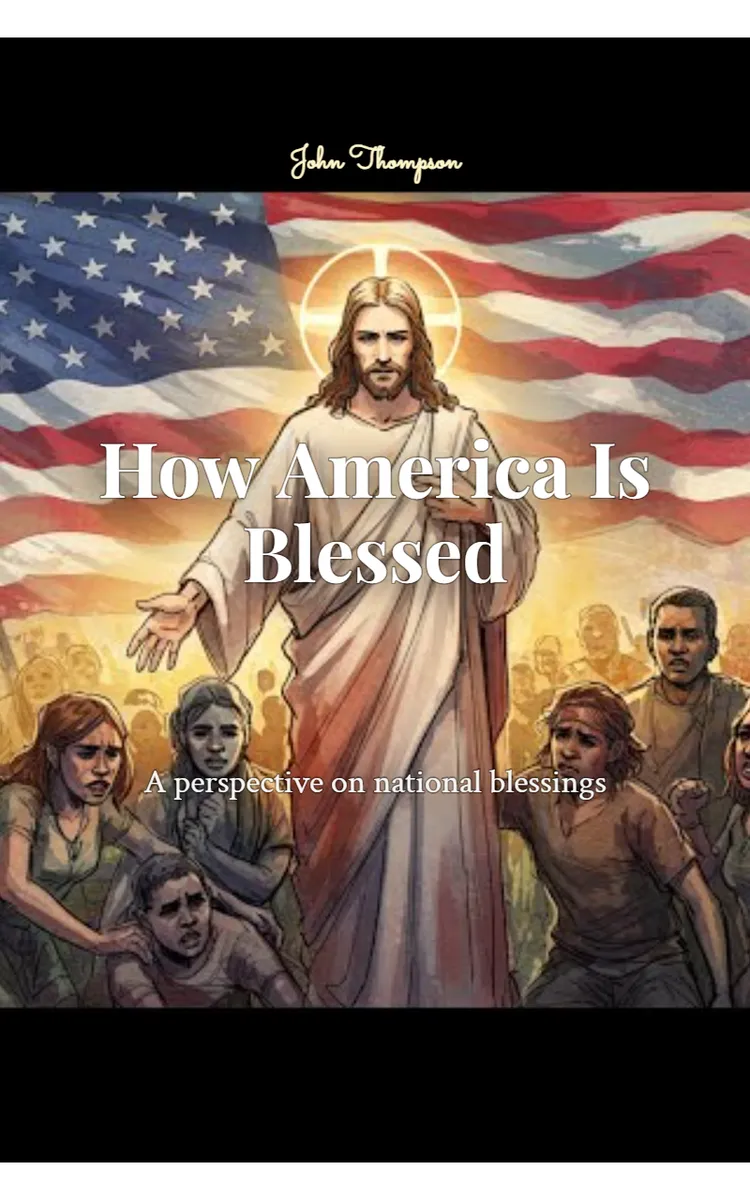
"How America Is Blessed" is a inspirational book by John Thompson with 5 chapters and approximately 6,805 words. Reflective discussion of why America is considered blessed.
This book was created using Inkfluence AI, an AI-powered book generation platform that helps authors write, design, and publish complete books. It was made with the AI Inspirational Book Writer.
Frequently Asked Questions
What is "How America Is Blessed" about?
Reflective discussion of why America is considered blessed
How many chapters are in "How America Is Blessed"?
The book contains 5 chapters and approximately 6,805 words. Topics covered include Practicing Gratitude for America’s Gifts, Choosing Humility Over National Pride, Serving Locally Through Everyday Responsibility, Building Resilience in the Midst of Change, and more.
Who wrote "How America Is Blessed"?
This book was written by John Thompson and created using Inkfluence AI, an AI book generation platform that helps authors write, design, and publish books.
How can I create a similar inspirational book?
You can create your own inspirational book using Inkfluence AI. Describe your idea, choose your style, and the AI writes the full book for you. It's free to start.
Write your own inspirational book with AI
Describe your idea and Inkfluence writes the whole thing. Free to start.
Start writingCreated with Inkfluence AI


