
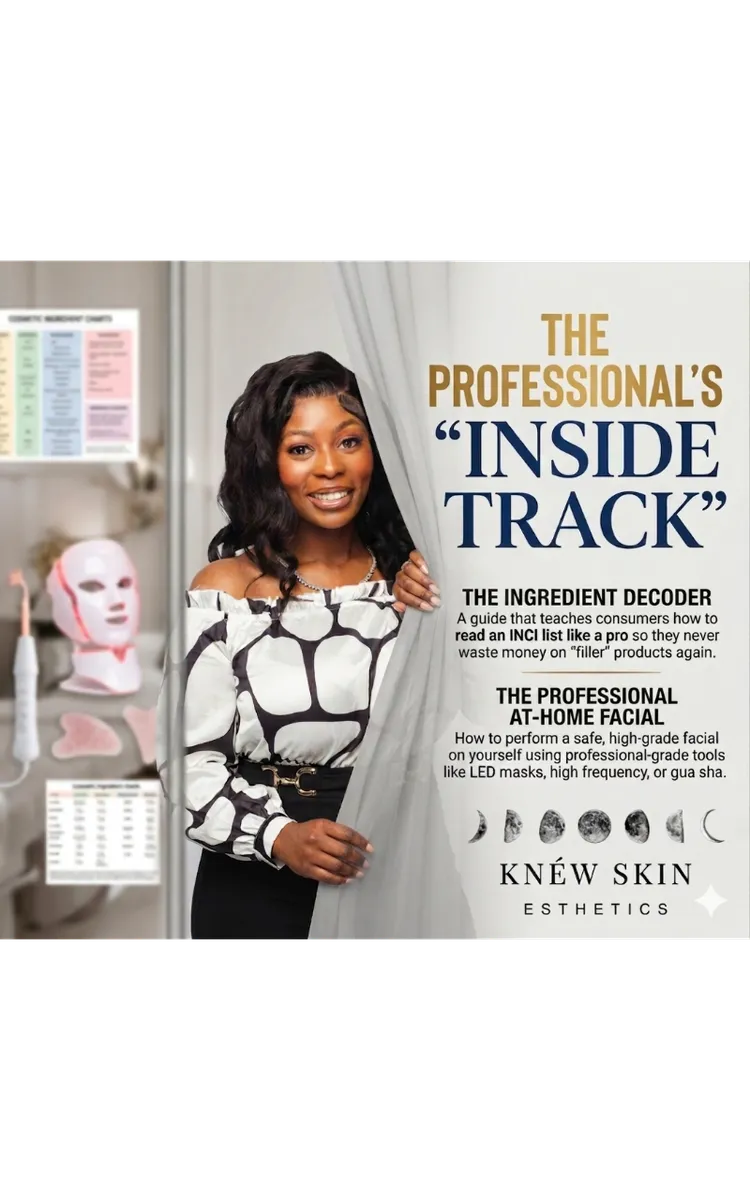
The Ingredient Decoder
Created with Inkfluence AI
How to interpret INCI ingredient lists and avoid filler products
Table of Contents
- 1. INCI Basics and Reading Order
- 2. Filler vs. Functional Ingredients
- 3. Actives, Concentrations, and Tradeoffs
- 4. Ingredient Red Flags and Patch Testing
- 5. Your Professional At-Home Facial Protocol
Preview: INCI Basics and Reading Order
A short excerpt from “INCI Basics and Reading Order”. The full book contains 5 chapters and 8,560 words.
Have you ever bought a “brightening” serum, used it for two weeks, and felt… nothing? When you look at the INCI ingredient list after the fact, you often spot the real reason: the good stuff sits too far down, or it’s buried under a stack of basic carriers that don’t do the job you paid for. Ingredient lists aren’t random. They follow a strict order, and once you learn that order, you can predict what a product will actually do-before you open the bottle.
Nia, 24, first-time skincare buyer, ran into this exact problem. She picked a cleanser that promised “gentle glow” but left her skin feeling tight by day three. When she checked the INCI list, she didn’t need chemistry to see the pattern: the list started with simple surfactants, then repeated basic ingredients, and only later mentioned “actives.” That’s the kind of gap this chapter fixes. You’ll learn how INCI lists are structured, why ingredient order matters, and how to spot red-flag patterns fast-so you stop guessing and start choosing.
Why This MattersINCI lists (International Nomenclature of Cosmetic Ingredients) show ingredients in a specific order. That order gives you a built-in clue about what the formula emphasizes. If the ingredients that match your goal show up early, you usually get more of the “working” ingredients. If they show up late, you often get tiny amounts-or you get a product that mainly behaves like a basic carrier with a marketing headline.
This matters because most “filler” products don’t look like filler at first glance. They look polished. They smell nice. They feel smooth. But if the formula relies mostly on carriers and comfort ingredients, you pay for a vibe-not results. The ingredient order helps you separate “nice-to-have” from “this likely drives the effect.”
After this chapter, you’ll be able to do three things quickly: (1) read the structure of an INCI list without getting lost, (2) use ingredient order to judge where the formula’s focus probably sits, and (3) spot common red-flag patterns that show up in ingredient lists of products that don’t deliver.
Takeaway to keep in mind: Your INCI list is a map. You just need to learn how to read it.
How It WorksINCI order follows a simple rule: ingredients appear in descending order by how much of each ingredient the product contains at the time it’s made. That means the first few ingredients carry the most weight. As you move down the list, the ingredients generally get lower in the formula.
But there’s a second rule that trips people up: the list sometimes groups ingredients that act as “systems.” For example, a product may use a mix of fatty ingredients, humectants (water-attracting ingredients), and preservatives (ingredients that keep the product safe). If you only look for one “active,” you miss how the formula supports or limits it.
To make this usable right away, use the INCI Compass. It turns an ingredient list into a quick decision tool based on order and patterns you can actually see.
Find the “front row” (first 5-8 ingredients).
These ingredients usually make up the product’s main behavior: how it cleans, moisturizes, foams, or feels. If your goal is “dryness repair” and the front row looks like mostly surfactants (cleansers) or alcohol and light carriers, you already know what you’re likely buying.
Spot the base type: water-based vs oil-based vs cleansing system.
Look for “Water (Aqua)” near the top for water-based formulas, and look for surfactant names for cleansers (like Sodium Laureth Sulfate or Cocamidopropyl Betaine). If you’re buying a moisturizer but the list reads like a cleanser, the product won’t act like a moisturizer no matter what the label says.
Track your goal ingredient’s position.
If the label says “niacinamide,” find “Niacinamide” in the list and note where it sits. Earlier usually means more impact potential. Later doesn’t automatically mean “bad,” but it does mean the formula likely relies on other ingredients to do most of the work.
Scan for red-flag patterns (repeats, comfort overload, and “mostly carrier”).
You don’t need to memorize every ingredient. You only need to recognize patterns that often signal “this product spends its budget on feel-good ingredients.” If the list is long and dominated by emollients (skin-softening ingredients) and film-formers (ingredients that leave a layer), with the real active far down, you should expect a “cosmetic finish,” not a targeted result.
Here’s a concrete example with how Nia would use this. She wants a cleanser that doesn’t leave her skin tight. She checks the INCI list and looks at the first few ingredients. If the top entries include harsh or heavy surfactants and the list doesn’t include enough balancing ingredients (like gentle amphoteric surfactants or soothing agents) near the top, she adjusts her choice. She doesn’t need to debate “strength” in theory-she uses the order to predict skin feel.
...
About this book
"The Ingredient Decoder" is a how-to guide book by Anonymous with 5 chapters and approximately 8,560 words. How to interpret INCI ingredient lists and avoid filler products.
This book was created using Inkfluence AI, an AI-powered book generation platform that helps authors write, design, and publish complete books. It was made with the AI Ebook Generator.
Frequently Asked Questions
What is "The Ingredient Decoder" about?
How to interpret INCI ingredient lists and avoid filler products
How many chapters are in "The Ingredient Decoder"?
The book contains 5 chapters and approximately 8,560 words. Topics covered include INCI Basics and Reading Order, Filler vs. Functional Ingredients, Actives, Concentrations, and Tradeoffs, Ingredient Red Flags and Patch Testing, and more.
Who wrote "The Ingredient Decoder"?
This book was written by Anonymous and created using Inkfluence AI, an AI book generation platform that helps authors write, design, and publish books.
How can I create a similar how-to guide book?
You can create your own how-to guide book using Inkfluence AI. Describe your idea, choose your style, and the AI writes the full book for you. It's free to start.
Write your own how-to guide book with AI
Describe your idea and Inkfluence writes the whole thing. Free to start.
Start writingCreated with Inkfluence AI


