

Read the first chapter
The whole of chapter one, free. About 8 min. Turn the pages with the arrows, your keyboard, or a swipe.
Chapter 1
Intermittent Fasting Basics for Beginners
Intermittent Fasting Basics for Beginners: What It Really Does (and Which Style to Start)
What if “fasting” didn’t mean suffering through hunger at all - it just meant changing when you eat? If that idea sounds too simple, that’s usually the problem: most beginners get overwhelmed by rules, timing charts, and fear of messing it up. You don’t need a perfect plan - you need a starting style that fits your day and your appetite.
This chapter helps you understand what intermittent fasting can do for your body, clear up a few common myths that keep people stuck, and choose a beginner-friendly schedule without going down a rabbit hole. You’ll learn what to watch for, how to start with a realistic fasting window, and how to adjust when hunger, energy, or cravings try to derail you.
Who this is for (and what you can expect): - If you want weight loss support but don’t want complicated meal timing, this is for you. - If you’re busy (like Nina - rotating shifts and limited predictable meals), you’ll get a “fits real life” approach. - If you’ve tried dieting before and quit because it felt unsustainable, you’ll learn how to build something you can keep.
Key benefits you can reasonably aim for with a beginner plan include more consistent calorie control, less mindless snacking, and improved rhythm around meals - often with fewer “all day grazing” habits. You’ll also learn when fasting is a bad match and when to get extra support.
Practical takeaway: You’re not choosing a fasting identity - you’re choosing a schedule you can repeat.
How Intermittent Fasting Works (Mechanisms, Risk Factors, and Common Triggers)
Intermittent fasting is a simple idea: you pick a daily or weekly window for eating, and outside that window you don’t eat calories. Your body responds to that change in timing. When calories aren’t coming in for a while, your body uses stored energy and shifts how it handles blood sugar (glucose) and insulin.
Here’s what typically happens when you start fasting consistently: 1. Lower insulin levels during the fasting window can help your body rely more on stored fuel instead of constantly processing incoming food. 2. Over time, many people experience less frequent calorie intake automatically - because there are fewer eating opportunities. 3. Some people notice appetite patterns change: cravings may calm down after an adjustment period, especially if their meals are filling and planned.
There are also risk factors to respect. Fasting is not “one size fits all,” and certain situations make it harder or riskier to experiment on your own. The big ones aren’t rare - they show up in real kitchens and shift schedules.
Common risk factors and “make it harder” situations include: 1. Pregnancy or breastfeeding (because nutrient needs and timing are different) 2. A history of eating disorders or frequent cycles of restriction and rebound eating 3. Certain medications that depend on food timing (for example, some diabetes or blood pressure medicines) 4. Low blood sugar tendencies, frequent dizziness, or episodes of shakiness that aren’t explained 5. Training loads or daily routines that make steady fueling impossible (especially if you’re doing intense workouts without a plan)
Quick clarity check: If you’re unsure whether any meds or conditions apply to you, treat that uncertainty as a reason to get guidance - not a reason to force through.
Ask yourself: “Am I fasting to make eating simpler, or am I trying to tough it out?” If it’s the second one, you’ll likely struggle and abandon the plan.
Practical takeaway: Fasting is mainly about timing - your body’s fuel-handling shifts, but your safety depends on your starting context.
The IF-Map Starter Model: Pick a Fasting Schedule That Won’t Break Your Week
This is where you stop guessing. The IF-Map Starter Model helps you choose a beginner fasting style based on your life - not your willpower.
IF-Map Starter Model uses three simple moves: - Map your day (work hours, commute, sleep, and when you realistically can eat) - Start with the smallest effective window (so you build the habit) - Progress by milestones (not by drama)
Step 1: Choose your starting style (pick one) For most beginners, the easiest entry is either a daily time-restricted window or a short “pause” a few days per week.
Here are beginner-friendly options that work well for weight loss goals:
| Starting Style | Eating Window | Fasting Window | How often | When to use it | |---|---:|---:|---|---| | 12:12 “Easy Start” | 12 hours | 12 hours | 7 days/week | If you’re new and want zero drama | | 14:10 “Most Common Beginner” | 10 hours | 14 hours | 5-7 days/week | If you want momentum without feeling deprived | | 16:8 “Shift-Ready” | 8 hours | 16 hours | 3-5 days/week at first | If your schedule naturally supports it |
Nina’s example (busy nurse, rotating shifts): On days she works early, she can usually eat from about 7:30 AM to 5:30 PM (a 10-hour eating window). On later shifts, she repeats the same length but moves the clock slightly. The key isn’t the exact time on the wall - it’s keeping the window length consistent enough that her body learns a rhythm.
Step 2: Set your progression milestones (so you don’t stall) A common reason people quit is they jump too fast and then feel awful. Use milestones instead.
Start with one of these progress paths: 1. If you choose 12:12: keep it for 7-14 days, then move to 14:10 if it feels manageable. 2. If you choose 14:10: keep it for 2-3 weeks, then consider 16:8 only if hunger is stable and your energy is steady. 3. If you choose 16:8: start with 3-4 days/week for 2 weeks, then add one extra day per week until you hit 5 days/week.
Step 3: Build meals that make fasting easier (not harder) Fasting without hunger is mostly a meal-planning problem. For beginners, aim for meals that include: - Protein at each eating time (helps fullness) - Fiber-rich foods (slows digestion and supports steady hunger) - Some healthy fats (makes meals satisfying)
You don’t need complicated tracking. But you do need consistency. If your first meal is basically “snack food,” hunger often shows up fast and loud.
Warning signs: when to pause and get help If fasting triggers significant problems, don’t “push through” on pure stubbornness. Seek professional guidance promptly if you notice: - Fainting, repeated dizziness, or severe weakness - Frequent shakiness or sweating that feels like blood sugar crashes - Vomiting, severe nausea, or persistent headaches that don’t ease - Signs of worsening binge/restrict cycles or intense food obsession - Any pregnancy/breastfeeding situation change
If any of your medicines require food timing, talk to a licensed professional before adjusting meal patterns. That’s not being difficult - that’s protecting your safety while you build a routine.
Practical takeaway: Pick a schedule length you can repeat, then progress in weeks, not days.
Common Fasting Mistakes That Make Beginners Quit (and How to Fix Them)
Most people don’t fail because fasting “doesn’t work.” They fail because their plan fights their real life. Here are the most common beginner errors I see - and the fixes that bring things back under control.
Mistake 1: Starting with 16:8 when 14:10 would fit Why it happens: You hear “the best results come from longer fasts,” so you jump straight to a bigger fasting window. On paper it looks efficient. In real life, hunger spikes, sleep gets weird, and workouts feel miserable - so you abandon the plan.
What to do instead: Start with 14:10 for 2-3 weeks. If you’re rotating shifts like Nina, choose the window that you can repeat most days, even if it’s not the “most aggressive” option. Then move to 16:8 only after the hunger pattern becomes predictable.
Quick check: If you’re already thinking about food all day on day 3, your starting window is too big.
Mistake 2: Eating too little during the eating window Why it happens: Some beginners treat the fasting window like the “real diet” and then eat barely anything during the eating window. The result is rebound hunger, overeating later, and a cycle of guilt.
What to do instead: Plan your eating window meals so they’re genuinely filling. A simple rule: include protein + fiber at each main meal. If your first meal is small, add a second planned meal inside your eating window rather than snacking mindlessly outside it.
Example fix for Nina: if her shift makes it hard to eat twice, she can still do it - by making the first meal larger and including protein plus fiber, then using a smaller second meal if needed.
Quick check: If you finish your eating window feeling “half-starved,” you’ll probably break the plan the next day.
Mistake 3: Treating every stomach feeling like a problem Why it happens: Beginners often misread normal adjustment as failure. In the first few days, hunger can be louder, energy can feel off, and cravings can flare - especially if you used to eat late at night.
What to do instead: Give your body time to adapt before you rewrite the plan. Use your milestones: 7-14 days at your starting style, then reassess. If the first week is rough, don’t jump to a harder window - return to the previous length or switch to 12:12 for a week to reset.
Quick check: Ask yourself, “Is this a temporary adjustment, or is it making me unsafe or miserable every day?”
Practical takeaway: The best fasting plan is the one your body can repeat without turning your life into a negotiation.
Your Beginner Takeaway: Choose the Schedule, Then Build the Rhythm
If you remember one thing, make it this: fasting is easiest when it becomes routine. Nina’s success on rotating shifts doesn’t come from extreme discipline - it comes from repeating a realistic eating window and progressing slowly using the IF-Map Starter Model. When you do that, hunger becomes something you can manage instead of something that manages you.
Before you pick your next step, ask yourself: “Which fasting window can I keep most days this month?” Choose that number. Then plan meals inside it so hunger doesn’t get the final vote.
In the next part of the book, you’ll learn how to handle the two most common real-life problems - hunger spikes and energy dips - so your fast feels like a pause instead of a punishment.
End of chapter one. 7 more chapters in the full book.
Swipe or use the arrows to turn the page


What's inside: 8 chapters
- 1. Intermittent Fasting Basics for Beginners
- 2. Choosing Your First Fasting Schedule
- 3. What to Eat During Your Eating Window
- 4. Fasting Without Hunger: Hunger Control
- 5. Electrolytes and Hydration for Safe Fasting
- 6. Managing Energy, Sleep, and Stress
- 7. Breaking Plateaus with Adjustments
- 8. Long-Term Sustainability and Progress Tracking
About this book
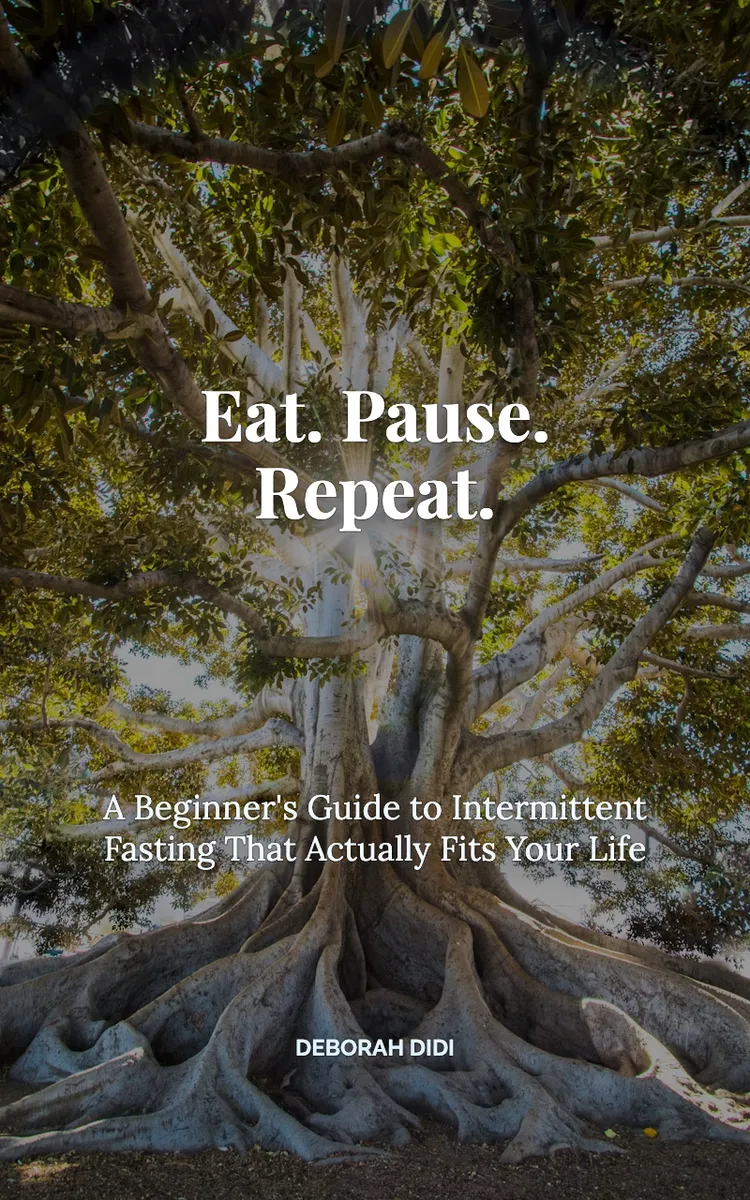
"Eat. Pause. Repeat." is a health & wellness book by DEBORAH DIDI with 8 chapters and approximately 15,547 words. Beginner-friendly intermittent fasting schedules for weight loss.
This book was created using Inkfluence AI, an AI-powered book generation platform that helps authors write, design, and publish complete books. It was made with the AI Health Book Generator.
Frequently Asked Questions
What is "Eat. Pause. Repeat." about?
Beginner-friendly intermittent fasting schedules for weight loss
How many chapters are in "Eat. Pause. Repeat."?
The book contains 8 chapters and approximately 15,547 words. Topics covered include Intermittent Fasting Basics for Beginners, Choosing Your First Fasting Schedule, What to Eat During Your Eating Window, Fasting Without Hunger: Hunger Control, and more.
Who wrote "Eat. Pause. Repeat."?
This book was written by DEBORAH DIDI and created using Inkfluence AI, an AI book generation platform that helps authors write, design, and publish books.
How can I create a similar health & wellness book?
You can create your own health & wellness book using Inkfluence AI. Describe your idea, choose your style, and the AI writes the full book for you. It's free to start.
Write your own health & wellness book with AI
Describe your idea and Inkfluence writes the whole thing. Free to start.
Start writingCreated with Inkfluence AI


