
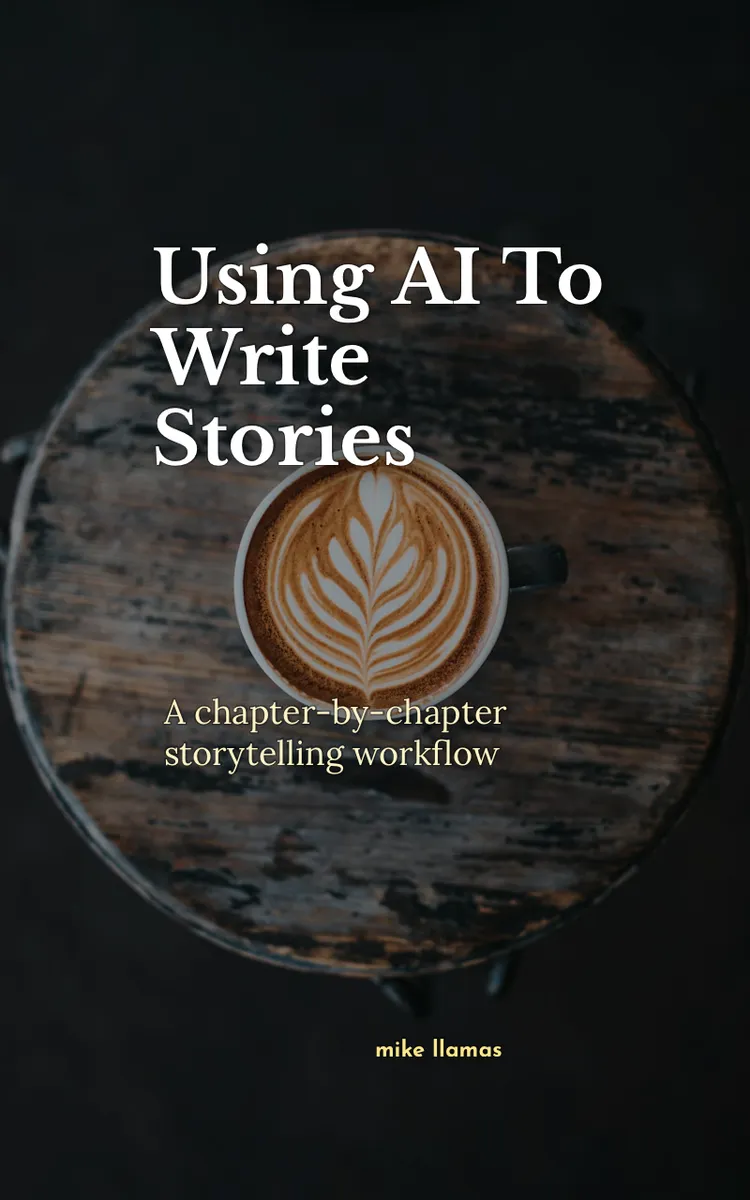
Using AI To Write Stories
Created with Inkfluence AI
Process for using AI to generate a story ebook with chapters
Table of Contents
- 1. Choosing Your Story Type and Promise
- 2. Building a Chapter-by-Chapter Outline
- 3. Creating Characters with AI Consistency
- 4. Writing Full Chapters from Prompts
- 5. Editing, Fact-Checking, and Finalizing
Preview: Choosing Your Story Type and Promise
A short excerpt from “Choosing Your Story Type and Promise”. The full book contains 5 chapters and 10,000 words.
What happens when you tell AI to “write a story,” and you get a mess of scenes that don’t match the book you pictured? You end up rewriting prompts, cutting pages, and still wondering why the plot keeps wandering. The fix starts before you touch any text: you choose a clear genre, a specific audience, and one sharp story promise that your AI can’t miss.
Leila, 24 and trying to become a novelist, ran into this exact problem. She asked for “a fantasy adventure ebook,” but her drafts kept turning into random side quests, shifting tones, and introducing characters that never mattered. Her reader couldn’t tell what kind of book they were buying. Her takeaway is simple: if you want the AI to write like your brain, you have to define like your brain-clearly and on purpose.
Why This Matters
A genre, audience, and story promise work like a steering wheel. Genre tells the AI what kind of rules and feelings to follow (mystery should feel like clues and reveals, not like random romance beats). Audience tells it what level of emotion, detail, and complexity to aim for. Story promise tells it what the reader will reliably get-so the AI builds toward the same payoff every time.
Without those three pieces, AI fills gaps with whatever sounds interesting. That’s how you get plot drift: the story keeps “going somewhere,” but not toward your actual ending or theme. You might love a scene, but it doesn’t belong in the book you meant to write. The result feels like you worked hard but didn’t build a real product.
After this chapter, you will be able to:
- pick one genre direction that fits your idea,
- name the exact type of reader you want,
- write a single-sentence story promise your AI can follow, and
- use a “Story Promise Blueprint” prompt that produces tighter chapters with less cleanup.
Practical takeaway / reflection prompt: Ask yourself: “If a stranger read my ebook description, could they predict the tone and the kind of payoff they’ll get?” If not, your story promise needs sharpening.
How It Works
The Story Promise Blueprint connects three decisions to one sentence you can paste into AI again and again. You’re not trying to write the whole book yet. You’re setting constraints so the AI builds the same kind of story each time.
Use this framework and fill in the blanks with your choices:
1. Choose your genre (one lane, not five).
Pick the main genre and a close sub-genre if it helps. Example: “cozy mystery” beats “mystery.” Example: “romantic fantasy” beats “fantasy.”
Why it matters: Genre sets expectations for structure (clues, suspects, reversals), pacing (slow-burn vs fast twists), and tone (light vs dark).
2. Define your target reader (who they are, what they want).
Write one sentence: the reader’s situation and what they’re hungry for. Example: “Readers who like clever puzzles and satisfying endings, not graphic violence.”
Why it matters: Audience tells the AI what to keep, what to soften, and what level of explanation to include.
3. State the core premise (what’s happening on the surface).
Core premise means the main “engine” of the story, not the theme. It answers: “What is the protagonist trying to do?”
Use one clear line: “A young investigator must solve a series of disappearances using hidden records.”
Why it matters: This gives AI a stable plot track even when it adds details.
4. Write your single-sentence story promise (the reliable payoff).
Your story promise must promise a reader experience from start to finish. Use this pattern:
“In [genre] for [audience], [protagonist] confronts [central problem] and uncovers [type of resolution], so readers get [specific satisfaction].”
Why it matters: This sentence becomes the “north star” for every chapter prompt you run.
Here’s how Leila’s choices could look when she applies the blueprint. She wants a novel that feels focused, not random. She might pick:
- Genre: cozy mystery
- Target reader: people who want clever clues, low-gore danger, and a warm community vibe
- Core premise: a small-town fixer finds links between old cases and a present-day threat
- Story promise (single sentence):
“In cozy mystery for readers who want clever clues and a satisfying, low-darkness payoff, Leila’s protagonist uncovers the truth behind a decades-old pattern while protecting her town, so readers finish each chapter feeling closer to the final reveal.”
Notice what this promise does not do. It doesn’t say “a lot happens.” It doesn’t drift into random subplots. It promises a consistent reading experience: clues, connection, and forward movement toward a reveal.
Quick comprehension check: Look at your draft promise. If you removed one word, could the meaning collapse? If yes, tighten it until it still makes sense as a promise on its own.
Putting It Into Practice
Let’s run a realistic scenario using Leila as the working example....
About this book
"Using AI To Write Stories" is a how-to guide book by mike llamas with 5 chapters and approximately 10,000 words. Process for using AI to generate a story ebook with chapters.
This book was created using Inkfluence AI, an AI-powered book generation platform that helps authors write, design, and publish complete books. It was made with the AI Ebook Generator.
Frequently Asked Questions
What is "Using AI To Write Stories" about?
Process for using AI to generate a story ebook with chapters
How many chapters are in "Using AI To Write Stories"?
The book contains 5 chapters and approximately 10,000 words. Topics covered include Choosing Your Story Type and Promise, Building a Chapter-by-Chapter Outline, Creating Characters with AI Consistency, Writing Full Chapters from Prompts, and more.
Who wrote "Using AI To Write Stories"?
This book was written by mike llamas and created using Inkfluence AI, an AI book generation platform that helps authors write, design, and publish books.
How can I create a similar how-to guide book?
You can create your own how-to guide book using Inkfluence AI. Describe your idea, choose your style, and the AI writes the full book for you. It's free to start.
Write your own how-to guide book with AI
Describe your idea and Inkfluence writes the whole thing. Free to start.
Start writingCreated with Inkfluence AI


