
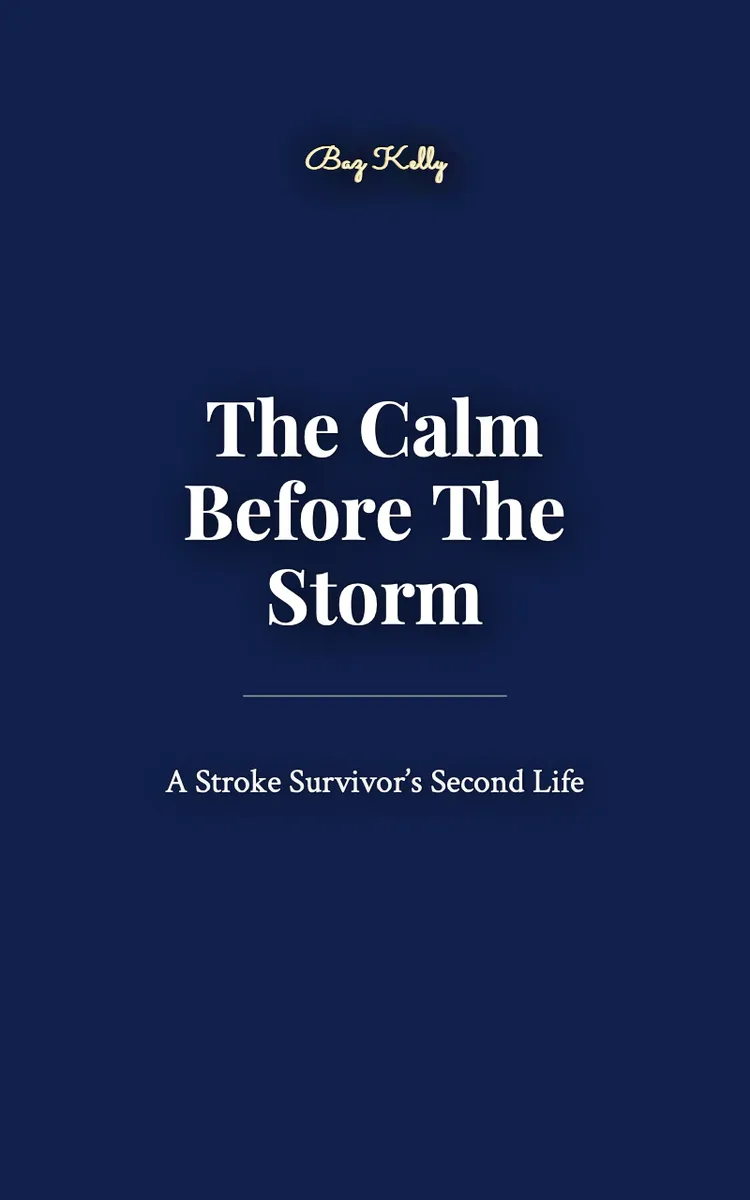
Read the first chapter
The whole of chapter one, free. About 10 min. Turn the pages with the arrows, your keyboard, or a swipe.
Chapter 1
Friday Night Reset in Australia
The first thing I noticed when I woke up that Friday night was how still the air felt, as if the whole island had decided to hold its breath. Warm and heavy, it carried eucalyptus leaves and salt from the surf somewhere beyond the rental. Moonlight lay across the pool like a sheet of silver, and when I stepped out onto the veranda the night air cooled the sweat on my skin. Below, the golf course stretched out in quiet lines, a velvet green under lights that didn’t flicker. I could hear the soft hum of distant traffic, nothing sharp, nothing sudden-just the ocean’s steady breathing and the faint clink of glass from inside where the others were winding down.
I’d always loved evenings that felt like a switch had flipped: the kind where my body knew what to do before my mind caught up. I’d spent the day moving-stretching, training, laughing with my girlfriend and the other couples, pretending I could stay in that easy rhythm forever. Before the stroke, I’d been an exotic dancer and a personal trainer, tuned for late nights and constant motion. I’d had washboard abs and low body fat, strength that came without thinking. That evening was supposed to be a reset. I’d told myself I’d earned it. I’d worked hard enough to deserve a calm Friday night, early sleep, and nothing more demanding than choosing what to drink while the stars settled in over the golf course.
Inside, my girlfriend was asleep beside me, her breathing slow, her face relaxed in a way that made me feel safe just by looking. When I lay down again, I could still smell eucalyptus on my skin, and the coolness of the sheets felt clean and crisp. I remember thinking-almost lazily-that I’d work in the early hours tomorrow, but that I felt well tonight. Healthy. Vibrant. It was the last time my body would agree with me.
At 10:15 p.m., something erupted inside my skull. It wasn’t pain in the way I’d understood pain before-sharp or manageable. It was obliteration. The headache came like someone had split my head open with a crowbar, instantaneous and seismic, and my mind tried to catch up as my body failed. I reached for the glowing clock, because that was what you did when the world felt wrong: you checked the numbers, you tried to anchor yourself. Red digits burned into my sight.
My girlfriend lay asleep beside me, peaceful and unaware, and I tried to call out. The words didn’t come clean. They turned to sludge before they reached my ears. My throat felt wrong-constricted-like the air couldn’t pass through properly. I tried again, louder, and my voice emerged twisted and heavy. The ceiling spiralled above me like a carousel spinning off its axle. I couldn’t sit up. My limbs weren’t listening.
In the confusion, my mind grabbed at logic the way a drowning person grabs at anything solid. I wondered if I’d been poisoned or drugged. I hadn’t drunk alcohol in weeks. That detail mattered, even then, because it gave my fear a shape. But the sensation didn’t care about my explanations. I tried to turn toward my girlfriend, to make her understand, to make the room make sense again. Instead, the room flashed bright, and then it didn’t feel like I was inside my own body anymore.
The next moment came in fragments. The room exploded in light as my girlfriend jolted upright, eyes wide. I heard movement-friends stirring, the sharp sound of someone getting out of bed too fast. Panic etched on faces, I later realised, because in that instant it all blurred into sound and light and the awful certainty that something was terribly wrong. I tried to speak again, tried to turn and vomit, but my vision flickered violently-angled, tilted-like the world couldn’t decide which way was up. Then everything snapped to black.
When I came to, it was as if I’d been dropped into a different world-cold leather under me, the taste of vomit in my mouth, the backseat rocking with every turn. My body felt limp, heavy, untrustworthy. Outside the window, streetlights smeared into streaks of colour and shadow. Voices came and went around me, muffled by distance and the pressure of my own head. I couldn’t hold onto words for long enough to understand them properly, but I understood the urgency in the way they moved me.
My friends raced me toward Southport Hospital by car. The ride felt endless and unreal at the same time, like my senses were lagging behind the scene. Every jolt carried a dull echo through my skull. The air smelled faintly of aftershave and hot plastic from the car’s vents. Somewhere, a siren rose and then fell, swallowed by the rhythm of the road. I tried to lift a hand to wipe my mouth, to clear myself, and the movement didn’t happen. My arm wouldn’t move.
That was when panic finally broke through in a way I could feel. I couldn’t make my body obey. My right side was paralyzed-right arm and right leg not working-and the knowledge came with a hard, frightening clarity. I think there must have been a logical explanation, I kept trying to tell myself, because the mind always wants a reason. But the body didn’t offer one. It only offered failure.
In the emergency room, chaos swirled and blurred. Staff moved with purpose in blue scrubs and white masks, their shoes squeaking on polished floors, their voices urgent and clipped. Light hit me from above, too bright, and my hearing fractured into static. My chest heaved with effort, as if breathing required permission I couldn’t get. I remember reaching-again, instinctively-toward my own face, toward the mess, and meeting only resistance. The room kept tilting. People kept talking, but the meaning slipped away like water.
I heard my friends say things I couldn’t clearly process, and I heard my own name somewhere in the noise. Then there was another kind of motion-someone trying to position me, someone checking something, the cold touch of equipment against skin. In between, there were those terrible moments when I couldn’t keep track of what was real: the smell of antiseptic and sweat, the metallic tang in the air, the way the fluorescent lights made everyone look pale and distant.
Sometime after morning arrived-when the light outside changed and the world didn’t feel like night anymore-a doctor asked me about recent steroids, cocaine, and cannabis. The question came in a calm voice that didn’t match the storm inside my head. I wanted to answer properly, wanted to be understood. I tried to gather my thoughts, but everything felt slow, thick around the edges. I remember the effort it took to form words, the way each syllable felt like it had to drag itself into place. I answered the way I could, but my speech wasn’t reliable, and I couldn’t tell how much made sense to them.
What I couldn’t stop noticing was the way my right side refused me. Even when I wanted to move, even when I imagined the command landing in the right place, nothing happened. The nurses and doctors kept their hands steady and their voices directed, but my body stayed stubbornly, frighteningly wrong. I watched people move around me as if I were watching from behind glass.
After that, the details became less like a story and more like a sequence of sensations. I remember being in the backseat again at one point, the same cold leather, the same blurred world outside the window. I remember the feeling of being carried by other people’s decisions. I remember the weight of my own helplessness, and the way my mind kept trying to bargain with what had happened-trying to locate the moment I could rewind.
Then, in the months that followed, the darkness returned.
It didn’t arrive as a dramatic scene. It arrived as something I’d been warned about without understanding. The memory of the stroke-the sudden collapse, the inability to speak clearly, the right side that wouldn’t work-had left a mark on me that I didn’t know how to name. I drove my car toward a tree at high speed because I didn’t have the language for what I was carrying. I only knew there was a darkness that kept coming back, and I was trying to outrun it with motion.
In that moment, I was stopped-not by some heroic force, but by someone who chose to show up. I was rescued and cared for by a compassionate friend near the Gold Coast. They didn’t ask questions in the way people sometimes do when they’re trying to make sense of you. They didn’t judge. They simply gave me space and love, as if I were still a person with dignity, even when I couldn’t feel it myself. That kindness grounded me when my thoughts were trying to float away.
When I finally began my own recovery in a way that felt real, it wasn’t glamorous. It wasn’t the kind of improvement that gets photographed. It was a daily negotiation with my own body. At one point, I had only 25% movement in my right arm. I remember standing there with a basketball and a wall, pressing the ball against it again and again, each repetition a quiet argument with the paralysis. I willed it to stay. I willed my arm to hold. The contact was solid and immediate-the ball thudding softly, the wall cool against my palm through the sweat. The rest of me was watching, waiting for the signal to work.
I practised standing, balancing, turning. I practised the small movements that others took without thinking: shifting weight, learning what my body felt like when it was no longer simply obedient to habit. Neighbours watched silently from nearby windows, their eyes lingering the way people do when they can’t look away but don’t know what to say. Some bet I wouldn’t improve. I don’t remember feeling angry at them. I remember feeling tired of trying to impress anyone. I was no longer trying to be seen. I was trying to return.
The return took time to understand. Looking back, I can see how much of my early recovery was about rebuilding trust. I had to learn that my body was still mine, even when it refused my commands. I had to learn that progress could be small and still count. I had to learn that strength wasn’t only something you showed on a stage or in a gym. It was something you demonstrated in the quiet moments when you kept going anyway.
When I returned to the UK, my family embraced me. Their arms around me felt both warm and fragile-like they were holding together something that might break if they held too tightly. They cried at my fragile frame, at the evidence of what had happened, but they also saw the fire in my eyes. That fire didn’t belong to the stroke. It belonged to me. Still, even with love all around, I felt adrift. The Stroke Association offered support, but their focus was older survivors, and I didn’t fit neatly into the kind of future they seemed prepared to imagine for me. I needed a place where my age and my life weren’t treated like a complication.
Then Different Strokes entered my story, a charity for younger stroke victims. Donald O’Kelly, a former barrister whose life had been rerouted by stroke, visited me. He came in with a steadiness that made the room feel less chaotic. He listened without rushing, without trying to fix me with clichés. I could tell he understood what it meant to be pulled away from the life you expected. When he spoke, it wasn’t about pity. It was about hope that had survived something real.
After that, my purpose began to take shape. I joined as a volunteer trainer, and the work felt like a doorway back into the world. Rebuilding muscle and movement wasn’t just physical. It was mental. It was reclaiming my body one session at a time, learning how to guide others with patience I’d once reserved for myself. My speech required work too; I challenged it deliberately, taking Japanese and Spanish lessons and forcing my tongue to bend and twist anew. It was awkward and exhausting at first, but repetition turned the struggle into something I could measure.
There were interviews too. I appeared in BBC interviews, and I cycled from London to Paris to raise money. I jumped off bridges in bungee fundraisers, and I even appeared in NHS magazines. Each time I stepped into public view, I carried the memory of that Friday night with me-the warm eucalyptus air and the moonlit pool, the quiet golf course, the version of myself who still believed her body would always cooperate. I never wanted to sensationalise what had happened. I just wanted to honour it by living beyond it.
Every survivor I met reminded me that resilience is contagious. I didn’t say it like a slogan. I felt it in the way people looked at me after I told them my story-some with tears, some with disbelief, some with recognition. They saw the damage and the recovery together, and they understood that healing wasn’t a straight line. It was a series of choices, small enough to make on a bad day, stubborn enough to carry you through.
That first Friday night-the calm before the storm-had ended in a way no one would have predicted. But it also started something in me that hadn’t existed before: the ability to keep moving when movement didn’t come easily. I now understand that the island air and the pool under moonlight weren’t the calm I deserved. They were the calm I had, and then lost, and then learned to rebuild inside myself.
End of chapter one. 4 more chapters in the full book.
Swipe or use the arrows to turn the page

What's inside: 5 chapters
- 1. Friday Night Reset in Australia
- 2. 10:15 p.m. Catastrophic Headache
- 3. Southport Hospital and First Questions
- 4. Ischemic Thrombotic Stroke and Missed Clots
- 5. Pool Suicide Attempt to Purpose
About this book
"The Calm Before The Storm" is a biography book by Baz Kelly with 5 chapters and approximately 12,382 words. Personal memoir of surviving a stroke and recovery.
This book was created using Inkfluence AI, an AI-powered book generation platform that helps authors write, design, and publish complete books. It was made with the AI Biography Writer.
Frequently Asked Questions
What is "The Calm Before The Storm" about?
Personal memoir of surviving a stroke and recovery
How many chapters are in "The Calm Before The Storm"?
The book contains 5 chapters and approximately 12,382 words. Topics covered include Friday Night Reset in Australia, 10:15 p.m. Catastrophic Headache, Southport Hospital and First Questions, Ischemic Thrombotic Stroke and Missed Clots, and more.
Who wrote "The Calm Before The Storm"?
This book was written by Baz Kelly and created using Inkfluence AI, an AI book generation platform that helps authors write, design, and publish books.
How can I create a similar biography book?
You can create your own biography book using Inkfluence AI. Describe your idea, choose your style, and the AI writes the full book for you. It's free to start.
Write your own biography book with AI
Describe your idea and Inkfluence writes the whole thing. Free to start.
Start writingCreated with Inkfluence AI


