
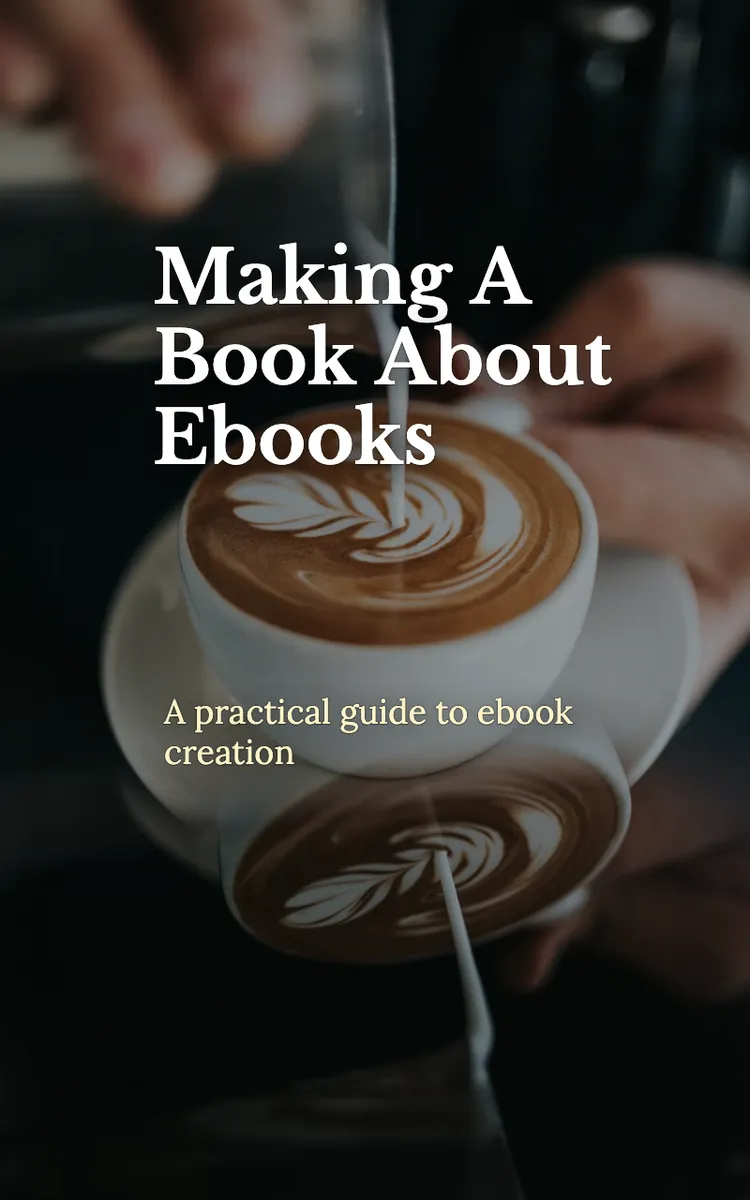
Making A Book About Ebooks
Created with Inkfluence AI
How to create, publish, and market ebooks
Table of Contents
- 1. Choosing Your Ebook Topic and Audience
- 2. Writing an Ebook Outline That Sells
- 3. Formatting and Designing for eReaders
- 4. Publishing Your Ebook in Key Formats
- 5. Marketing Your Ebook With a Launch Plan
Preview: Choosing Your Ebook Topic and Audience
A short excerpt from “Choosing Your Ebook Topic and Audience”. The full book contains 5 chapters and 10,861 words.
What if you publish a “great ebook” and still get crickets-because you picked a topic that sounds good to you, but doesn’t match what a specific reader actually searches for or buys? Topic choice and audience definition decide whether your ebook gets read, recommended, and purchased. If you skip this step, you end up writing pages that don’t answer real questions, and you market to the wrong people with the wrong message.
Talia, 34, a career switcher, learned this the hard way. She started writing an ebook about “getting organized,” then realized she didn’t know whether she meant students, busy parents, or remote workers. Each group wants different examples, different tools, and different promises. Without a clear audience, her outline kept changing-and her draft never felt “finished” because it kept trying to please everyone. After she picked a clear reader and a tighter problem, her writing finally had direction.
Why This Matters
A profitable ebook topic doesn’t just mean “a popular subject.” It means you can describe who will buy it, what problem it solves, and what the reader can do after reading. When your topic and audience line up, every page earns its place: the title fits, the chapters follow a logical path, and your marketing messages sound like help instead of noise. When they don’t, you get weak sales and a draft that feels like it’s missing something-because it is.
This chapter solves a common beginner problem: you guess at a topic, then you guess at an audience. Guessing feels fast, but it costs time later. You’ll rewrite your outline, redo your cover messaging, and start over with ads or posts because the reader you meant to serve never recognized themselves in your ebook.
After this chapter, you will be able to pick a topic that fits your strengths and a reader you can clearly describe. You will also leave with a ready-to-use “audience sentence” and a simple way to test whether your idea is specific enough to write-and specific enough to sell. Practical takeaway: by the end, you’ll know exactly what your ebook is for, who it helps, and what it will deliver.
How It Works
The Niche Clarity Sprint helps you narrow down to a topic that has a clear buyer and a clear promise. You do it by turning a broad idea into a specific reader + specific problem + specific result. That structure keeps your writing focused and keeps your marketing honest.
Use these steps in order:
Write your “broad topic” in one line.
Example: “Home workout planning.” Don’t add audience yet. This keeps you from jumping straight to marketing language before you know what you’re actually writing.
Pick one “reader” group you can name in plain words.
Example: “Busy office workers who can only work out at night.” You want a reader you can picture using real routines: commute times, schedules, skill level, and constraints.
Choose one “core problem” they feel weekly.
Example: “They don’t stick to a plan and they waste time deciding what to do.” This matters because your ebook must solve a decision problem, not just share general info.
Define the “result” in a concrete way the reader can do after reading.
Example: “They will follow a 4-week plan with workouts, progression, and a ‘what to do when you miss a day’ rule.” This result becomes the spine of your chapters and your sales copy.
Run a specificity check using three quick questions.
Ask yourself: “Would this reader recognize themselves in the first paragraph?” “Can I describe the ebook’s promise in one sentence?” “Does my outline answer the problem without drifting into unrelated tips?” If you can’t answer these cleanly, tighten the reader, the problem, or the result.
Talia used this structure when she stopped writing “getting organized” and narrowed to something she could explain clearly. She changed her broad topic to “career transition organization” and then picked a reader: “career switchers with a gap in their resume who need a system to track applications and prep interviews.” Her core problem wasn’t “being organized.” It was “losing track of applications and follow-ups, then feeling overwhelmed.” Her result became: “a weekly tracking system and interview prep checklist that they can run without extra tools.” Suddenly, her ebook had direction-and her marketing message became simple: it helped a specific reader do a specific job.
Here’s a simple formula you can reuse immediately:
For [reader], this ebook helps you [core problem] so you can [concrete result].
If you can fill that in with real words and real outcomes, your topic becomes writable and marketable.
Practical takeaway: when you match a specific reader to a specific problem and a specific result, you stop rewriting and start building an ebook that feels “obvious” to the right buyer.
A quick “audience sentence” template
Use this template to lock your audience in place:
...
About this book
"Making A Book About Ebooks" is a how-to guide book by Anonymous with 5 chapters and approximately 10,861 words. How to create, publish, and market ebooks.
This book was created using Inkfluence AI, an AI-powered book generation platform that helps authors write, design, and publish complete books. It was made with the AI Ebook Generator.
Frequently Asked Questions
What is "Making A Book About Ebooks" about?
How to create, publish, and market ebooks
How many chapters are in "Making A Book About Ebooks"?
The book contains 5 chapters and approximately 10,861 words. Topics covered include Choosing Your Ebook Topic and Audience, Writing an Ebook Outline That Sells, Formatting and Designing for eReaders, Publishing Your Ebook in Key Formats, and more.
Who wrote "Making A Book About Ebooks"?
This book was written by Anonymous and created using Inkfluence AI, an AI book generation platform that helps authors write, design, and publish books.
How can I create a similar how-to guide book?
You can create your own how-to guide book using Inkfluence AI. Describe your idea, choose your style, and the AI writes the full book for you. It's free to start.
Write your own how-to guide book with AI
Describe your idea and Inkfluence writes the whole thing. Free to start.
Start writingCreated with Inkfluence AI


