
Read the first chapter
The whole of chapter one, free. About 8 min. Turn the pages with the arrows, your keyboard, or a swipe.
Chapter 1
Why Unknown Feels Personal
“Unknown” Gets Treated Like a Message - Even When It Isn’t
Have you noticed how a missing piece - one blank in a pattern, one word you can’t quite place - can feel more personal than the rest of the puzzle? That sense isn’t just impatience; it’s a built-in mental reflex that nudges your brain to treat unknowns as if they carry meaning aimed at you.
The mind doesn’t handle uncertainty like a neutral state. It handles it like a signal. In this chapter, we’ll explore how unknown triggers pattern-hunting, and why your brain often frames that hunt as a kind of message - something worth decoding because it seems to belong to you, your situation, your identity, or your next move.
The Personal-Meaning Loop: When an Unanswered Question Feels Targeted
Theo, 22, is a psychology student, the kind of person who can’t leave a half-remembered detail alone. He’s not alone in this. Plenty of people describe the same experience: you look at a page, a conversation, a data set, a map - then one element refuses to click into place. Instead of sitting quietly in the background, the unknown pulls focus and starts to feel like a clue.
What makes this distinctive is the way uncertainty gets “assigned a job.” A true unknown is simply a gap in information. But the brain often turns that gap into a meaning-bearing object. That’s where the Personal-Meaning Loop comes in: the unknown draws attention, attention sharpens interpretation, and interpretation feeds back into attention - making the unknown feel increasingly relevant, increasingly “about you,” even when it’s not.
The loop has a familiar texture. You might be reading about a topic you like, then hit a term you’ve never seen - one that sits there, slightly out of reach. Or you might hear a comment that’s missing context, leaving you to fill in the rest. In both cases, the unknown doesn’t just block understanding; it invites your mind to supply an explanation. And because your mind is built to connect new inputs to existing knowledge, it naturally reaches for patterns you already carry - patterns about people, intentions, danger, fairness, competence, and belonging.
Theo describes a common student version of this: a lecture slide shows something that looks important, but one label is blurred or one variable is missing. Even when he knows the missing piece is probably a simple formatting issue, his brain still starts running “what does this mean?” scripts. The unknown becomes emotionally loaded - not because the unknown is inherently dramatic, but because the system seeking coherence is also the system that assigns significance.
Inside the Pattern-Hunt: What a “Personal” Unknown Actually Does
To see what’s happening, it helps to zoom in on a typical rhythm rather than a single moment. Start with attention. When the brain encounters a discrepancy - something it can’t map onto what it expects - it flags it. That flag is not only cognitive; it’s also bodily. People often report a subtle tension: you feel “stuck,” like the mind is pressing its face against glass.
Then comes the search. Pattern-hunting isn’t random wandering; it’s targeted sampling. The brain compares what it has to what it knows. If the unknown sits inside a familiar domain - say, social behavior, academic content, or personal relevance - it will lean on the patterns that domain already provides. That’s why the same kind of uncertainty can feel different in different contexts. Unknowns in a social setting often trigger guesses about motives. Unknowns in a technical setting trigger guesses about mechanisms. Unknowns tied to your performance can trigger guesses about competence.
For Theo, the process often looks like this: he pauses, then his mind begins generating candidate explanations that fit the surrounding information. The unknown becomes a pivot point for interpretation. Even before he decides what the missing thing is, he starts testing meanings against the rest of the scene - tone of voice, typical phrasing, the “shape” of the argument. The unknown, in other words, becomes a constraint. Your brain doesn’t just wait for more data; it actively compresses possibilities into something that feels plausible.
This is where the Personal-Meaning Loop turns from “curiosity” into “personal.” Because your brain is also a prediction machine, it doesn’t merely ask, “What is this?” It also asks, “What does this imply about what happens next?” If the unknown seems to threaten prediction - if it blocks the brain’s ability to forecast - then the brain tries harder. And when harder trying is paired with self-relevant context, the unknown gets stitched to identity.
That stitching can be surprisingly automatic. Psychologists have long studied prediction and prediction error - the idea that the brain constantly generates expectations and reacts when reality doesn’t match them. Prediction error is the signal that something is off, and the system responds by updating. But the “update” can include meaning-making, not just learning facts. If you’re already primed to care about a situation - grades, reputation, fairness, safety - then the update process tends to incorporate those concerns. The unknown becomes not only an information gap but a potential implication about you.
There’s another mechanical layer too: working memory and attention. When you hold an unknown in mind, you keep it active. Keeping it active is metabolically expensive, and the brain hates waste. So it seeks resolution. Resolution doesn’t have to be correct to feel satisfying; it just has to reduce the tension enough to let attention move on. That’s why people can feel “certain” about a guess that was never verified. The system is rewarding coherence, not necessarily truth.
Theo notices this in his own studying. He’ll sometimes feel an immediate sense of “I get it” after inventing a plausible missing definition, even when he later finds the original lecture meant something else. The satisfaction came from the reduction of the unknown’s pressure, not from confirmed understanding. The Personal-Meaning Loop is doing its job - closing gaps - while the content of the closure can still be wrong.
The Psychology and Culture Behind “Why Me?” Unknowns
The urge to make meaning out of unknowns has deep roots. Human survival depended on interpreting incomplete information quickly. If you’re walking through a landscape and something moves behind the bushes, you don’t wait for perfect evidence. You infer. Sometimes you infer correctly; sometimes you infer incorrectly. Either way, the ability to act under uncertainty has always mattered.
That history of inference explains why the brain treats unknowns like prompts for interpretation rather than passive blanks. But it doesn’t fully explain the “why it feels personal” part. For that, culture and personal experience matter.
Think about how many everyday systems are built on partial signals. Social status, workplace politics, online reputation, even medical symptoms - these often come in fragments. People learn to read those fragments because they can have consequences. When an unknown appears in a context where consequences exist, the mind assigns it urgency. The unknown becomes emotionally charged because it sits near stakes.
Now add the modern layer: the way information is delivered. Online, we don’t always get full context. We get headlines that imply, videos that cut, posts that leave out the “why.” Even when the missing piece is purely accidental, the brain has been trained - by repeated exposure to selective information - to treat gaps as clues. Unknowns don’t just happen; they arrive inside systems that reward interpretation.
Theo’s student world intensifies that too. In school settings, unknowns are often tied to evaluation. Even when a missing detail isn’t about him personally, the environment teaches the association between uncertainty and performance. Over time, unknowns can acquire a personal tint through conditioning: the brain learns that not knowing correlates with being judged, falling behind, or missing signals. That’s not a character flaw; it’s a learning history.
There’s also a psychological concept that helps illuminate this: intolerance of uncertainty. People vary in how they respond to not knowing. Some experience uncertainty as manageable; others experience it as uncomfortable enough to push for closure. When intolerance is higher, unknowns produce stronger pressure to resolve them quickly, and that pressure makes the unknown feel more insistent. The unknown isn’t just present - it’s demanding.
Culture adds another twist: stories. Human beings are surrounded by narratives that treat missing information as suspense. Mystery is entertaining, and entertainment teaches the brain that unknowns are meaningful by default. The world, in that sense, trains pattern-hunting. Even in everyday life, we live inside formats - detective shows, true-crime podcasts, “explainer” videos - that frame unknowns as puzzles with answers waiting to be found. That framing can seep into how your mind interprets uncertainty outside entertainment.
Theo doesn’t need to be told any of this in a lecture tone. He can feel it. When he can’t locate a concept quickly, his attention tightens around it. When he finally gets the correct explanation, the sensation shifts: relief, yes, but also an odd sense of “that was the missing link.” The mind doesn’t merely learn the fact; it learns that it was supposed to care about that fact all along.
Why This Matters: The Bigger Picture of Meaning-Making
The Personal-Meaning Loop reveals something quietly profound about how minds work: uncertainty is never just uncertainty. It becomes a canvas for prediction, a trigger for interpretation, and a magnet for identity. When you say “this doesn’t make sense,” your brain is really saying, “I need a model that fits.” And because your model includes you - your goals, your fears, your social world - the unknown naturally starts to wear your signature.
This is also why “unknown” can feel like a message without actually being one. The mind is built to find patterns, and patterns can be meaningful even when they aren’t literally targeted. The feeling of personal relevance is often an internal consequence of how the brain reduces prediction error, not evidence that the universe is sending clues.
Theo’s experience offers a small but telling lesson: even a psychology student can fall into the loop. That doesn’t mean the mind is broken. It means the mind is doing what it evolved to do - turn fragments into forecasts, and forecasts into meaning - so that life remains navigable even when the picture isn’t complete. Somewhere just beyond the unknown, the mind is already searching for the next piece, and the search itself becomes part of the story we tell ourselves about reality.
End of chapter one. 4 more chapters in the full book.
Swipe or use the arrows to turn the page
What's inside: 5 chapters
- 1. Why Unknown Feels Personal
- 2. The Breadcrumbs-Not-Answers Strategy
- 3. The Hidden Audience Test
- 4. Chapter 5
- 5. From Curiosity to a Coherent Story
About this book
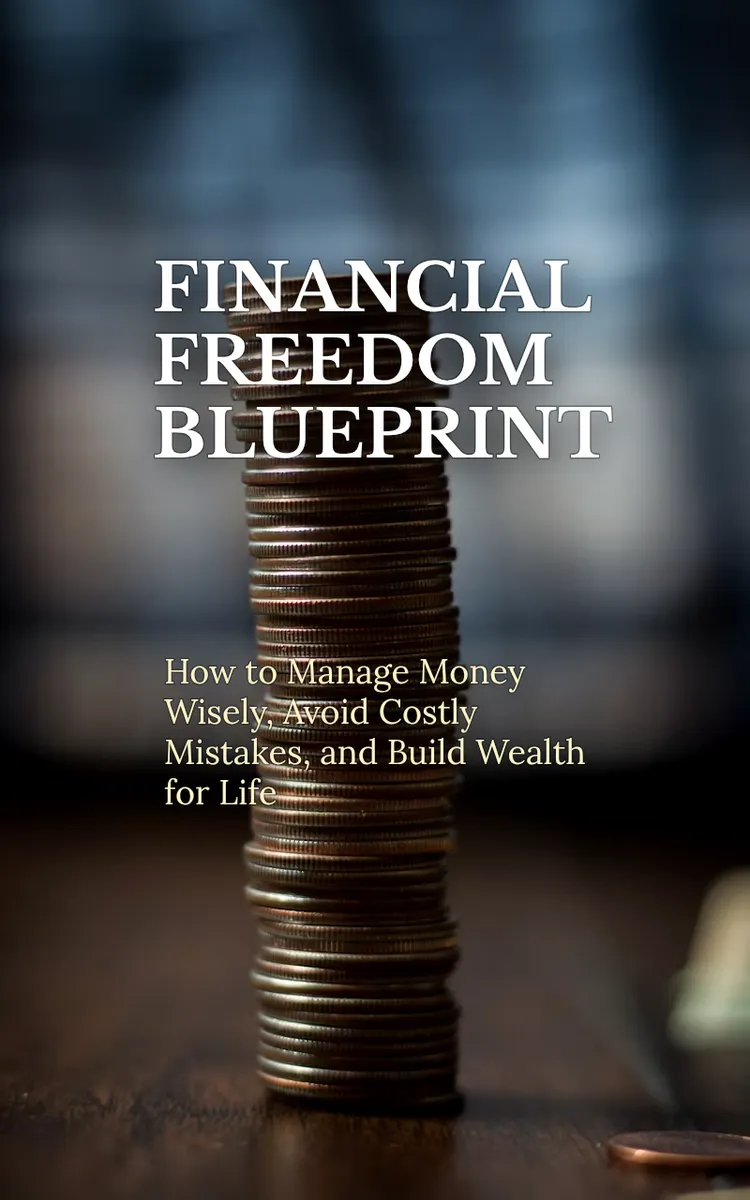
"FINANCIAL FREEDOM BLUEPRINT" is a curiosity book by Anonymous with 5 chapters and approximately 7,081 words. Unknown book concept from an external link.
This book was created using Inkfluence AI, an AI-powered book generation platform that helps authors write, design, and publish complete books.
Frequently Asked Questions
What is "FINANCIAL FREEDOM BLUEPRINT" about?
Unknown book concept from an external link
How many chapters are in "FINANCIAL FREEDOM BLUEPRINT"?
The book contains 5 chapters and approximately 7,081 words. Topics covered include Why Unknown Feels Personal, The Breadcrumbs-Not-Answers Strategy, The Hidden Audience Test, Chapter 5, and more.
Who wrote "FINANCIAL FREEDOM BLUEPRINT"?
This book was written by Anonymous and created using Inkfluence AI, an AI book generation platform that helps authors write, design, and publish books.
Write your own curiosity book with AI
Describe your idea and Inkfluence writes the whole thing. Free to start.
Start writingCreated with Inkfluence AI


