
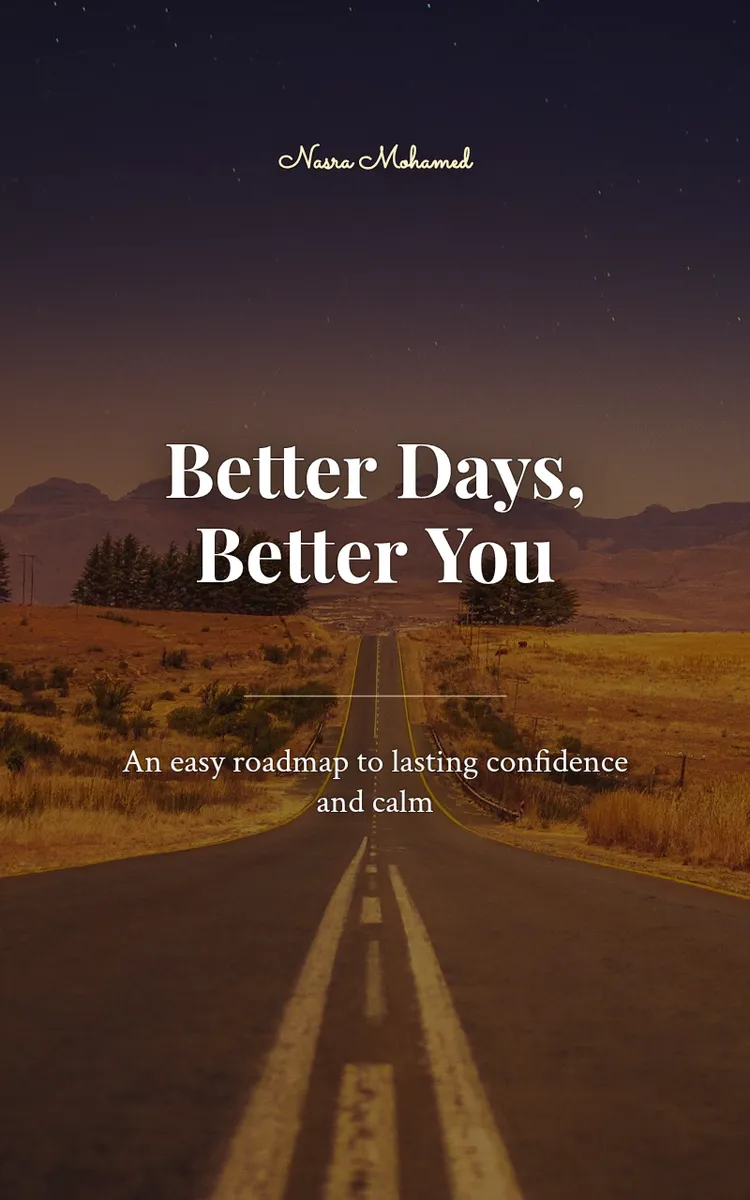
Better Days, Better You
Created with Inkfluence AI
General self-help guidance for improving mindset and habits
Table of Contents
- 1. Rewriting Your Identity Script
- 2. Belief Audits That Remove Self-Doubt
- 3. Building Habits With the Two-Trigger Rule
- 4. Saying No Without Losing Respect
- 5. Resilience Through Purpose-Led Recovery
Preview: Rewriting Your Identity Script
A short excerpt from “Rewriting Your Identity Script”. The full book contains 5 chapters and 9,888 words.
The Identity Script Swap: When You Keep Acting Like “That Person”
Last week, Talia - 31, a customer-support manager - caught herself doing the same thing she swore she’d stop. A customer got snippy in the chat. Instead of reading the message with calm, she immediately felt that familiar heat in her chest. Then came the script: “This is going to go badly. People like this always try to blame you.” Her fingers moved faster than her patience. She wrote a response that was technically correct… and emotionally wrong. The customer escalated. Talia apologized twice. By the end of the call, she felt small, even though she’d handled the issue.
The worst part? She didn’t feel like she was choosing it. It felt automatic - like her mood was driving the car and she was just along for the ride. And later, when she tried to “think positive,” it didn’t stick. She’d just swap one sentence for another and still act the same. That’s when she asked herself the question she’d been avoiding: what if the problem isn’t your attitude - what if it’s your identity script?
Before vs After: Old Stories vs the Identity You Can Live By
Old Belief: “I’m the kind of person who gets stressed and reacts fast when people are upset.”
New Reality: “I’m the kind of person who notices the reaction early, chooses a response on purpose, and stays steady under pressure.”
That shift looks small on paper, but it changes what your brain thinks is “allowed.” The old belief treats your reaction like a personality trait - something you are stuck with. The new reality treats it like a trainable skill you can practice, even when your body tries to sprint ahead of you.
For Talia, the swap started when she stopped asking, “How do I stay calm?” and started asking, “What identity am I performing right now?” She paused before typing her next reply and said (out loud, quietly, like she was coaching herself): “I’m the steady responder.” Not “I hope I’m calm.” Not “please don’t make me mad.” Just a clear identity statement. Then she did the boring part - read the message twice, slow down her first sentence, and choose words that matched the person she wanted to be. The customer still complained. But Talia didn’t mirror the heat. She stayed in control of her response, and that control felt like relief - not effort.
Here’s why this matters: limiting self-stories don’t just affect how you feel. They shape what you expect in the moment, which determines what you do next. When your story is “I’m reactive,” your brain starts scanning for evidence that you’re right (“See? I got stressed again.”). When your story is “I’m a steady responder,” your brain starts scanning for evidence that you can act on your values (“Did I notice it early? Did I respond instead of react?”). That’s how your life starts changing without you needing to become a different person overnight.
The Mind Shift Inside the Identity Script Swap
Most self-stories feel true because they’re consistent. Your brain loves consistency. If you’ve been “that person” for a while, your mind files it under fact, not pattern. The Identity Script Swap flips that filing system. You’re not arguing your feelings out of existence - you’re rewriting the role your mind assumes you’re playing.
This is also why “positive thinking” can feel fake. If your identity script is “I always mess up when pressure hits,” then telling yourself “I’ve got this!” doesn’t match the deeper belief. Your mind hears the contradiction and goes back to the old script for safety. The swap works because it targets the underlying assumption - the one that decides whether you’ll act like you trust yourself or act like you’re bracing for impact.
Signs this pattern is running your life
You call it a personality. You don’t just say you’re stressed - you say you’re “the type” to get stressed. That turns a moment into a label.Your next move is automatic. When you feel triggered, you don’t choose. You perform your usual response like it’s the only script you know.You only celebrate outcomes, not choices. If you do well, it’s “luck” or “I got lucky this time.” If you do poorly, it’s “I knew it - I'm just like that.”You keep trying to fix feelings instead of steering behavior. You try to calm your mind first. But your mind won’t calm until it believes it’s safe to change.
Identity scripts don’t just describe you - they direct you.
Rewriting the Script in Real Time (Using Daily Language + Evidence)
The Identity Script Swap has one job: replace “who I am” language with “who I’m choosing to be” language - then collect evidence that you’re actually living it.
Start with a simple structure:
...
About this book
"Better Days, Better You" is a self-help book by Nasra Mohamed with 5 chapters and approximately 9,888 words. General self-help guidance for improving mindset and habits.
This book was created using Inkfluence AI, an AI-powered book generation platform that helps authors write, design, and publish complete books. It was made with the AI Self-Help Book Writer.
Frequently Asked Questions
What is "Better Days, Better You" about?
General self-help guidance for improving mindset and habits
How many chapters are in "Better Days, Better You"?
The book contains 5 chapters and approximately 9,888 words. Topics covered include Rewriting Your Identity Script, Belief Audits That Remove Self-Doubt, Building Habits With the Two-Trigger Rule, Saying No Without Losing Respect, and more.
Who wrote "Better Days, Better You"?
This book was written by Nasra Mohamed and created using Inkfluence AI, an AI book generation platform that helps authors write, design, and publish books.
How can I create a similar self-help book?
You can create your own self-help book using Inkfluence AI. Describe your idea, choose your style, and the AI writes the full book for you. It's free to start.
Write your own self-help book with AI
Describe your idea and Inkfluence writes the whole thing. Free to start.
Start writingCreated with Inkfluence AI


