
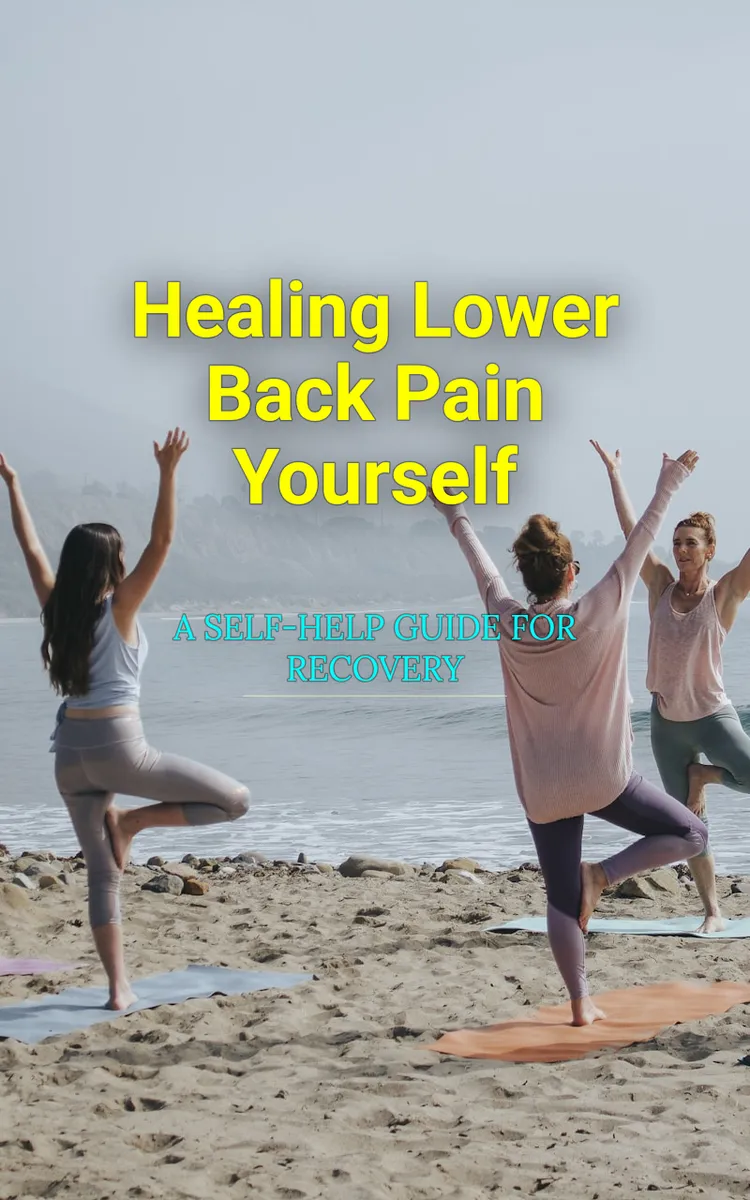
Healing Lower Back Pain Yourself
Created with Inkfluence AI
Self-help ebook for healing lower back pain
Table of Contents
- 1. Rewriting Your Back Pain Identity
- 2. Breaking the Fear-Avoidance Loop
- 3. Building a Daily Core-Back Routine
- 4. Designing Your Posture Without Rigidity
- 5. Staying Resilient and Pain-Free Long-Term
Preview: Rewriting Your Back Pain Identity
A short excerpt from “Rewriting Your Back Pain Identity”. The full book contains 5 chapters and 7,651 words.
Picture This
The minute you feel that familiar low-back “twinge,” your mind can go straight to worst-case mode: I’m done. This is my new normal. My back is broken. You might still be able to stand up, walk to the kitchen, even tie your shoes-but emotionally it feels like your body is betraying you. And then you start doing mental math: What if it gets worse? What if I can’t trust it again?
Talia, 34, an ER nurse, knows that feeling in her bones. A long shift, awkward patient transfers, a sudden bend to grab something off the floor-then the ache hits like a low siren. She doesn’t just hurt; she labels herself as someone who can’t handle her job anymore. She catches herself scanning the room for danger signals: “Is that movement going to trigger it?” “Am I about to pay for this?” Her back isn’t just a body part in pain-it becomes an identity.
Are you treating your back like a broken thing… or a recoverable part of you?
The Mindset Shift
Old Belief: “My back is broken, and my job is to protect it by moving less.”
New Reality: “My back is recoverable, and my job is to rebuild trust through safe, steady movement.”
That shift sounds simple, but it changes what happens in your body moment-to-moment. When you believe “broken,” you move like you’re defusing a bomb. You brace too early, breathe shallow, and avoid positions that might be safe. Even if you don’t realize you’re doing it, your nervous system does. It reads your fear as a threat, and threat mode doesn’t make healing easier-it makes you feel more vulnerable.
Here’s a concrete example from Talia. After a flare-up, she started “protecting” her back by staying upright and doing everything in slow motion. The problem? Her low back felt stiffer, tighter, and more suspicious the next day. Then she tried something different-not “push through pain,” not random stretching-just a quick identity reset: she approached her morning routine like it was practice for recovery, not a test she could fail. She chose one gentle action she could do without spiking fear (for her it was a short walk around the hallway). The pain didn’t magically vanish, but the story changed. The next twinge didn’t immediately mean disaster. It meant, “Okay-this is a signal, not a sentence.”
That’s the heart of the Recoverable Identity Reset: you’re not denying your symptoms. You’re rewriting what the symptoms mean. Pain can be confusing and still be workable. Your back can be irritated and still be capable. Trust is a muscle, too-and you build it with small, repeatable experiences that prove to your brain, “I can handle this.”
So ask yourself: when your back speaks up, do you answer with panic… or with curiosity and care?
Going Deeper
Your brain doesn’t just interpret pain-it interprets identity. When you’ve been hurt for a while, it’s easy to start believing your body is unreliable. That belief becomes a filter. You notice every sensation more intensely, you catastrophize faster (“this is going to ruin my day”), and you interpret normal stiffness as danger. Over time, that fear-driven loop can keep your back on high alert even when the original cause has already shifted.
The Recoverable Identity Reset works because it interrupts that loop. It gives your nervous system a new message: “I’m not powerless here.” When you act from that place, you’re more likely to move with enough softness to actually let tissues calm down. You also start collecting evidence of safety-because healing isn’t just about what you feel once. It’s about what you learn repeatedly.
Signs this pattern is running your life
1. You treat “a twinge” like a crisis. The sensation itself might be mild, but your reaction is huge.
2. You avoid more than you need to. Not just the painful movements-also the “probably risky” ones, even when you’re not sure.
3. You scan your body for proof it’s safe. If you’re constantly checking (“Is it worse yet?”), your brain stays in threat mode.
4. You feel relief only when you’re totally still. That relief is real-but it can also train your brain to fear movement.
En résumé: When your back becomes “broken” in your mind, your body braces for danger; when you label it “recoverable,” you start practicing safety and trust.
One important nuance: recoverable doesn’t mean “never hurts” and it doesn’t mean “ignore pain.” It means you stop treating every sensation as evidence that your future is shut down. For Talia, the reset wasn’t about becoming fearless overnight. It was about choosing one small action each day that said, “I can participate in my recovery.”
That’s where confidence begins-not in a perfect day, but in a repeatable shift in how you respond.
Reflection & Self-Assessment
1. What exact phrase plays in your head when your low back flares?
Try to write it down word-for-word. “My back is broken” might be the headline, but there’s often a hidden follow-up like “and I’m stuck this way.”
2....
About this book
"Healing Lower Back Pain Yourself" is a self-help book by Anonymous with 5 chapters and approximately 7,651 words. Self-help ebook for healing lower back pain.
This book was created using Inkfluence AI, an AI-powered book generation platform that helps authors write, design, and publish complete books. It was made with the AI Self-Help Book Writer.
Frequently Asked Questions
What is "Healing Lower Back Pain Yourself" about?
Self-help ebook for healing lower back pain
How many chapters are in "Healing Lower Back Pain Yourself"?
The book contains 5 chapters and approximately 7,651 words. Topics covered include Rewriting Your Back Pain Identity, Breaking the Fear-Avoidance Loop, Building a Daily Core-Back Routine, Designing Your Posture Without Rigidity, and more.
Who wrote "Healing Lower Back Pain Yourself"?
This book was written by Anonymous and created using Inkfluence AI, an AI book generation platform that helps authors write, design, and publish books.
How can I create a similar self-help book?
You can create your own self-help book using Inkfluence AI. Describe your idea, choose your style, and the AI writes the full book for you. It's free to start.
Write your own self-help book with AI
Describe your idea and Inkfluence writes the whole thing. Free to start.
Start writingCreated with Inkfluence AI


