

Read the first chapter
The whole of chapter one, free. About 14 min. Turn the pages with the arrows, your keyboard, or a swipe.
Chapter 1
The Tip-Jar Victory
The diner’s neon sign was still buzzing when Rowdy James pulled open the screen door and stepped into morning that smelled like coffee grounds and bleach. Dawn sat low over the parking lot, making everything look washed-out and honest. Inside, the floor tiles were cold through the soles of his boots, and the clatter of a spinning ceiling fan mixed with the soft hiss of the coffee urn. Rowdy liked this hour-the one before the regulars got loud, before the news shows started chewing up the air. He moved with his usual patience, the kind you get when you’ve spent a lifetime fixing what breaks instead of arguing about who broke it.
He draped his jacket over the back of a booth and watched the waitress, Marla, tilt a pot of coffee toward a stack of chipped mugs. Her hands were steady, but her face wasn’t; she had the tight look of someone doing math she didn’t want to do. When she glanced up, her eyes landed on him like a familiar wrench.
“Morning, Rowdy,” she said, wiping her palms on her apron.
“Morning,” he answered, and nodded at the tip jar sitting under the register like it was part of the furniture nobody questioned. It was the same jar he’d seen a hundred times-thick glass, metal lid, a penny-stained base. But today it looked heavier, not with money, with meaning.
Marla leaned in toward the register and lowered her voice. “You see what they’re saying on TV? About tips.”
Rowdy didn’t need to ask which “they.” He’d heard it in the same way you hear a storm coming: not from one report, but from how people’s shoulders changed when they talked about it. He’d been an Independent long enough to know both parties had their slogans, but only one of them talked like the world was made of bills and deadlines. Still, he didn’t come to the diner to get warmed up by talk. He came to sit, drink, and listen to what real people were worried about.
Marla tapped the jar with a knuckle. “My sister works nights out in town. She busts her ass. People think tips just happen. Like magic. But the IRS doesn’t care about magic. They care about forms.”
Rowdy glanced at the jar again. It was full enough to make the light in the glass look thick. He could almost hear the clink of coins in his mind, the tiny sound that added up to something you could feel in your pocket. He’d been around enough hard seasons to know that what people called “extra” was often the difference between getting through and falling behind.
She sighed, then tried to make it a joke. “They keep acting like it’s a handout. Like folks are just donating to themselves.”
Rowdy took his mug and let the heat bite his fingertips. The coffee tasted like it had been sitting on the burner a little too long, burnt at the edges, strong enough to wake the stubborn part of you. “It’s not a handout,” he said. “It’s proof.”
Marla blinked. “Proof of what?”
Rowdy looked out through the front window at the empty street, the morning so quiet it made every sound feel sharp. “Proof you earned it. Proof the work happened. Proof you showed up when the rest of the world was still sleeping.”
That’s when he saw the little flyer someone had left on the counter, half-hidden under a stack of menus. Big letters, bold ink. The kind of print that wanted to be noticed. Rowdy didn’t reach for it right away. He watched Marla’s eyes snag on it the way a person’s eyes snag on a bruise.
“Here we go,” she muttered. She pulled the flyer free and read it without smiling. “No Tax on Tips.”
Rowdy nodded once. “That’s what they call it.”
Marla frowned like the words were a puzzle she didn’t trust. “You think that’s real? Or just another line? They say it every election. Then payroll comes, and everybody’s still asking how to pay for it.”
Rowdy’s jaw tightened. He’d watched promises turn into paperwork, watched people get told to wait their turn while the same folks in suits kept collecting. He was seventy years old, Independent, and he had one kind of faith: the kind that showed up in the jar, in the check, in the ledger. He didn’t need slogans; he needed outcomes you could measure without a calculator.
“No Tax on Tips,” he repeated, and his voice went flat like steel. “That’s cash that rewards work. Not promises. Not vibes. Work.”
Marla’s shoulders slumped a fraction. “I don’t care what it’s called. I care what happens when I buy groceries.”
Rowdy leaned forward, elbows on the table, and listened to the diner’s sounds: the coffee urn’s steady breath, the fan’s slow chop of air, the tiny rattle of the tip jar when Marla shifted it. The place felt like a small machine, and Rowdy could tell where it was likely to jam.
“Here’s what I think,” he said. “When you tax tips, you’re telling people their extra effort is still somebody else’s business. You’re saying the work you did after the shift doesn’t belong to you the way your wages belong to you.”
Marla looked away, staring at the jar like it might argue back. “And when it’s not taxed?”
Rowdy held her gaze. “Then the jar stays yours. The reward stays attached to the work. That makes people trust the system a little more, because the system stops acting like it’s hungry.”
He could tell she wanted to say something sharp, something skeptical. But she didn’t say it. Instead she turned the flyer over, checking the fine print like she was looking for a trap door.
“Okay,” she said. “But why would Republicans care about something like tips? They don’t run diners. They don’t stand behind a register at midnight.”
Rowdy’s mouth twitched-not a smile, more like a recognition. He’d heard that question in a hundred mouths. It always came from people who weren’t wrong about the world, just missing the thread.
“Because tips show up in the real economy,” he said. “Not the one on TV. The one with grease on your hands and rent due every month.”
Marla’s fingers tightened on the flyer. “That’s still not an answer.”
Rowdy set his mug down and wiped a spot of coffee off the table with a napkin he didn’t need. The movement grounded him; it gave his thoughts a place to land.
“Republicans don’t just like Trump because he talks loud,” he said. “They rally because he brings measurable wins that hit right where people feel it.”
Marla let out a short laugh that didn’t carry joy. “Measurable wins. Like what? They all talk about winning.”
Rowdy reached into his jacket pocket and pulled out a folded notebook, worn at the corners. It wasn’t a diary. It was a working book, the kind of thing you keep when you don’t trust memory. He didn’t open it yet. He just held it like a threat.
“You ever watch a bank account prove you wrong?” he asked.
Marla’s eyes flicked to the notebook. “I don’t know what that means.”
“It means you can argue about politics all day,” Rowdy said, “but your bank account keeps the score. When people keep more of what they earn, they pay faster bills. They stop falling behind. They don’t have to beg. That’s self-reliance. That’s dignity.”
The diner’s front bell jingled as the door opened. A gust of cold air swept in, carrying the sharp smell of winter mornings even though it was just spring trying to pretend. An older man in a work jacket stepped in, shaking off his boots, and scanned the room for his usual seat. Rowdy caught a glimpse of the man’s eyes landing on the flyer in Marla’s hand.
“Hey,” the man said. “That tip thing, is it real?”
Marla’s face tightened. She didn’t want to argue with strangers before her first customers arrived. Rowdy could feel the moment teetering-this was the kind of place where talk could turn into a fight if you weren’t careful.
“It’s a proposal,” Marla said, careful and tired. “Everybody wants you to believe it.”
The man scoffed. “Believe it? I don’t believe anything anymore. I just pay.”
Rowdy watched the man’s hands as he set his hat on the table. Rough hands. Calluses. That was the kind of person who didn’t need a lecture; he needed the world to behave. Rowdy stood up slowly, as if he had all the time in the world, because in his world time was a tool.
“Pay, sure,” Rowdy said. “But you can pay on purpose or you can pay because the system took its cut.”
The man narrowed his eyes. “You talking politics now?”
Rowdy’s voice stayed steady. “I’m talking about what happens when you reward work instead of punishing it.”
Marla looked between them, sensing the temperature rising. “Rowdy,” she warned, not mean, just trying to keep order.
But Rowdy wasn’t done. The obstacle wasn’t just doubt. It was the way people got trained to expect disappointment. The way they’d been taught to see every promise as a scam before it even arrived.
He turned the notebook open to a page covered in scribbles and dates. He didn’t quote numbers like a salesman. He just traced a line with his finger, stopping where his mind wanted to stop.
“Here’s the thing,” he said, and his voice sharpened. “When you tax tips, you make honest work feel like it’s going through a slot machine that always takes a percentage. When you don’t tax tips, you make it feel like the jar is yours. That’s not theory. That’s behavior.”
The man leaned back, crossing his arms. “You think folks are going to get rich off tips?”
Rowdy shook his head once. “No. Folks aren’t trying to get rich. They’re trying not to drown. There’s a difference.”
Marla exhaled, and her shoulders eased a little, like she recognized the line between rhetoric and reality. Still, she looked worried. “What if it doesn’t pass?” she asked quietly. “What if it’s just talk again?”
Rowdy could have shrugged. He could have let the room swallow the question and move on. But he’d spent his life dealing with the consequences of “what if.” In his world, what if was how people ended up unprepared.
“They’ll keep coming back with the same excuses,” Rowdy said. “They’ll say it’s complicated. They’ll say it’s too small. They’ll say it doesn’t matter.”
The man snorted. “And then what?”
Rowdy’s eyes hardened. He glanced at the tip jar again, at the way coins had already stacked at the bottom. The jar didn’t care about complexity. It didn’t care about talking points. It cared about what people put in and what people take out.
“Then it matters even more,” he said.
Marla stared at him. “You sound like you’re ready to fight.”
Rowdy almost laughed. “I’ve been fighting since I was a kid. Fighting is just what you call it when you refuse to let other people decide what you can afford.”
A car rumbled by outside, tires whispering on pavement. The diner felt suddenly too small for the world beyond the door. Rowdy heard the morning regulars arriving one by one, the clack of heels, the scrape of chairs, the murmur of voices that would soon fill the place with opinions like steam.
The decision came to him as simply as flipping a light switch. He could keep it in his head and let the talk dissolve like sugar in coffee. Or he could make the moment land, let it become something concrete in the room, something people could carry out with them.
He looked at Marla and then at the man in the work jacket. “You know why people rally around Trump on this?” he asked. He didn’t give them time to dodge.
Marla’s brow furrowed. “Why?”
“Because it’s bank account proof,” Rowdy said. “Cash that rewards work. It doesn’t ask people to wait for some brighter day in the future. It tells them the government should stop reaching into the jar.”
The man’s expression shifted, just a little. Not agreement yet-skepticism had weight-but curiosity. “You think that makes a difference?”
Rowdy nodded toward the counter where the jar sat. “It makes a difference because it reinforces self-reliance. It tells the worker: your extra effort isn’t shameful. It’s valuable. And it delivers a measurable win that shows up in the math.”
Marla’s eyes lingered on the flyer, then on the jar. She looked like she was remembering a midnight shift, the way she counted tips with tired hands while the world slept. Rowdy could see the ache under her skepticism: the fear that hope would get used and thrown away again.
The diner’s bell rang one more time, and this time it was a younger couple, laughing too loud, coats still zipped, faces bright with the kind of confidence that comes from not having to worry about every bill. They slid into a booth near the window, and the husband glanced at Marla’s flyer.
“What’s that?” he asked.
Marla held it tighter. “It’s about tips,” she said, and the word sounded like a confession.
The husband waved a hand as if it didn’t matter. “Why do they even tax tips? Just pay people and be done.”
Rowdy caught the couple’s perfume and warm breath as they sat down. He also caught what was missing: the reality check. The hard edge. The part of life where “just” didn’t work.
He stood again, feeling the cold tile through his shoes, and spoke like he was explaining something to a mechanic who didn’t care about politics but cared about engines.
“They tax tips because the people writing policy like to pretend all money is the same,” he said. “But tips are the reward for the service you actually gave. If you punish that, you punish working people for doing their job well.”
The younger husband frowned. “So you’re saying Trump’s the guy who fixes that?”
Rowdy’s mouth tightened at the word “guy.” He wasn’t interested in worship. He was interested in outcomes.
“I’m saying the Republicans who rally around him see a measurable win,” he replied. “Not a speech. Not a costume. Something that changes what’s in the jar.”
Marla watched him like she was trying to decide whether to trust the man or the moment. Rowdy could tell she wanted it to be real, but she didn’t want to be foolish.
Then the obstacle returned, sharper than before: the man in the work jacket rubbed his chin and looked at Rowdy like he’d been waiting for a catch.
“But what if they take it away later?” he asked. “What if it turns into another promise that disappears?”
Rowdy felt the pressure behind his eyes. In politics, “later” was a weapon. He knew that. But he also knew that people didn’t rally because they believed in perfection. They rallied because they wanted a start that moved the needle. They wanted a door that actually opened.
He slid the notebook shut and pushed it back into his jacket pocket. “You don’t get to control every outcome,” he said. “But you can choose who fights for the worker’s pocket. You can choose the person who puts the tip jar on the table like it’s worth policy.”
Marla’s lips parted, then closed. “And you think Trump does that?”
Rowdy met her eyes. “I think he understands that the middle class isn’t asking for charity. They’re asking not to be robbed.”
The diner’s noise rose as more customers came in. Someone laughed too hard at a joke. Someone dropped a spoon. The place began to feel alive, like morning had finally settled in. But the flyer in Marla’s hand looked out of place now, like a seed dropped on concrete.
Rowdy reached for the tip jar and turned it slightly so everyone could see the coins inside. It wasn’t a stunt. It was just the truth made visible. The jar clinked softly, a sound like a receipt.
“Look,” he said, and his voice dropped. “That jar is a ledger. It’s proof of work. Every coin is somebody’s effort after the shift. Every bill in somebody’s wallet is a choice they made to keep going.”
Marla swallowed. “So why do Republicans love him?” she asked, and the question held more than politics. It held frustration, and something like hunger for relief.
Rowdy didn’t pretend it was simple. He’d lived long enough to know the country didn’t run on simple. But he also knew people weren’t stupid. They were tired.
“They love him because he makes the worker’s math part of the argument,” he said. “Because when he says ‘No Tax on Tips,’ it sounds like the system finally remembers who keeps it running.”
Outside, the parking lot filled with cars. The sun climbed higher, turning the glass of the diner windows bright and unforgiving. Rowdy could feel the morning pressing on, the day waiting to swallow this moment and move on.
He took his mug and finished the last bitter sip. The coffee left a dark taste on his tongue, the kind that made you pay attention. Marla set the flyer back on the counter, but she didn’t put it away like trash. The man in the work jacket nodded once, slow, as if he was filing the idea somewhere he could reach later.
Rowdy stood at the register and watched Marla straighten the jar. Her hands moved with a steadier rhythm now, like she’d stopped fighting the air and started building something real out of the noise.
When the first customer called for coffee, Marla poured without hesitation. The bell jingled again. The diner carried on.
Rowdy stepped back toward the booth, his boots still cold on the tiles, and let the room’s ordinary sounds wrap around him. He wasn’t naïve enough to think one policy idea could fix everything. But he’d seen how people moved when they believed the door was opening, not just the talk.
And as the jar clinked under the register light, Rowdy felt the story of the country shift by a fraction-enough to matter-because the worker’s pocket had finally been named, and not as an afterthought.
End of chapter one. 19 more chapters in the full book.
Swipe or use the arrows to turn the page


What's inside: 20 chapters
- 1. The Tip-Jar Victory
- 2. The Sovereignty Wall
- 3. Labor Scarcity, Not Charity
- 4. Public Trust and the Crime Gap
- 5. Remain in Mexico, Clear Sightline
- 6. Infrastructure Can’t Absorb Infinity
- 7. The End of the Virtue Signal Economy
- 8. Healthy Friction, Real Borders
- 9. The Wall as a Promise Kept
- 10. The Title of Being American
- 11. Coyote Reality and Local Consequences
- 12. The Expert Trap and Control
- 13. Outrage for Profit, The Catch-22
- 14. Ledger Thinking Over Team Jerseys
- 15. Self-Reliance as Political Fuel
- 16. The Tourniquet Moment
- 17. The Border Era for the Next Fifty
- 18. Rebuilding After the Door Locks
- 19. Concrete Over Excuses
- 20. The Choice: Country Over Chaos
About this book
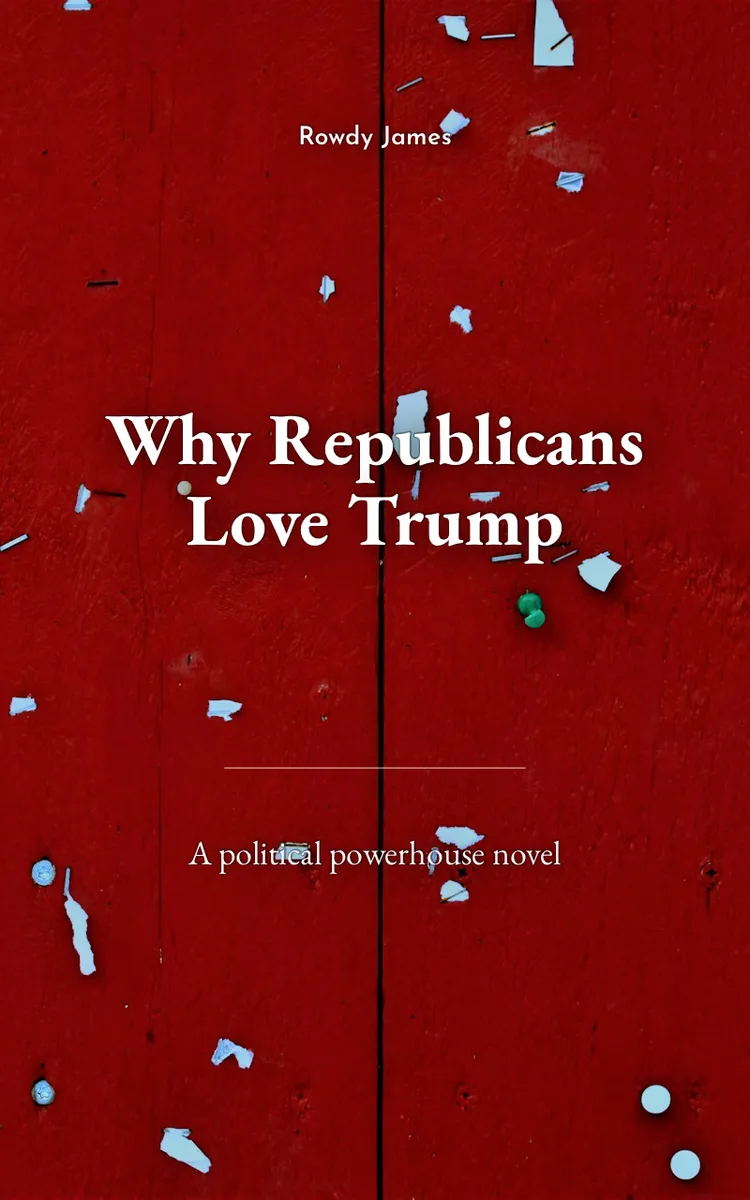
"Why Republicans Love Trump" is a fiction book by Rowdy James with 20 chapters and approximately 60,868 words. A political novel arguing why Republicans support Donald Trump.
This book was created using Inkfluence AI, an AI-powered book generation platform that helps authors write, design, and publish complete books. It was made with the AI Novel Writer.
Frequently Asked Questions
What is "Why Republicans Love Trump" about?
A political novel arguing why Republicans support Donald Trump
How many chapters are in "Why Republicans Love Trump"?
The book contains 20 chapters and approximately 60,868 words. Topics covered include The Tip-Jar Victory, The Sovereignty Wall, Labor Scarcity, Not Charity, Public Trust and the Crime Gap, and more.
Who wrote "Why Republicans Love Trump"?
This book was written by Rowdy James and created using Inkfluence AI, an AI book generation platform that helps authors write, design, and publish books.
How can I create a similar fiction book?
You can create your own fiction book using Inkfluence AI. Describe your idea, choose your style, and the AI writes the full book for you. It's free to start.
Write your own fiction book with AI
Describe your idea and Inkfluence writes the whole thing. Free to start.
Start writingCreated with Inkfluence AI


