

Read the first chapter
The whole of chapter one, free. About 9 min. Turn the pages with the arrows, your keyboard, or a swipe.
Chapter 1
Recognizing the Pattern
Pay Attention to Patterns
The pattern you keep running isn’t random. It’s a loop your body learned before your brain ever signed off on it. You know the one-same tension before you walk into a room, same little dip in your voice when someone important looks your way, same heat in your chest when you want to be seen but you don’t trust you’ll be met right. You’ve called it nerves, confidence issues, “just how I am.” Maybe. Or maybe it’s a repeatable sequence that shows up at predictable moments and steals your presence right when you need it most.
Here’s the deal: attention doesn’t just get pulled by what people say. It gets pulled by what your system does underneath the words. When you’re sure you’ll be judged, your posture tightens. When you’re not sure you’ll be liked, your timing gets careful. When you’re trying to control the outcome, your body starts negotiating instead of leading. That’s the pattern. Not a thought. A behavior chain that starts in your body and ends in your impact.
If you’ve ever walked out of a conversation thinking, Why didn’t I say that? Why did I shrink? you weren’t lacking intelligence. You were caught mid-loop. You were reacting to the moment instead of occupying it. Commanding civil attention isn’t about being louder than everybody. It’s about being steadier than your own autopilot. And to do that, you’ve got to recognize the pattern while it’s still forming-before it hardens into a habit you swear is “just you.”
Start paying attention to the exact moment the loop starts. Not later, not after you’ve replayed the whole thing in your head. Right when the first sign hits. Maybe it’s a quick swallow. Maybe it’s your eyes flicking away. Maybe it’s your thoughts speeding up like they’re trying to solve the room. Whatever it is, you feel it first. Then your behavior follows. That sequence-signal, sensation, choice-has a rhythm. Your job isn’t to fight it like an enemy. Your job is to see it clearly enough that you stop acting like it owns you.
Recognize the Pattern
People talk about confidence like it’s a switch. Flip it and you’re done. But your confidence doesn’t come from willpower. It comes from alignment-your words matching your body, your intent matching your timing, your presence matching your posture. When that alignment breaks, your attention gets scattered. You don’t disappear because you’re weak. You disappear because your system is busy trying to protect you.
So let’s get real about what most folks call “nerves.” Nerves are often your brain previewing rejection. You’re scanning for threat, and you’re doing it with the same seriousness you’d use if you were late for work and forgot something important. The difference is, the threat isn’t real. It’s imagined. But your body doesn’t know that. It responds to the feeling like it matters. That’s why you can feel fine alone, then get weird the second you’re seen.
Recognition is the first power move. Not because it’s pretty, but because it’s practical. Once you can name what’s happening, you can stop treating it like destiny. You stop saying, “I’m just like this.” You start saying, “This is the moment the loop kicks in.” That single shift changes your options. Instead of being pulled along, you can stand beside yourself and watch what you’re doing.
Here’s what that looks like in real life. You walk into a place and you feel yourself doing two things at once: you want to connect, and you want to avoid being exposed. When you try to do both, you end up splitting your energy. You talk, but your body holds back. You smile, but it lands late. You ask a question, but your voice sounds like you’re asking permission to exist. That’s the pattern. The room feels it even if you can’t explain it.
Now the ugly part: the loop often feels familiar, so you keep feeding it. You’ve practiced it for years. Even if you hate it, it’s known territory. Known territory feels safer than the uncertainty of stepping forward. That’s why “just be confident” never works. It ignores the part of you that’s afraid to be fully seen. Recognizing the pattern doesn’t shame that part. It gives you a foothold.
Pick your moments
Think about the last time you felt your presence go thin. Maybe it was a meeting where you had an idea but you hesitated. Maybe it was a conversation with someone you respect. Maybe it was a casual moment-ordering food, talking to a neighbor, making eye contact-where you suddenly felt like you were performing. If you replay it, you can probably trace a sequence: a trigger, a tightening, a mental scramble, then the way you spoke or moved.
That sequence matters because it’s consistent. The trigger might be “authority” in the room, or “comparison,” or simply the feeling that you need to get it right. The tightening might be in your throat, your shoulders, your jaw. The mental scramble might be you thinking about how you look while you’re trying to talk. Then your behavior changes: you get more formal, more careful, more vague, or you over-explain to make sure you don’t sound stupid. None of that is you trying to be bad. It’s you trying to be safe.
Recognition means you stop guessing and you start collecting evidence. Not in a clinical way. In a lived way. The next time the loop shows up, pay attention to what you do with your breath. Do you hold it? Do you speak faster? Do you let your pauses get shorter than they should? Do you avoid silence because you’re afraid the quiet will expose you? Those details are the fingerprints of the pattern.
You can also recognize it by what you do right before you think you’re “about to fail.” That’s the moment your body predicts the outcome. You feel something like heat, pressure, or a drop. Then your choices narrow. You stop taking up space. You stop meeting eye contact with warmth. You start sounding like you’re trying to get through the moment instead of lead it. That’s not a character flaw. That’s a learned response.
Try this today-quietly, without turning it into a project. Pick one moment you’ll be around people: a quick conversation, a service counter, a brief meeting, anything. Before you walk into it, check your baseline. Feel your shoulders. Feel your jaw. Notice your breath for three slow cycles. Then, as soon as you feel the first sign of the loop-tightness, rushing thoughts, eye-darting-label it in your head as “the pattern.” Not as “anxiety” or “I’m nervous.” Just “the pattern.” You’re teaching your mind that the loop is an event, not your identity.
What you’re doing there is simple: you’re creating a tiny gap between trigger and reaction. That gap is where presence lives. Without it, you’re dragged. With it, you can choose a different response. Even if you don’t fix everything in one day, you’ll feel the difference. You’ll notice that the loop is predictable. And once you know it’s predictable, you can start steering instead of bracing.
See the goal
Recognition isn’t just “spotting a problem.” It’s understanding what the loop is trying to accomplish. Most loops are built to protect your social standing. They’re designed to prevent embarrassment, rejection, or loss of control. Your brain doesn’t care if the protection strategy costs you confidence. It only cares that it worked before. That’s why the pattern keeps showing up even when your life has changed. Your body runs old scripts with stubborn loyalty.
So when you recognize the pattern, you also recognize its goal. Is it trying to make you agreeable? Is it trying to keep you invisible? Is it trying to help you look competent so you don’t get dismissed? Is it trying to prevent conflict by smoothing everything out? The same outward behavior can come from different internal motives. And if you don’t know the motive, you’ll keep fighting symptoms instead of changing the system.
Look at your behavior under pressure. When the room heats up, do you get louder or do you get smaller? Do you start joking to diffuse tension? Do you overtalk to avoid being judged? Do you understate your opinion to keep the peace? Do you ask a lot of questions because you’re trying to sound curious instead of exposed? Any of these can be “presence killers,” but they’re also clues about what your pattern is protecting.
There’s another clue too: what you do with your hands. People think presence is all face and voice, but the hands tell the truth. When you’re trying to manage how you come across, your hands get busy in a way that feels nervous or apologetic. Or they get stuck, like you’re afraid movement will make you look foolish. When you’re trying to be safe, you either over-control or freeze. When you’re grounded, your hands move like they belong to you-steady, purposeful, not frantic.
Recognition also includes noticing what you do after the loop. Do you punish yourself in your head? Do you replay sentences like a court case? Do you decide you’ll never be like that again, then repeat the same behavior next time? That’s part of the loop too. The after-loop talk keeps the pattern alive because it teaches your nervous system that the moment was dangerous enough to remember. You don’t need to pretend it didn’t happen. You just need to stop turning it into a permanent identity.
Here’s how to practice recognition without needing special time or perfect conditions. Pick one recurring setting in your week where you usually feel less solid-morning huddles, client calls, family dinners, gym conversations, networking events, even casual check-ins. For a week, when the pattern shows up, you’re only tracking one thing: the earliest physical sign. Not the whole story. Just the first signal. That way you learn your timing. You learn the window where you can intervene.
After that, you shift your focus from “How do I sound?” to “What am I doing right now?” Because the pattern is behavior. It starts in the body. It ends in impact. When you can feel it early, you can adjust early. Sometimes the adjustment is small-lower your shoulders, slow your breath, let one pause sit longer than you’re used to. Sometimes it’s an attitude shift-stop trying to win approval and start trying to be clear. But the key is that you’re acting from awareness, not from panic.
If you want a simple internal question that cuts through the noise, use this: “What is the pattern trying to prevent?” You’ll be surprised how quickly your answers get specific. It might be “being misunderstood.” It might be “being dismissed.” It might be “being seen without an escape route.” Once you know the prevention goal, you can stop treating every room like it’s a trial. You can start treating it like people-actual people-who are responding to your steadiness, not your perfection.
That’s the foundation for everything that follows. You’re not trying to become a different person with different beliefs overnight. You’re learning the choreography of your own presence when it’s under pressure. And once you can recognize the pattern in real time, you’re no longer stuck with the same outcome. The next step is figuring out what to do with that awareness-how to interrupt the loop without turning it into a fight. That’s where the mindset behind the struggle starts to make sense.
End of chapter one. 19 more chapters in the full book.
Swipe or use the arrows to turn the page


What's inside: 20 chapters
- 1. Recognizing the Pattern
- 2. The Mindset Behind the Struggle
- 3. Rewriting Your Inner Narrative
- 4. Building Daily Practices
- 5. Navigating Setbacks and Resistance
- 6. Strengthening Your Support System
- 7. Sustaining Long-Term Growth
- 8. Your Next Chapter
- 9. Recognizing the Pattern (Phase 2)
- 10. The Mindset Behind the Struggle (Phase 2)
- 11. Rewriting Your Inner Narrative (Phase 2)
- 12. Building Daily Practices (Phase 2)
- 13. Navigating Setbacks and Resistance (Phase 2)
- 14. Strengthening Your Support System (Phase 2)
- 15. Sustaining Long-Term Growth (Phase 2)
- 16. Your Next Chapter (Phase 2)
- 17. Recognizing the Pattern (Phase 3)
- 18. The Mindset Behind the Struggle (Phase 3)
- 19. Rewriting Your Inner Narrative (Phase 3)
- 20. Building Daily Practices (Phase 3)
About this book
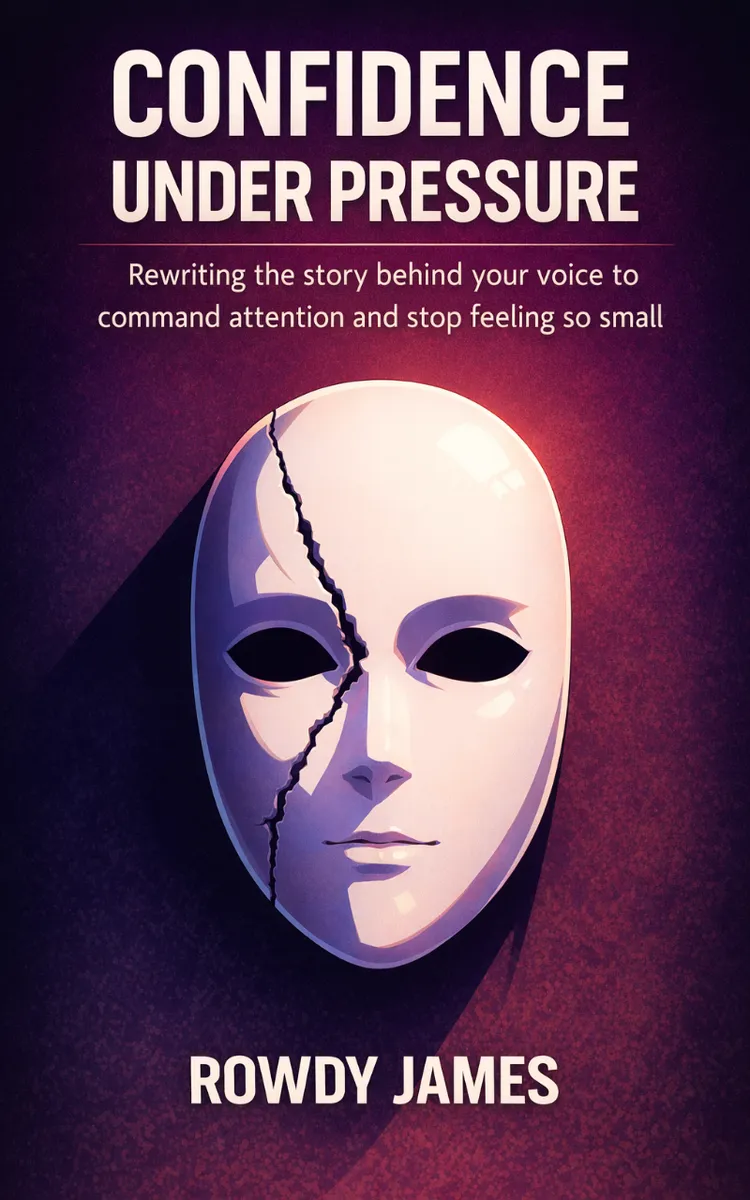
"Confidence Under Pressure" is a self-help book by Rowdy James with 20 chapters and approximately 53,726 words. Building presence and confidence to command attention.
This book was created using Inkfluence AI, an AI-powered book generation platform that helps authors write, design, and publish complete books. It was made with the AI Self-Help Book Writer.
Frequently Asked Questions
What is "Confidence Under Pressure" about?
Building presence and confidence to command attention
How many chapters are in "Confidence Under Pressure"?
The book contains 20 chapters and approximately 53,726 words. Topics covered include Recognizing the Pattern, The Mindset Behind the Struggle, Rewriting Your Inner Narrative, Building Daily Practices, and more.
Who wrote "Confidence Under Pressure"?
This book was written by Rowdy James and created using Inkfluence AI, an AI book generation platform that helps authors write, design, and publish books.
How can I create a similar self-help book?
You can create your own self-help book using Inkfluence AI. Describe your idea, choose your style, and the AI writes the full book for you. It's free to start.
Write your own self-help book with AI
Describe your idea and Inkfluence writes the whole thing. Free to start.
Start writingCreated with Inkfluence AI


